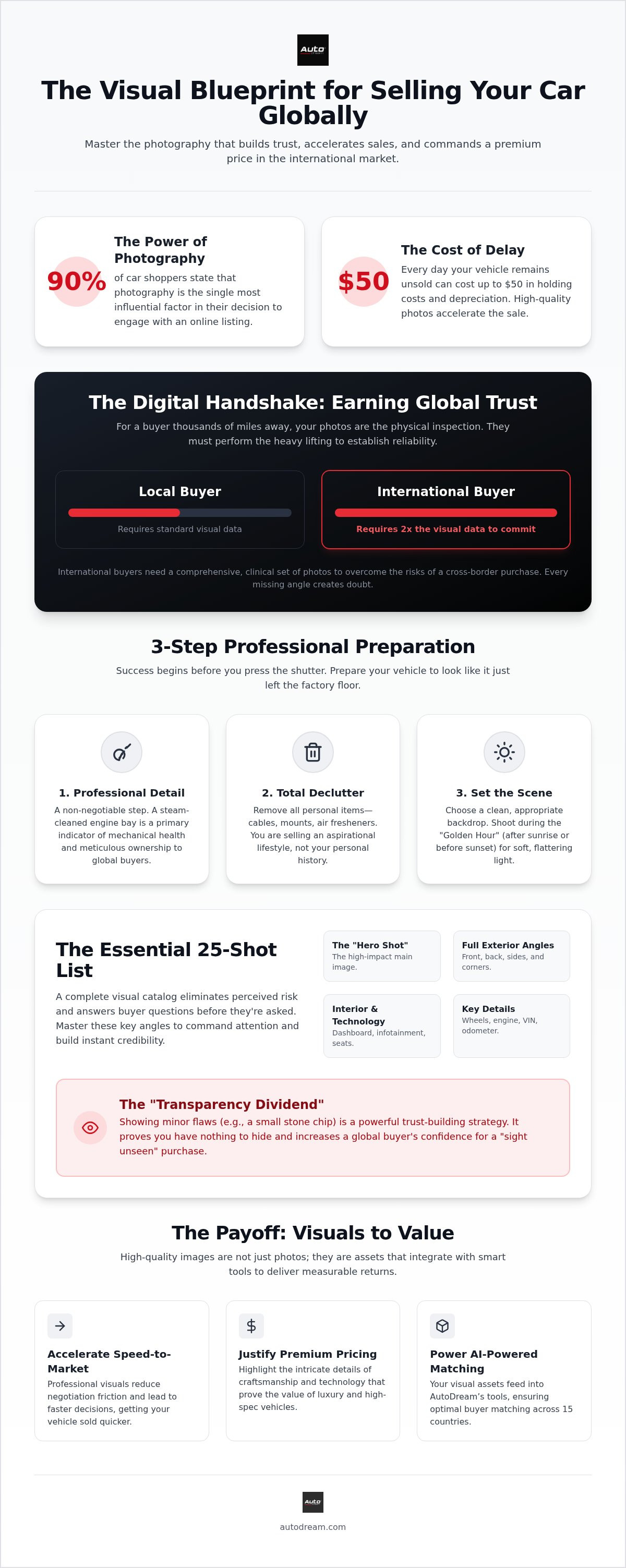
Nearly 90% of car shoppers state that photography is the most influential factor in their decision to engage with an online listing. In a global marketplace, a dark or amateur photo does more than just look poor; it signals a lack of transparency that drives international buyers away. Every day your vehicle remains unsold can cost you up to $50 in holding costs and depreciation. It's a high-stakes environment where visual trust is the primary currency of the digital showroom.
You likely understand that a car is more than just metal and glass, yet translating that value into a digital format often feels like a technical hurdle. Mastering how to take photos for car ad campaigns is the most efficient way to bridge the gap between your vehicle's current state and a successful sale. This guide provides the smart logic you need to master automotive visual storytelling. By following these principles, you will build instant credibility with buyers across 15 countries and sell your vehicle faster than traditional methods allow.
We'll examine the essential angles that eliminate perceived risk and the sophisticated lighting techniques that highlight premium features. You will also discover how high-quality images integrate with modern AI tools to optimize your listing for better buyer matching, ensuring your vehicle achieves the visibility it deserves in a competitive global landscape.
Key Takeaways
- Understand the psychology of the "digital handshake" and why international buyers require twice as much visual data to commit to a cross-border purchase.
- Execute a professional-grade vehicle preparation that covers everything from engine bay detailing to total interior decluttering for a pristine presentation.
- Master the essential 25-shot list, including the high-impact "Hero Shot," to learn exactly how to take photos for car ad listings that command attention.
- Gain technical mastery over lighting and composition to avoid the "amateur look" and ensure your vehicle is showcased with professional-grade clarity.
- Discover how high-quality visual assets integrate with AutoDream’s AI-powered tools and virtual tours to accelerate your speed-to-market and secure a premium price.
Table of Contents
The Psychology of Visual Trust in Global Car Sales
In a borderless economy, visual trust serves as the digital handshake between a seller and a global audience. When a buyer is thousands of miles away, they cannot walk around the vehicle or feel the texture of the leather. Your images must perform the heavy lifting of a physical inspection. This is not merely about aesthetics; it's about establishing a foundation of reliability that transcends geographic boundaries. A sophisticated visual presentation signals that the seller is professional, organized, and transparent.
International buyers typically require twice the amount of visual data compared to local purchasers. This increased demand stems from the inherent risks of cross-border logistics and the inability to perform a "sight-seen" evaluation. To bridge this gap, your photography must be comprehensive and clinical. Understanding how to take photos for car ad success means recognizing that every pixel is a data point for a cautious investor. If a listing lacks detail, a buyer's brain often fills those gaps with doubt rather than curiosity.
This psychological dynamic creates what we call the "Transparency Dividend." When you provide honest, high-resolution imagery that captures every angle, you significantly reduce negotiation friction. Buyers feel empowered by the clarity of the information provided, which leads to faster decision-making and fewer redundant inquiries. Mastering this visual narrative is a critical component of the broader how to list a car for sale process on a global platform like AutoDream.
Bridging the Distance Gap with Transparency
Showing minor flaws is actually a powerful trust-building strategy for global exports. When a buyer in another country sees a clear, well-lit photograph of a small stone chip or minor seat bolster wear, their confidence in the seller increases. It proves that nothing is being hidden. This level of detail is essential for "sight unseen" purchases, where the buyer relies entirely on your digital assets. Professional-grade photos signal a sophisticated seller who understands the complexities of international trade and values the buyer's peace of mind.
The ROI of Premium Automotive Visuals
There is a measurable correlation between the depth of a visual catalog and the "time to sell" on global marketplaces. For luxury assets such as a Porsche 911 or a Mercedes-Benz S-Class, high-quality images justify premium pricing by highlighting the intricate details of craftsmanship and technology. These assets also feed into AutoDream’s AI-powered tools, ensuring better buyer matching across our presence in 15 countries. Visual Equity is the perceived value added by professional presentation.
Preparing Your Vehicle for a Professional-Grade Shoot
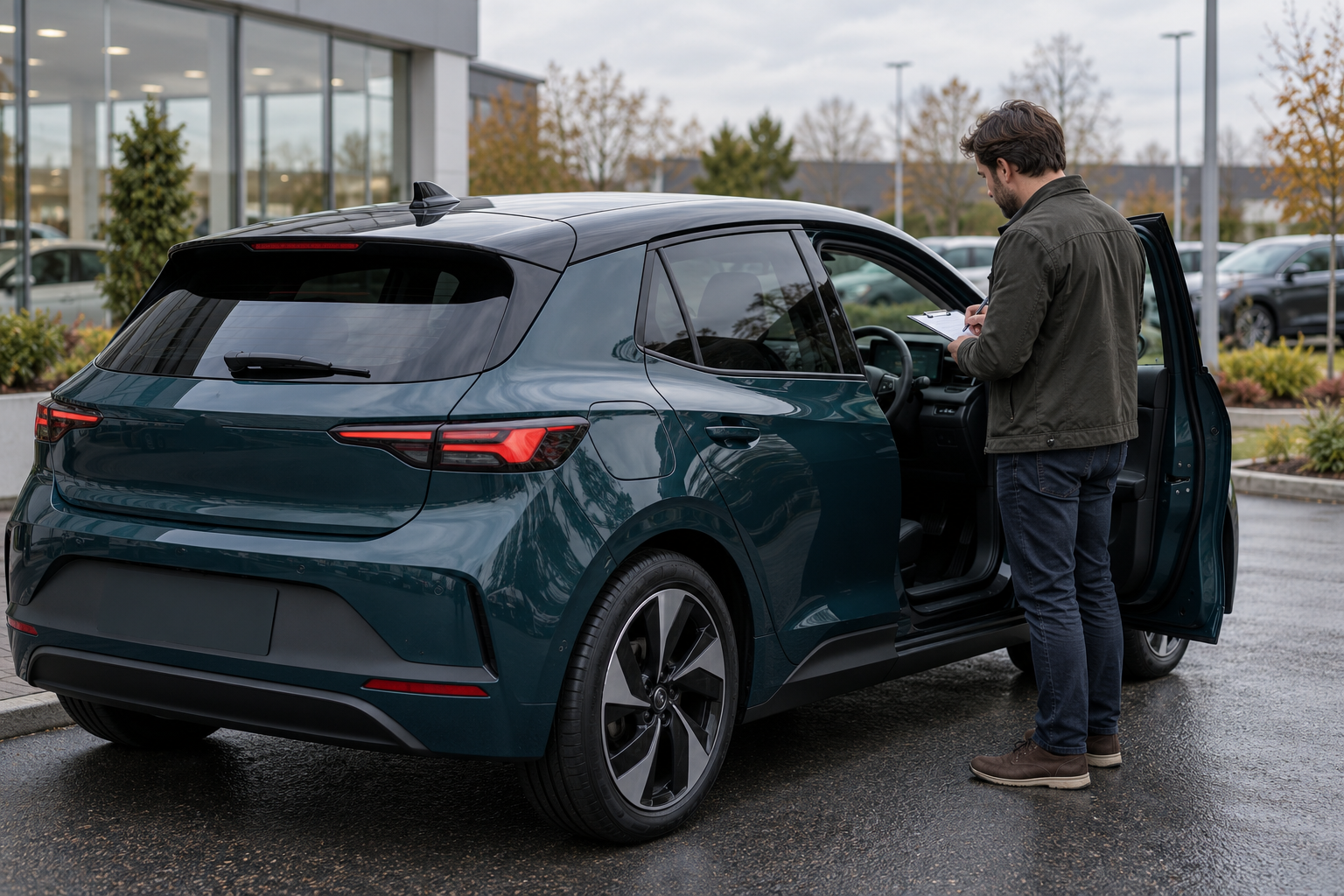
Global sales success begins long before you press the shutter button. If you are learning how to take photos for car ad listings that convert, you must first understand that preparation is the foundation of visual trust. Your vehicle should look as though it just transitioned from the factory floor to the showroom. A professional detail is non-negotiable; this must include a steam-cleaned engine bay. For an international buyer, a pristine engine compartment is a primary indicator of mechanical health and meticulous ownership.
Interior decluttering is equally vital for a sophisticated presentation. Remove every personal item, from charging cables and phone mounts to hanging air fresheners. You are selling an aspirational lifestyle, not your personal history. Once the physical space is clear, perform a technology audit. Modern buyers are intensely focused on infotainment and driver-assistance features. Wipe every screen with a microfiber cloth to eliminate oily fingerprints and ensure the displays are active during the shoot to showcase the vehicle's digital intelligence.
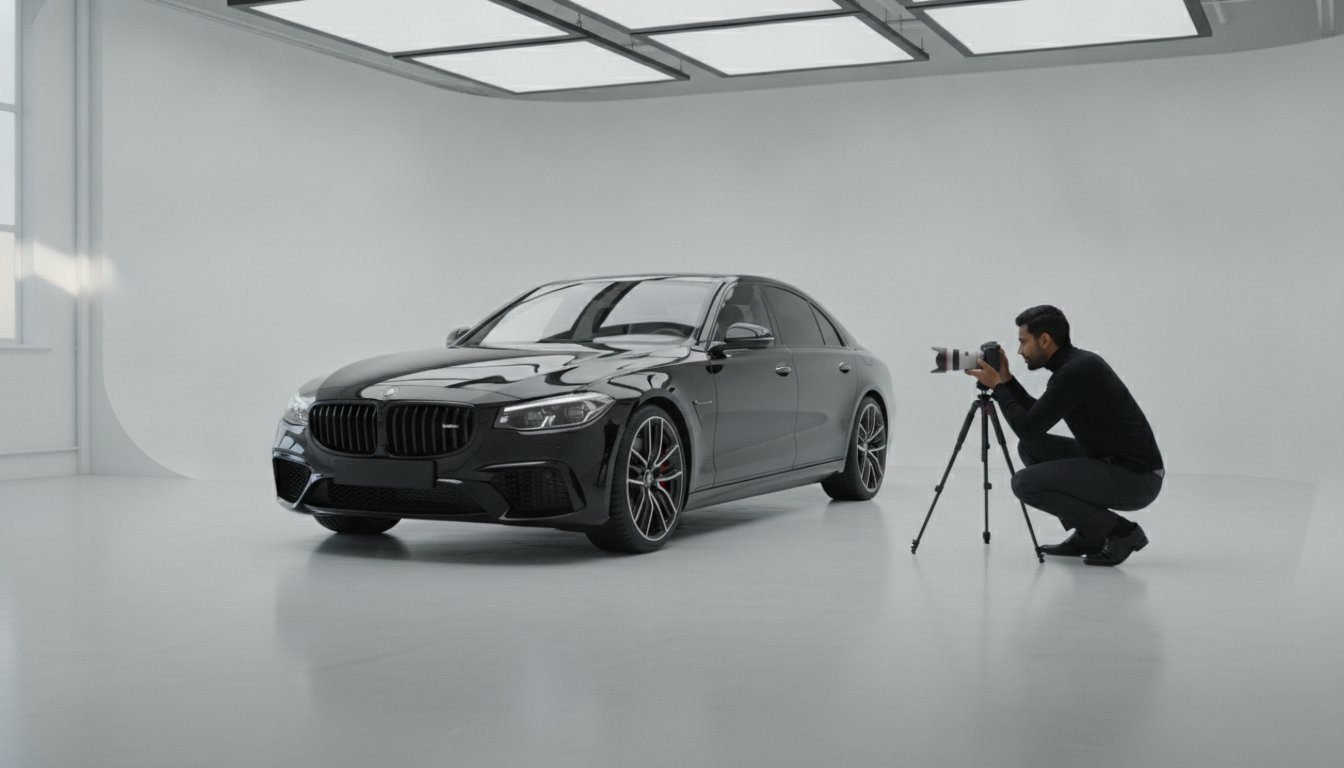
Choosing the right environment is your final preparatory hurdle. A luxury sedan belongs on a clean, paved surface in an urban setting, while an SUV thrives against a scenic, rugged backdrop. Timing is the final ingredient. Shooting during the "Golden Hour," the hour after sunrise or before sunset, provides the soft, directional light necessary to accentuate the vehicle's body lines without the harsh glare of midday sun. This level of preparation is the baseline for those seeking a Featured Listing Placement on the AutoDream platform.
Detailing for the Camera Lens
There is a distinct difference between "street clean" and "camera clean." High-resolution digital sensors capture imperfections that the naked eye might overlook in passing. Focus heavily on high-touch contact points such as steering wheels, seat bolsters, and pedals. Buyers often use these areas to verify the vehicle's reported mileage and overall maintenance history. Additionally, apply a matte tire dressing. It provides a finished, showroom-ready look that grounds the vehicle in the frame and suggests a higher level of care.
Scouting the Visionary Backdrop
Your backdrop should complement the vehicle, not compete with it for the buyer's attention. Visual noise like trash cans, power lines, or stray vehicles can distract a viewer and diminish the listing's perceived value. Always match the environment to the vehicle's DNA. An electric vehicle looks most at home in a modern, high-tech urban environment, whereas a luxury SUV benefits from a clean, paved overlook. Avoid grass or gravel for luxury listings; a solid, clean surface reflects light more predictably and maintains the sophisticated atmosphere required for premium global sales.
The Essential 25-Shot List for Maximum Engagement
Execution is the bridge between a prepared vehicle and a completed transaction. While many sellers settle for a handful of blurry images, a visionary approach requires a comprehensive catalog of at least 25 high-resolution assets. This volume of data is what modern buyers expect when they are learning how to take photos for car ad listings that compete on a global scale. Your shot list must act as a virtual tour, leaving no question unanswered regarding the vehicle's aesthetic or mechanical condition. By providing this level of visual depth, you empower the buyer to move from interest to intent without the friction of additional requests.
The "Hero Shot" is your primary hook. This front three-quarter angle, captured at eye level, should be the first image in your gallery. It presents the car's most flattering proportions and sets the tone for the entire listing. From there, you must execute a 360-degree exterior walk-around consisting of at least eight distinct angles. This systematic approach ensures that every panel is documented, providing the transparency required for cross-border trust. High-quality imagery of this caliber is a prerequisite for any seller aiming for a Featured Listing Placement on the AutoDream platform.
Beyond the primary body panels, you must document the vehicle's digital intelligence. Capture high-resolution images of the infotainment screens, digital clusters, and advanced driver-assistance interfaces. In an era where software defines the driving experience, these shots are as valuable as the exterior paint. For electric vehicles, ensure the battery health and charging interface are clearly displayed to provide the specific data points that modern global buyers prioritize.
Exterior Angles: Capturing Automotive Sculpture
To capture the true essence of the vehicle's design, employ the 45-degree rule for all corner shots. This angle provides a sense of depth and dimension that profile shots lack. For SUVs and sports cars, lowering your camera height can emphasize the vehicle's "stance," making it appear more grounded and powerful. Don't forget the details; close-up shots of the wheels and tires are essential. These images should clearly show the brand and the remaining tread life, as tires are a significant maintenance item for any buyer. High-resolution documentation here signals that you are a detail-oriented seller who values precision.
Interior Details: Selling the Driver's Experience
The interior is where the buyer will spend their time, so the photography must reflect a premium experience. Start by shooting from the center of the back seat to capture a wide-angle cockpit view. This perspective allows the buyer to visualize themselves behind the wheel. Use macro photography to highlight premium materials like leather stitching or carbon fiber trim, as these tactile details justify a higher valuation. It is also critical to show the odometer clearly. Verifying mileage is a fundamental step for those utilizing online car shopping tools to compare global inventory. Finally, document the "Proof of Condition" set, including the VIN plate and service stamps, to finalize the buyer's confidence in your listing.
Technical Mastery: Lighting, Composition, and Post-Processing
Technical execution is where the vision of a global sale meets the reality of digital data. In 2026, the technology available to individual sellers has effectively leveled the playing field between amateur listings and professional showrooms. However, high-tech tools require smart logic to produce results that drive engagement. Understanding how to take photos for car ad success requires a mastery of environmental variables that hardware alone cannot solve. By aligning your technical approach with professional standards, you ensure your vehicle is optimized for the advanced algorithms used in a Featured Listing Placement.
The debate between using a DSLR and a modern smartphone has largely been settled by the integration of AI-powered capture apps. By August 2026, platforms like Spyne and the latest mobile versions of Adobe Lightroom Classic provide guided sequences that ensure consistent exposure and focus. While a dedicated camera offers superior sensor depth, a high-end smartphone remains a highly efficient tool for capturing the high-volume data international buyers demand. The key is not just the device, but how you manage the light and space around the vehicle.
Harnessing the Golden Hour
Direct midday sun is the primary enemy of automotive photography. It creates harsh, vertical shadows and "blown-out" highlights that obscure the vehicle's true paint depth and body lines. Instead, aim for the "Golden Hour," the 60-minute window after sunrise or before sunset. This low-angle light provides a warm, directional glow that accentuates the sculpture of the car. If your schedule doesn't permit a dawn or dusk shoot, "Open Shade"—the shadow cast by a large building or a canopy of trees—offers a reliable alternative for consistent, diffused lighting that minimizes distracting reflections on metallic or matte finishes.
Sophisticated Composition and Framing
Composition is the difference between a snapshot and a professional asset. Always ensure your horizon is perfectly level; tilted shots are a hallmark of amateur photography and immediately degrade the listing's perceived value. Utilize the "Space to Drive Into" rule by positioning the car so it faces toward the larger portion of the frame. This creates a sense of movement and forward-thinking momentum. Avoid using ultra-wide lenses for close-ups, as they introduce lens distortion that can make the vehicle's proportions look unnatural. Stick to standard focal lengths to maintain the integrity of the car's design.
Post-processing in 2026 should focus on clarity rather than distortion. Ethical editing means using tools like Luminar Neo or Photoshop to remove distracting background elements or correct white balance, never to hide physical flaws. Transparency is the ultimate currency. AI-powered background replacement can provide a clean, virtual showroom look, but the vehicle itself must remain an accurate representation of reality to maintain the "Transparency Dividend" discussed earlier in this guide.
Leveraging AutoDream’s Smart Tools for Your Visual Assets
The integration of high-fidelity visual assets into the AutoDream ecosystem transforms a standard advertisement into a high-performance digital storefront. When you master how to take photos for car ad campaigns, you aren't just appealing to human buyers; you are feeding sophisticated algorithms. AutoDream's AI-powered tools use these high-quality images to facilitate better buyer matching and more accurate search results across 15 countries. By providing clear, high-resolution data, you allow our AI to interpret the vehicle's features more effectively, ensuring your listing appears in front of the most relevant global audience.
This technical synergy is most evident when utilizing Featured Listing Placement. While a standard listing provides visibility, a featured placement backed by professional photography creates a dominant market presence. High-quality visuals are the prerequisite for this premium tier. They allow our platform to highlight your vehicle's unique value propositions, from rare interior trims to advanced driver-assistance systems. Using AutoDream's distance insights, you can even target specific regions where buyers place a higher premium on the exact visual details you have captured.
The Future of Virtual Vehicle Tours
Interactive technology is the next horizon in cross-border automotive sales. Shooting for 360-degree interactive viewers requires a steady hand and a consistent sequence, but the payoff in buyer confidence is immense. Video walk-arounds further humanize the transaction, providing a layer of authenticity that static images alone cannot reach. Virtual tours effectively remove the "sight unseen" barrier by providing an immersive, remote inspection experience that satisfies even the most cautious international investor. This level of transparency is what separates visionary sellers from the rest of the market.
Maximizing Global Visibility
Your first photograph is the most critical asset in your digital arsenal. It determines your click-through rate (CTR) in search results, acting as the primary filter for potential buyers. Once your listing is live, you can use the AI-Powered Dealer Dashboard to track engagement metrics in real-time. This tool allows you to see which specific angles or features are attracting the most attention from international users, giving you the data needed to refine your presentation. The transition from a local seller to a global authority is now a matter of smart design and strategic tool utilization. Understanding how to take photos for car ad listings is simply the first step in a larger journey toward digital sales mastery.
Upload your professional listing to AutoDream today and experience the efficiency of a truly global smart marketplace.
Elevate Your Vehicle to the Global Stage
Mastering how to take photos for car ad campaigns is more than a technical exercise; it's a strategic investment in visual equity. By executing a meticulous 25-shot list and harnessing the clarity of the "Golden Hour," you bridge the physical distance between your driveway and a buyer on the other side of the world. This level of transparency doesn't just sell a car; it commands a premium price by eliminating the doubt inherent in sight-unseen transactions.
The future of automotive sales is borderless, and the tools to conquer it are already at your fingertips. With AutoDream, your high-resolution assets integrate seamlessly with our AI-powered multilingual support and advanced distance insights. We empower you to reach qualified buyers in over 15 countries, providing the smart logic needed to navigate a complex market with confidence. Your vehicle deserves a presentation that reflects its true value and intelligence.
Start your professional car listing on AutoDream today and leverage our visionary platform to accelerate your success. The global showroom is waiting for your next move.
Frequently Asked Questions
How many photos should I include in my car ad for the best results?
You should include a minimum of 25 high-resolution photos to achieve the best results. International buyers typically require twice the visual data of local purchasers to mitigate the risks of cross-border transactions. A comprehensive gallery acts as a virtual tour, providing the transparency needed to secure a premium sale without redundant inquiries.
Is it better to take car photos with a smartphone or a professional camera?
You can achieve professional results with both, but 2026 smartphone technology is often the most efficient choice for individual sellers. High-end mobile devices combined with AI-powered capture apps provide guided sequences that ensure consistent exposure. While a DSLR offers superior sensor depth, a modern smartphone is a powerful tool when learning how to take photos for car ad listings that convert.
Should I edit out scratches or dents in my car photos?
Never edit out physical imperfections like scratches or dents. Honesty is the foundation of the "Transparency Dividend," where showing minor flaws actually increases buyer confidence in your reliability. If a buyer discovers undisclosed damage later, it can jeopardize the entire transaction and your reputation on global platforms.
What is the best time of day to take photos of my car?
The "Golden Hour," which occurs during the first hour after sunrise or the last hour before sunset, is the optimal time for vehicle photography. This period provides soft, directional light that accentuates body lines without creating harsh shadows. If you can't shoot during these times, "Open Shade" near a large building offers a reliable, diffused alternative.
How do I take good interior photos if the cabin is dark?
To illuminate a dark cabin, open all doors and the sunroof to allow natural, diffused light to enter the space. Avoid using a harsh camera flash, as it creates unnatural reflections on leather and infotainment screens. Positioning the vehicle in a bright but shaded area ensures the interior details remain visible without losing clarity in the shadows.
Should I include a photo of the VIN number in my online listing?
Yes, including a clear photo of the VIN plate is essential for establishing technical trust. This allows international buyers to perform their own history checks and verify the vehicle's specifications. High-resolution documentation of the VIN plate and service stamps signals that you are a sophisticated seller who values data-driven transparency.
What background works best for selling a luxury car internationally?
A clean, paved surface with a modern urban or architectural backdrop works best for luxury vehicles. Avoid visual noise like power lines or trash cans that distract from the car's sculpture. A sophisticated, neutral environment reflects the aspirational lifestyle of the vehicle and ensures the focus remains entirely on the asset itself.
Can I use stock photos if my car is in perfect condition?
You should never use stock photos, even if your vehicle is in pristine condition. Stock imagery immediately signals a lack of transparency and can cause buyers to ignore your listing entirely. Real-world photos are the only way to prove the current state of the vehicle and build the visual equity required for a successful global sale.
Ready to list your car?
Put your vehicle details and photos together, then start your listing on AutoDream.
Create your listing