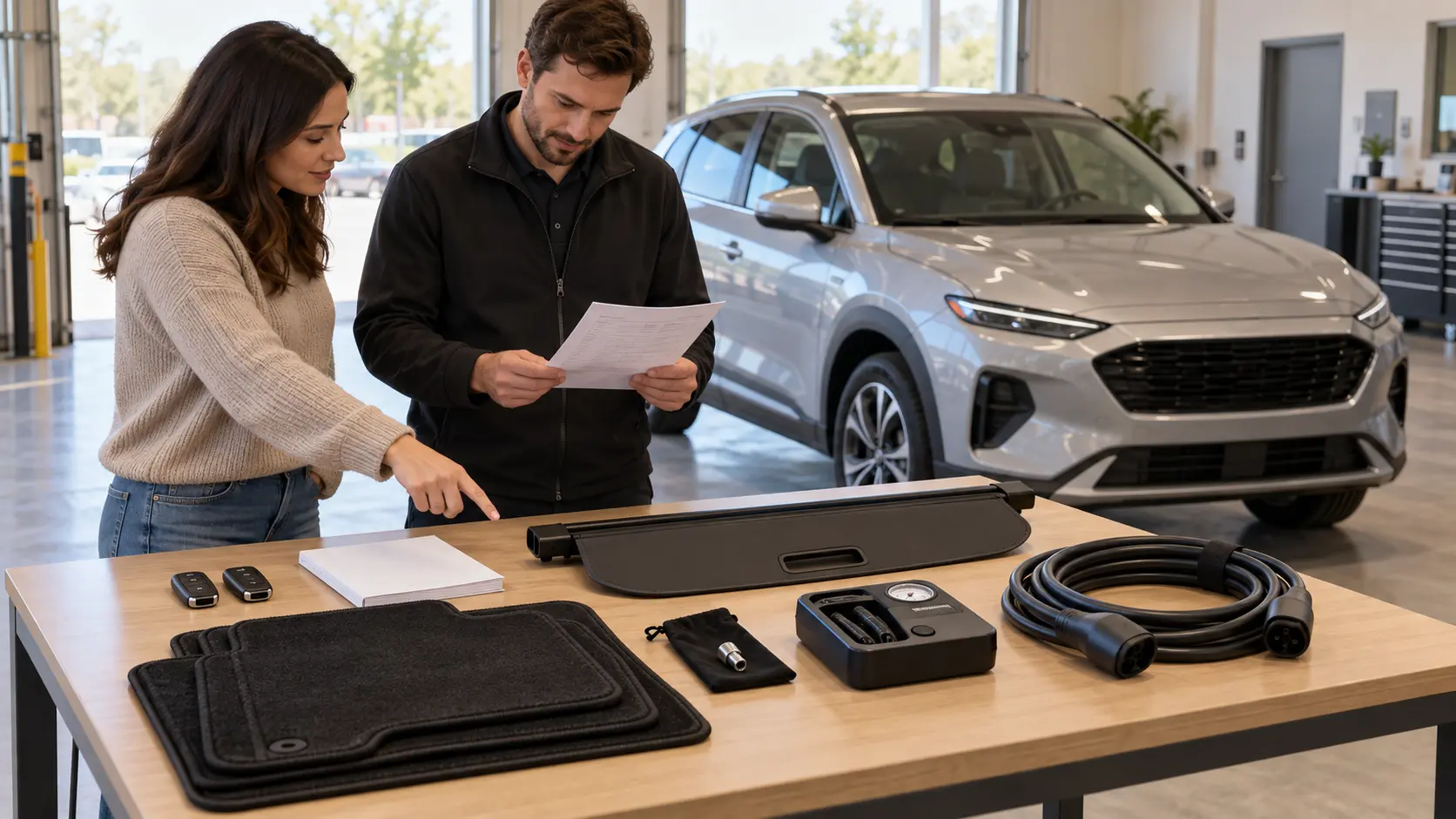
“We’ll take care of that before pickup” sounds reassuring, but it leaves important questions unanswered. What exactly will be done? Who pays? When can the buyer check the result? And what happens if the work is still pending on collection day?
This guide gives dealership staff and buyers a practical way to record and follow up on repair commitments. It is a communication and recordkeeping checklist, not a universal contract form or legal advice. The U.S. official sources were checked on October 15, 2026; state requirements and the actual transaction documents still matter.
1. Separate a request from an agreement—and an agreement from completion
Start a separate line for each concern. Keep the buyer’s observation, any technician’s finding and the dealer’s commitment in different fields. “Window moves slowly” is an observation. “Replace the window motor” is a proposed remedy unless a qualified assessment and an agreement support it.
| Status | What your record should say | What it does not establish |
|---|---|---|
| Requested | The buyer asked for a specified check or repair. | The dealer has agreed to perform or pay for it. |
| Agreed | The parties recorded the exact commitment and terms. | The work has started or finished. |
| Scheduled | A shop, appointment or part order is identified. | The concern is resolved. |
| Reported complete | The workshop says the work is done and supplies its record. | The buyer has reviewed the evidence or checked the agreed result. |
| Reviewed or unresolved | Record the actual review, any remaining concern and the next action. | A guarantee about every other part of the car. |
These are suggested tracking labels, not official legal categories. Do not mark an item “done” merely because a part arrived, a booking exists or an employee sent an internal message.
2. Turn vague assurances into specific commitments
The FTC’s used-car buying guidance advises getting promises in writing. It also says that, when an “as is” box is checked, verbal repair promises should be recorded on the Buyers Guide. A separate checklist is not a substitute for the documents and disclosures that apply to the sale.
For each item, resolve these questions before treating it as agreed:
- Vehicle: which VIN and stock number does the commitment concern?
- Location and symptom: which panel, seat, control or component, and what was observed?
- Scope: inspection only, diagnosis, adjustment, replacement, refinishing or another specifically agreed task?
- Parts and finish: what specification or condition is agreed, where relevant, and who approves a substitution?
- Payment: who pays the shop, what the buyer owes, and whether approval is needed for additional work?
- Timing: a firm completion commitment or only an estimated date? Is handover intended to wait for completion?
- Responsibility: the dealer’s named contact and the workshop handling the job.
- Evidence: what completion record and review will be provided?
- Exceptions: any remaining unknown, part delay or decision that must be resolved.
Avoid “fix everything,” “make it perfect” or “sort the noise.” Ask what those phrases mean for this vehicle. If the cause has not been established, record the agreed diagnostic step and what decision follows it; do not quietly turn a diagnosis-only appointment into a promise of a particular repair.
3. Keep the sale, warranty and workshop documents consistent
A pre-delivery repair commitment, the vehicle’s warranty coverage, a shop estimate and a completed repair order answer different questions. Keep their purpose visible rather than using one as shorthand for all four.
For dealers covered by the FTC Used Car Rule, the Dealer’s Guide says negotiated warranty changes must appear on the Buyers Guide, and the buyer must receive a copy reflecting final changes. It also explains that the Buyers Guide does not replace a separate written warranty document. State rules can differ; have the responsible compliance person resolve conflicting wording before signing, rather than assuming a handwritten note overrides every other term.
Ask both parties to review the final, dated version and retain their copies. If a form says “nothing owed” but a repair is still promised, flag that conflict immediately. Do not sign an acknowledgment that work is complete when it is not, and do not treat receipt of a document as proof of a satisfactory repair.
For private-party sales, do not assume dealer-specific federal forms apply. The same clarity questions can help the conversation, but use the documentation and advice appropriate to the sale’s location.
4. A fictional example: a loose interior trim panel
Imagine a buyer notices that the left rear door’s interior trim panel is loose. The salesperson says, “We’ll fix the door.” That wording could mean a cosmetic adjustment, a replacement panel or something involving the latch. The useful next step is to narrow the task.
Illustrative tracking entry—not a ready-to-sign contract: For the vehicle identified by the VIN in the sale file, the dealer agrees to have its workshop secure the loose left rear interior door trim panel, using suitable replacement retainers if required, before the agreed handover. The dealer pays the agreed work in full; buyer charge for this item is $0. If the workshop finds damage requiring a different repair, the service manager will explain the finding and obtain a documented revised agreement before treating the item as resolved. At pickup, the dealer will provide the completed work record and allow the buyer to review the panel with the service representative.
The sale record would also need the actual date, responsible contact and applicable transaction terms. The example does not diagnose the cause or certify the latch, window or entire door. Those are separate concerns if raised by an inspection.
Suppose the workshop discovers the panel itself is damaged and a replacement will arrive later. Change the tracking status to “unresolved—revised scope required,” not “complete—part ordered.” Record the revised timing and handover plan explicitly. A delay should not silently become an agreement that the buyer accepts an unfinished car.
5. Close the item with evidence, not a reassuring phrase
The FTC’s auto-repair guidance distinguishes a written estimate from a completed repair order. It recommends a completion record identifying the work, supplied parts, charges and odometer readings. Ask the workshop to explain any difference between the agreed task and the recorded work.
Match the document to the vehicle and to each commitment line. For a visible cosmetic item, a dated photograph may help document the result, but it cannot establish hidden mechanical condition. For a technical concern, use the qualified workshop’s findings and an appropriate follow-up assessment rather than a salesperson’s visual guess.
Record the review accurately: “buyer viewed the repaired trim panel at collection” is narrower than “buyer confirms vehicle has no defects.” If something remains wrong, keep that concern open with a named owner and next contact date. Do not ask a buyer to perform an unsafe test or drive a vehicle with an unresolved safety concern merely to complete the checklist.
A repair promise is also not a replacement for a pre-purchase inspection. See our independent inspection planning guide for arranging the broader assessment, and our service-record timeline guide for interpreting earlier work.
6. Make one employee responsible for the open-item list
For a small dealership, use one vehicle-level record shared through the dealership’s approved process. The salesperson records the customer discussion; the authorized manager confirms the commitment; the service contact updates progress; the handover employee checks the final status. One named owner remains responsible for keeping those entries aligned.
Keep dated revisions instead of silently overwriting the original promise. Notify the buyer of a material change through the agreed contact method. Include the current item list in a staff handoff, so an absent employee does not become the only person who knows what was agreed.
Update listing language only when supported: “repair scheduled” is not “repair completed.” This is a suggested manual workflow, not a claim that AutoDream tracks workshop jobs, enforces agreements or certifies repairs.
Before signing or collecting the car
- Each promise belongs to the exact vehicle and describes a specific item.
- Requested work and accepted commitments are clearly separated.
- The scope, payer, timing and responsible contact are understood.
- The final sale and applicable warranty documents are consistent.
- Scheduled work is not described as completed work.
- Completion evidence matches the agreed task.
- Unresolved items have a documented next step, not a misleading completion acknowledgment.
- Both parties retain the current documents and dated changes.
If a disagreement persists, preserve the relevant records and first raise the specific unresolved item with the dealer’s manager. The FTC’s consumer guidance points readers to state consumer-protection authorities for further help. A checklist improves clarity; it does not guarantee a legal remedy or a particular repair outcome.
Ready to list your car?
Put your vehicle details and photos together, then start your listing on AutoDream.
Create your listing