What if the most profitable vehicle for your inventory isn't even in your country? With the European used car market valued at $61.7 billion in 2026, the opportunities are vast, yet many dealers remain trapped by the friction of language barriers and fragmented regulations across 15 plus nations. You've likely felt the pressure of new EU emission rules that, as of January 2026, began banning older diesel and gasoline cars from low-emission zones. It's a complex environment where the old ways of sourcing just don't cut it anymore.
This article promises to show you how to turn these challenges into a competitive advantage. You'll discover the sophisticated shifts, AI-driven efficiencies, and cross-border opportunities defining the automotive landscape right now. We'll provide a clear framework for sourcing vehicles across borders and explain how AI impacts vehicle valuation. We'll also identify which specific markets offer the best value for high-demand brands like Tesla or BYD, ensuring you're ready to lead in this digital-first era.
Key Takeaways
- Master the transition from local inventory to a unified digital ecosystem where geographical borders no longer limit your sourcing potential.
- Learn how AI-powered algorithms are redefining vehicle valuation, moving beyond outdated pricing models to provide real-time market intelligence.
- Navigate the rapidly expanding European used car market for electric vehicles by prioritizing battery health transparency and understanding the resale dynamics of brands like Tesla and BYD.
- Gain a practical framework for international vehicle acquisition, including essential insights into managing VAT implications across different European jurisdictions.
- Discover how to leverage smart marketplaces to eliminate language barriers and friction, positioning your dealership as a leader in borderless automotive trade.
Table of Contents
The State of the European Used Car Market in 2026
The European used car market has transformed into a high-velocity, borderless ecosystem. By May 2026, the traditional reliance on local dealerships has been superseded by a digital-first approach that treats the entire continent as a single inventory pool. This shift is fueled by a market valuation of $61.7 billion, where success depends on data-driven intelligence rather than geographic proximity. Sophisticated buyers no longer settle for what is available in their immediate vicinity. They leverage advanced platforms to identify specific vehicle specifications across 15 plus countries, effectively neutralizing the friction of distance and language.
Supply chain stabilization has finally brought a sense of equilibrium to pricing across the continent. According to the AUTO1 Group Price Index, the index value stood at 136.6 in January 2026. While wholesale prices saw a modest 1% year-over-year increase, the month-over-month trend showed a 1.2% decline. This data suggests a maturing market where price volatility is being replaced by predictable, logic-driven fluctuations. Understanding these dynamics is essential for any professional participant in The Used Car Market, as it allows for strategic timing in both acquisition and resale. The current landscape still feels the ripple effects of the previous semiconductor shortage, particularly within the three to six year old vehicle segment, which keeps prices for these specific models resilient due to limited supply.
Market Integration and the Death of "Local-Only" Sourcing
The modern buyer is an empowered strategist. Searching for a specific trim or a rare color palette now routinely spans 1,000km, facilitated by digital tools that provide total transparency. Price equalization across the Eurozone is becoming a reality as digital platforms remove the information asymmetry that once allowed for local price gouging. While major markets showed mixed results in Q1 2026, with German transactions dipping by 1.6% and Spain growing by 2.9%, the overarching trend is toward "Smart Sourcing." Buyers prioritize the best asset at the best price, regardless of where the vehicle is currently parked.
The Impact of Euro 7 Standards on Resale Values
Legislation is the primary architect of inventory movement in 2026. As of January 1, 2026, diesel cars below the Euro 5 standard and gasoline cars below Euro 2 face strict bans in low-emission zones across the EU. Fines began in March 2026, triggering a massive migration of older, non-compliant vehicles toward Eastern European markets where regulations are less stringent. This creates a premium on compliant vehicles in major metropolitan hubs like Paris and Berlin. Strategic sourcing now involves identifying value in markets with different regulatory timelines, allowing dealers to arbitrage inventory based on local demand for cleaner, Euro 7-compliant vehicles.
The Digital Transformation: AI and Smart Marketplaces
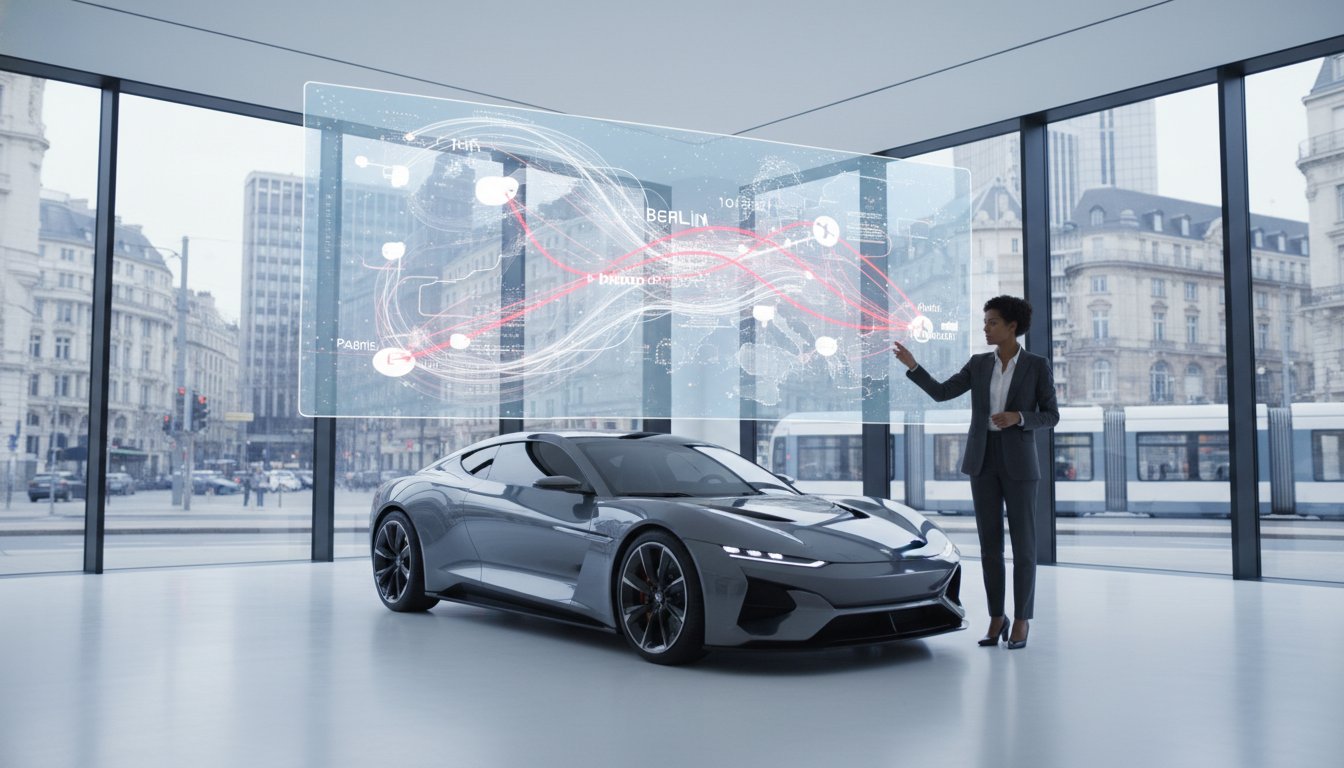
Digital transformation in 2026 has moved far beyond simple online listings. It is now defined by deep intelligence and the total removal of transactional friction. The rigid "blue book" pricing models of previous decades have been replaced by sophisticated AI algorithms. These systems analyze millions of real-time data points across the European used car market, adjusting valuations based on instant shifts in demand, local regulatory changes, and even hyper-local inventory shortages. This evolution allows dealers to price assets with surgical precision, ensuring they don't leave money on the table or sit on stagnant inventory.
The shift from static search engines to intelligent facilitators is palpable. Modern platforms now automate the most complex parts of the trade. For instance, calculating the true cost of acquisition across borders involves more than just a sticker price. Automated distance insights now factor in the logistical realities of different jurisdictions. Navigating Cross-Border Complexity is no longer a manual burden. Instead, smart marketplaces provide a comprehensive view of the total investment required before a transaction begins. It's a move toward a "platform-as-a-service" model that empowers the user through clarity and foresight.
Eliminating Friction with Multilingual Sales Support
Language barriers once acted as a hard ceiling on international trade. Today, AI-powered communication tools facilitate seamless, real-time negotiations between parties speaking entirely different languages. Whether it's a German-to-Italian dealer trade or a Spanish buyer communicating with an English seller, these context-aware systems translate technical automotive nuances perfectly. This technology does more than just swap words. It builds the trust necessary for high-value transactions. AutoDream's vision for the European used car market is a completely globalized conversation where the only thing that matters is the quality of the vehicle, not the native tongue of the seller.
Predictive Analytics for High-Volume Dealers
In a high-velocity market, being reactive is a liability. Predictive analytics now allow dealers to identify which specific models will appreciate in certain regions weeks before the trend hits the mainstream. This foresight is built into the modern AI-Powered Dealer Dashboard, which serves as a command center for inventory management. In a crowded digital field, visibility is paramount. Strategic use of featured listing placement ensures that high-margin assets are positioned in front of the most relevant international buyers. This combination of data-driven sourcing and targeted visibility creates a powerful engine for growth in the borderless 2026 landscape.
Electric Dominance and the Second-Hand EV Surge
The European used car market is witnessing an unprecedented influx of battery electric vehicles (BEVs) as early-decade leases reach maturity. While internal combustion engines still hold significant volume, the velocity of the second-hand EV sector is undeniable. In France alone, used BEV sales jumped 47% by March 2026, signaling a massive shift in consumer appetite. This surge is creating a new layer of market complexity. According to 2026 Used-Car Market Trends, wholesale price indices for BEVs have seen the sharpest declines among all fuel types. This price correction makes high-performance electric mobility accessible to a broader demographic, effectively democratizing the green transition across the continent.
Market maturity varies significantly by border. Norway remains the blueprint for high EV penetration, but Germany and the UK are catching up fast, together projected to command 50% of the total market share in 2026. Government subsidies that incentivized new EV purchases in the early 2020s are now indirectly fueling the used market. When new car incentives are reduced or removed, used EVs often become the more pragmatic entry point for cost-conscious, eco-friendly buyers. This dynamic is stabilizing the European used car market by providing a steady stream of high-quality, tech-forward inventory that meets the rising demand for cleaner transport.
The Shifting Brand Dynamics in the Used EV Market
Pioneering EV models from established manufacturers remain a benchmark for liquidity in the used market. Their robust charging infrastructure and consistent over-the-air updates ensure they retain a higher "tech-relevance" than many traditional competitors. However, the landscape is shifting with the rise of Chinese manufacturers. Brands like BYD are entering the second-hand market with inventory priced 20% to 30% lower than European equivalents. This creates a clear divergence: premium German brands are fighting to maintain luxury residuals, while BYD captures the high-volume, entry-level segment with aggressive pricing and modern features.
Verifying Battery Integrity Sight Unseen
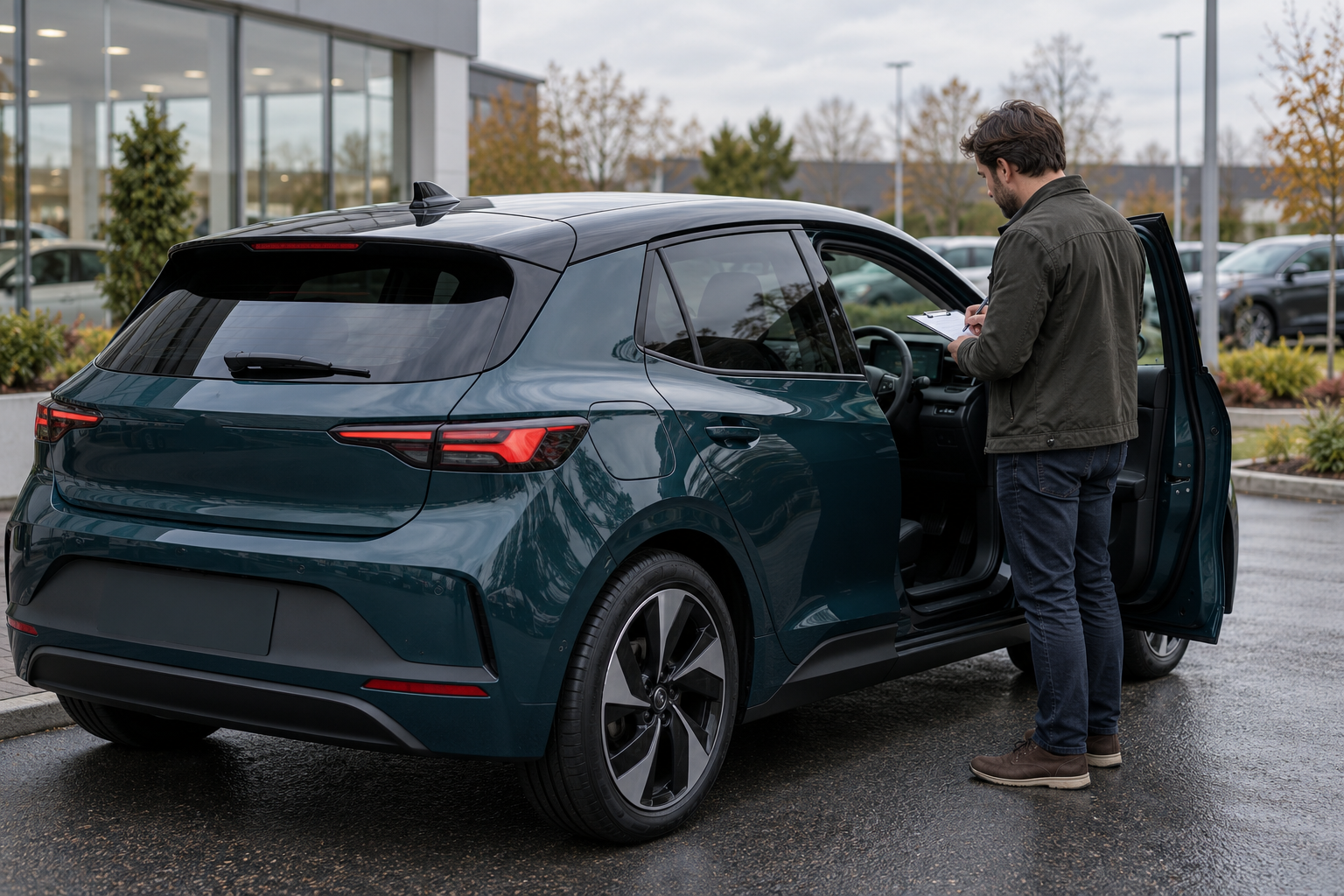
In 2026, the odometer is no longer the primary indicator of a vehicle's value. Battery health transparency has become the ultimate currency for international trade. Standardized battery health certificates have emerged as a mandatory requirement for serious cross-border transactions. Modern marketplaces now facilitate remote verification of a battery's state of health (SOH), allowing buyers to purchase from another country with total confidence. A verified 95% SOH on a four-year-old vehicle is now a more powerful sales tool than a low mileage count, providing the peace of mind necessary for sight-unseen digital deals.
Navigating Cross-Border Complexity in 2026
The European used car market is a landscape of high opportunity, yet it remains governed by a patchwork of 15 plus different regulatory frameworks. Successful international acquisition requires a systematic approach that bridges these gaps through digital intelligence. Central to this process is a deep understanding of VAT implications, such as the MwSt in Germany or IVA in Spain. For professional traders, distinguishing between net and gross pricing is the difference between a high-margin deal and a costly oversight. While the market has moved toward a unified digital inventory, the logistical reality of moving an asset from one jurisdiction to another still demands precision.
Security in 2026 is underpinned by digital escrow and sophisticated payment systems that protect both parties. These systems ensure that funds are only released when specific, verifiable milestones are met. Streamlining the path from a digital listing to doorstep delivery involves a chain of professional milestones. Buyers should always verify that third-party inspection services and logistical providers are integrated into their workflow to maintain a frictionless experience. By treating the continent as a single marketplace, dealers can leverage regional price variances to maximize their inventory's value.
Documentation and Regulatory Compliance
Paperwork is the traditional enemy of speed. In 2026, the European Certificate of Conformity (CoC) remains the essential passport for any vehicle crossing borders. Managing export plates and temporary insurance across multiple nations used to take days. Today, sophisticated platforms automate the paperwork trail, generating the necessary digital documentation in real-time. This automation ensures that every transaction meets current EU standards, allowing you to focus on sourcing rather than administrative hurdles.
The Visionary Approach to Remote Negotiation
Buying "sight unseen" is no longer a risk; it's a strategic advantage. The sophisticated international buyer utilizes high-definition virtual tours and independent, on-site inspections to validate an asset's condition from thousands of kilometers away. Trust is built through verified platform identities and transparent communication. Negotiating across cultures requires a blend of professional etiquette and data-backed confidence. To manage these complex interactions with ease, professionals utilize an AI-Powered Dealer Dashboard to track every stage of the international negotiation and acquisition process. This centralized intelligence ensures that no detail is lost in translation, providing a clear path to a successful cross-border trade.
The Visionary Future: Empowering the Borderless Buyer
The horizon of the European used car market is no longer defined by physical borders or regional limitations. We're witnessing the birth of a singular digital inventory where a dealer in Rome can source with the same efficiency as one in Munich. This transition is powered by a shared commitment to digital transparency and the systematic removal of transactional friction. By 2027, the concept of a "local" search will feel like a relic of a less connected era. The marketplace is evolving into a high-tech ecosystem where proximity is irrelevant and data is the ultimate currency.
Success in this environment requires a definitive move away from intuition toward pure intelligence. Every transaction, every bid, and every listing must be backed by real-time market insights. As we look toward the next year, expect to see even deeper integration of automated systems that predict demand shifts before they manifest in price changes. The borderless buyer is no longer an aspirational concept; they're the new industry standard. Dealers who embrace this globalized perspective will find themselves at the forefront of an $84.6 billion opportunity as the market continues its projected growth through 2033.
AutoDream: Your Intelligent Bridge to the European Market
AutoDream acts as the high-tech catalyst for this evolution. Our platform enables you to leverage sophisticated tools to identify specific models across 15 countries with surgical precision. We've designed an ecosystem that removes the traditional hurdles of international trade, replacing administrative confusion with digital clarity. The future of car buying is smart, efficient, and fundamentally global. It's about empowering you to reach your goals without being slowed down by outdated market silos or language barriers. Our technology serves as the bridge between your current inventory and the vast potential of a unified continent.
Actionable Next Steps for 2026
Preparation is the key to capturing value in this fast-paced landscape. Start by configuring smart alerts for specific cross-border price drops to ensure you're the first to act on emerging opportunities. If you have inventory to move, it's time to list your vehicle for maximum international exposure. Utilizing a Featured Listing Placement can significantly amplify your reach among sophisticated buyers who prioritize quality and speed.
By utilizing the AI-Powered Dealer Dashboard, you're not just participating in the European used car market. You're leading it. The modern buyer chooses our platform because we provide the tools to turn a complex continent into a single, accessible opportunity. The transition from local search to global sourcing is not just a trend. It's a fundamental shift in how the automotive world operates. Take the lead today and position your dealership for the borderless future of 2027.
Lead the Borderless Automotive Evolution
The shift toward a unified, digital-first ecosystem is no longer a future projection. It's the current reality of the European used car market. Success in 2026 requires more than just inventory; it demands the intelligence to navigate shifting emissions regulations and the foresight to master the second-hand EV surge. By leveraging AI-driven valuations and standardized battery health data, you transform logistical complexity into a distinct competitive advantage. You've seen how digital transparency eliminates traditional border friction, allowing for a level of precision that was previously impossible.
You're now equipped with the framework to source across borders and the logic to outperform traditional local models. The tools to bridge the gap between 15 plus nations are at your fingertips. It's time to move beyond geographic limits and embrace a platform that prioritizes your efficiency and global reach. Explore the most sophisticated listings in the European used car market on AutoDream and gain immediate access to inventory across 15 countries. Benefit from AI-powered multilingual support and advanced distance insights that redefine what's possible in international trade. The horizon is wide, and you're ready to command it.
Frequently Asked Questions
Is it cheaper to buy a used car from another European country in 2026?
Regional price variances frequently make international sourcing more cost-effective than buying locally. For example, the German market holds a 30% share of the European used car market and offers a higher volume of inventory, which often drives prices down compared to smaller nations. You should analyze local supply levels and tax structures to identify arbitrage opportunities that maximize your purchasing power across the continent.
What are the main risks of the European used car market for international buyers?
Language barriers and fragmented regulations across 15 plus countries represent the most significant hurdles for international buyers. Navigating different legal requirements can lead to administrative delays or unexpected costs if you don't use a digital facilitator. Additionally, the lack of transparency regarding cross-border VAT implications requires a sophisticated approach to ensure that every transaction remains secure and profitable.
How do I verify the battery health of a used EV from a seller in another country?
You should request a standardized battery health certificate that provides a verified State of Health percentage. In 2026, these digital certificates have replaced mileage as the primary indicator of an electric vehicle's value. Many professional sellers now facilitate remote access to this diagnostic data, allowing you to confirm the battery's integrity from thousands of kilometers away before committing to a deal.
Will used car prices in Europe continue to drop throughout 2026?
Market data indicates a stabilizing trend with specific declines in the electric vehicle sector. The AUTO1 Group Price Index recorded a 1.2% decrease in January 2026 compared to the previous month, though wholesale prices saw a slight 1% increase year-over-year. While BEV prices are softening rapidly, the shortage of three to six year old vehicles continues to keep prices resilient for high-quality internal combustion models.
What documents are required to export a car from Germany to another EU country?
Exporting from Germany requires the Zulassungsbescheinigung Teil I and II, a valid TUV inspection certificate, and a specialized export insurance policy. You must also obtain "Ausfuhrkennzeichen," or export plates, for the transit period. Sophisticated digital platforms now help organize these records electronically, ensuring that the essential Certificate of Conformity is present to facilitate a seamless registration process in the destination country.
How does the AutoDream AI chat help with international car sales?
The AI-powered communication tool provides real-time, context-aware translation to eliminate linguistic friction during negotiations. It allows parties speaking different languages, such as German and Italian, to discuss technical specifications and contract terms with total clarity. This technology is a core part of our mission to facilitate a borderless European used car market, ensuring that trust is built through precise and transparent dialogue.
Are BYD cars holding their value well in the European second-hand market?
BYD vehicles are entering the second-hand market at aggressive price points, typically 20% to 30% lower than their European equivalents. This competitive entry strategy affects their initial residual value compared to established premium German brands. While they offer high tech-relevance and modern features, their long-term value retention is currently being defined by their rapid market expansion and the increasing supply of used Chinese EVs.
Can I get a warranty on a used car bought from a different European country?
You should check if the vehicle still carries a manufacturer's warranty, as many premium brands provide pan-European coverage that remains valid regardless of the country of registration. For older vehicles, you should investigate third-party warranty providers that offer international products. It's essential to verify that any extended coverage is recognized by service centers in your specific region before you finalize the international purchase.
Ready to list your car?
Put your vehicle details and photos together, then start your listing on AutoDream.
Create your listing