
The traditional car dealership is no longer a physical lot; it's a borderless, intelligent ecosystem that exists wherever you are. By the end of 2026, the global smart car marketplace is projected to reach $195.82 billion, driven by a radical shift toward software-defined vehicles and automated trade. You likely already know the frustration of trying to source a specific Tesla or BYD model from another country, only to be met with confusing language barriers, opaque shipping costs, and a lingering lack of trust in remote sellers. It's a friction-heavy process that has long kept sophisticated buyers tethered to their local inventory.
We're here to show you that those barriers are finally dissolving. Discover how AI-driven platforms and new international safety regulations, like the UN's ADS GTR adopted in June 2026, are redefining the retail experience for the modern driver. This guide explores the transition to a frictionless buying and selling journey where automated logistics and real-time multilingual communication handle the heavy lifting. We'll look at how high-tech facilitators now provide instant access to global inventory while ensuring every cross-border deal is as transparent as a local transaction.
Key Takeaways
- Learn how the modern smart car marketplace utilizes AI-powered multilingual chat to dissolve language barriers in international transactions.
- Understand the transition from manual search processes to intelligent matching systems that calculate logistics and distance insights before you even click.
- Explore a strategic framework for sourcing global inventory, focusing on high-value opportunities for tech-heavy brands like Tesla and BYD.
- Discover how software-defined vehicles are transforming automotive retail into a proactive, platform-driven ecosystem that prioritizes user convenience.
- Identify the mechanisms that allow sellers to maximize visibility and efficiency using advanced AI-powered management dashboards.
Table of Contents
- Beyond Classifieds: Defining the 2026 Smart Car Marketplace
- The Architecture of Intelligence: AI’s Role in Global Trade
- Frictionless Transactions: Smart Marketplaces vs. Legacy Platforms
- Navigating the Global Inventory: A Buyer’s Strategic Framework
- AutoDream: Empowering the Next Horizon of Automotive Retail
Beyond Classifieds: Defining the 2026 Smart Car Marketplace
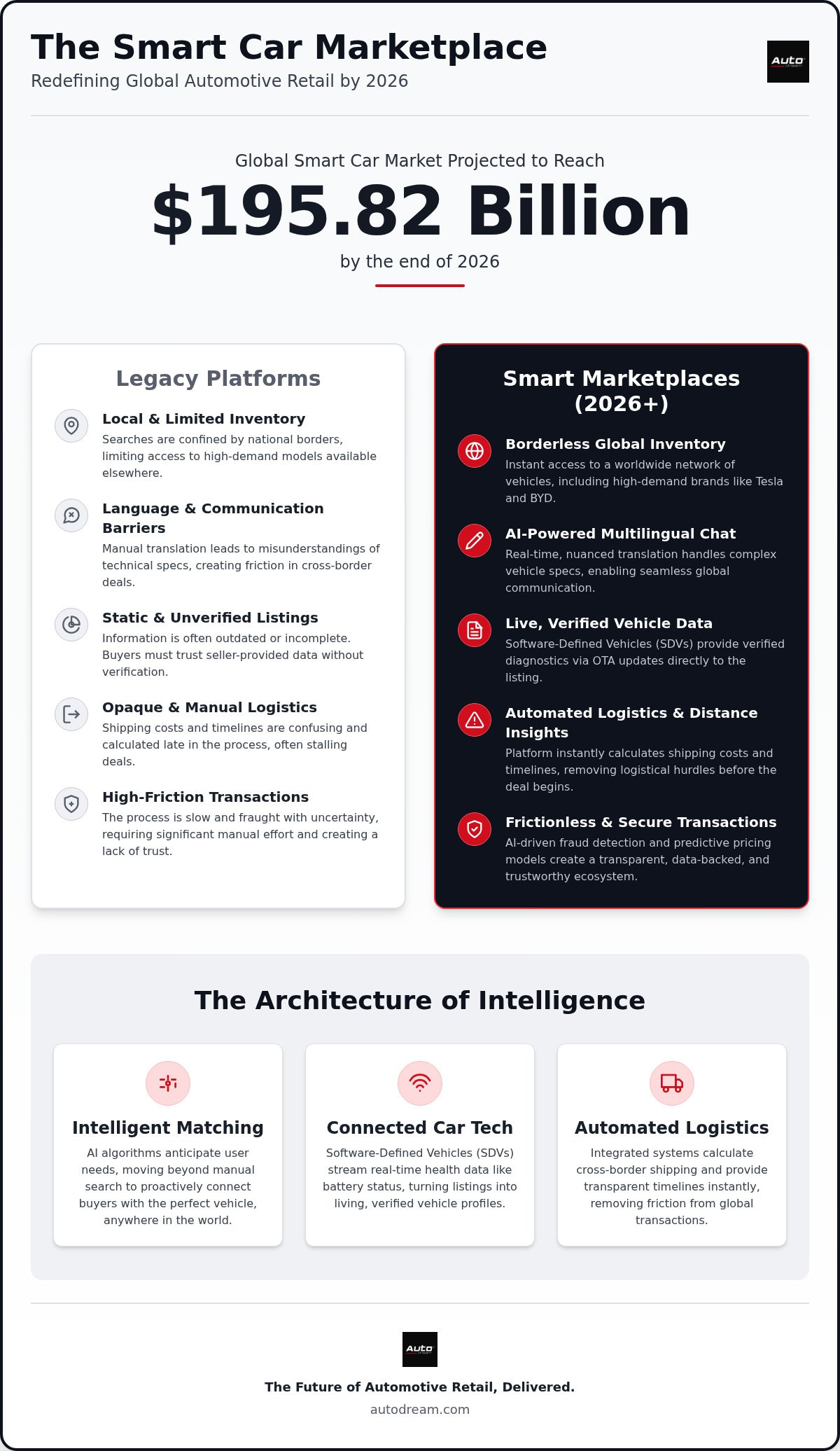
The automotive retail world has moved past the era of digital bulletin boards. In 2026, a smart car marketplace isn't just a place to find a specific brand of compact vehicle; it's a sophisticated, data-driven ecosystem. Static listings have evolved into living profiles, fueled by the rise of software-defined vehicles (SDVs). With the global smart car market projected to reach $195.82 billion by 2026, the focus has shifted from simple transactions to comprehensive lifecycle management. This means that "smart" now describes the intelligence of the platform's logic, moving away from traditional retail models toward a frictionless, platform-as-a-service experience that feels both reliable and cutting-edge.
The Intelligent Infrastructure of Modern Sales
The days of manual browsing through endless pages are over. Modern infrastructure relies on algorithmic matching that anticipates user needs based on real-time data. This evolution is deeply rooted in connected car technology, which allows the marketplace to pull vehicle health data directly into the interface. Instead of wondering about battery degradation in a used EV, buyers see verified diagnostic reports updated via over-the-air (OTA) connections. This level of transparency empowers users, turning every transaction into a data-backed decision rather than a leap of faith. It creates a sense of global connectivity where the platform acts as a knowledgeable facilitator rather than a passive host. This approach ensures that the marketplace isn't just a utility, but a catalyst for achieving personal mobility goals.
Global Reach vs. Local Limitations
National borders no longer define the limits of a car search. Sophisticated buyers in 2026 look toward global inventory to secure high-demand models like Tesla and BYD, which often see varying availability across different regions. A smart car marketplace eliminates the "geographic tax" by integrating automated distance insights; these tools calculate logistics and potential delivery timelines before a user even initiates a conversation. This capability is vital as the industry moves toward large-scale production of collaborative intelligent vehicles. By removing the friction of distance, the market becomes truly decentralized. You're no longer limited by what's on the local lot. Instead, you're empowered by a worldwide network that handles communication and logistics through smart, automated logic, ensuring that your next vehicle is sourced from the best possible market, regardless of where it's currently parked.
The Architecture of Intelligence: AI’s Role in Global Trade
The architecture of modern vehicle trade rests on a foundation of proactive intelligence. In a smart car marketplace, AI isn't a secondary feature; it's the invisible hand that validates every transaction. By 2026, AI-powered systems have moved beyond simple chatbots to become sophisticated facilitators of international commerce. These systems now utilize predictive pricing models that analyze global market fluctuations in real time, ensuring that both buyers and sellers operate with the most accurate data available. This intelligence also serves as a critical defense against fraud. By verifying seller patterns and cross-referencing historical listing data, the platform creates a secure environment where trust is built into the code, not just the contract.
Multilingual Communication as a Catalyst
Global connectivity fails if the users can't understand each other. Real-time translation has evolved to handle the deep technical nuances of vehicle specifications, allowing a buyer in the UK to negotiate with a seller in the UAE without friction. This technology removes the risk of technical details getting lost in translation, which is vital when discussing complex features like ADAS recalibration or battery health. AutoDream serves as a prime example of this evolution, facilitating seamless connectivity across 15 countries. By bridging these linguistic gaps, the platform empowers users to expand their reach without needing a translator. If you're ready to see how these tools can streamline your next deal, you can explore the AI-driven connectivity solutions that are setting the new standard for global trade.
Automated Logistics and Distance Logic
The logistical hurdles of cross-border deals often stall transactions before they begin. Automated distance insights solve this by calculating shipping complexities and potential hurdles before you even click "contact seller." This logic-driven approach is far superior to manual shipping quotes, which are frequently outdated or inaccurate. The system integrates several data points to provide a comprehensive value assessment, including:
- Real-time shipping availability based on current global trade routes.
- Automated fuel type and mileage analysis to determine specific import regulations.
- Dynamic logistics insights that adjust for seasonal shifts in transport costs.
This level of automation ensures that every user has a clear view of the total cost of ownership. It transforms the "search and hope" model of the past into a "match and execute" system that prioritizes efficiency. By handling the complex math of international logistics, the marketplace allows you to focus on finding the right vehicle rather than worrying about the miles in between.
Frictionless Transactions: Smart Marketplaces vs. Legacy Platforms
Legacy platforms rely on a "search and hope" philosophy. You filter by year and make, then hope the seller responds or that the car actually exists in the condition described. This model is fundamentally high-friction, particularly for international deals where the stakes are higher. A smart car marketplace replaces this outdated approach with a "match and execute" system. Here, data drives the discovery process. The decline of manual entry is a major factor in this evolution. Automated feeds now handle the heavy lifting, which saves dealers hours of administrative work and ensures that listings are always current. This shift creates a unified global inventory where luxury and electric vehicles are accessible regardless of the buyer's physical location. The result is a streamlined environment that prioritizes movement over maintenance.
The Professional Advantage: AI-Powered Dealer Dashboards
Professional sellers are rapidly moving away from fragmented tools and clunky spreadsheets. An AI-Powered Dealer Dashboard provides real-time analytics that identify which listings are performing and why. This isn't just about tracking raw views. It's about understanding buyer intent across 15 different countries. By automating customer communication, these platforms ensure that no lead is lost to a time-zone difference or a language barrier. Understanding how AI for auto dealers is transforming the showroom reveals a future where efficiency is the primary competitive advantage. High-volume sellers can now manage global interest without increasing their headcount, using platform logic to handle the repetitive aspects of lead management and visibility. The shift is decisive. It empowers dealers to act as global consultants rather than local clerks.
User Empowerment: Buying Sight Unseen with Confidence
The psychological barrier to buying a car without a physical inspection is falling. In the past, "sight unseen" was a massive risk that few were willing to take. Today, sophisticated buyers prioritize platforms that offer integrated transparency and verification tools. By using specialized online car shopping tools, buyers verify listings against global data sets and vehicle health history. This significantly reduces the hidden costs of international buying, such as unexpected repair needs or documentation errors. When a smart car marketplace handles the verification through automated logic, the need for a physical visit often vanishes. You can confidently source a BYD from Asia or a Tesla from the US, knowing the data provided by the platform is more reliable than a quick walk-around on a dealership lot. This transparency doesn't just build trust; it accelerates the entire global trade cycle.
Navigating the Global Inventory: A Buyer’s Strategic Framework
Sourcing a vehicle across continents requires more than curiosity; it demands a strategic framework built on real-time data. High-value markets often specialize in specific technological ecosystems. The United States remains a primary hub for high-specification Tesla models, while Asian markets offer the most competitive pricing and availability for BYD inventory. A sophisticated smart car marketplace provides the visibility necessary to identify these arbitrage opportunities as they happen. By utilizing automatic distance insights, you can instantly filter out listings that don't align with your logistical requirements, ensuring that every option presented is a viable candidate for import. This data-driven approach removes the guesswork from global sourcing, allowing you to focus on vehicle quality rather than shipping hurdles.
The Tesla Sourcing Strategy
Securing a premium electric vehicle from an overseas seller involves more than just a price comparison. Understanding buying a used Tesla internationally requires a platform that can parse regional software differences and battery health metrics. In 2026, where Level 2+ driving automation is the standard, verifying that a vehicle's hardware supports the latest over-the-air updates is essential. Platform insights allow you to navigate international warranty nuances, ensuring that your investment remains protected even after it crosses a border. This level of foresight is what separates a visionary buyer from one who is simply shopping. You're not just buying a car; you're acquiring a software-defined asset that must remain functional in your home region.
The BYD and EV Expansion
The rapid expansion of the EV market has created new hubs for 'export-ready' inventory, particularly in the UAE and major Asian ports. When sourcing emerging leaders like BYD, you must compare charging standards and fuel type efficiency across different global regions. China’s new 5G network standards for autonomous driving, effective as of September 1, 2026, have professionalized the data logs available for these vehicles. A smart car marketplace leverages these standards to provide a transparent view of a car’s history. Direct negotiation with overseas dealerships becomes simple when you use integrated multilingual tools to bridge the communication gap. This ensures that technical questions regarding V2X connectivity or battery chemistry are answered with precision. If you're ready to expand your search beyond local limits, you can browse global listings to find the exact model that fits your criteria.
Documentation remains the final hurdle in any cross-border deal. The adoption of the UN’s ADS GTR regulations in mid-2026 has helped unify international safety requirements, making the export process more predictable. However, you still need to manage specific customs declarations and compliance certificates. Modern platforms now automate the generation of these documents, pulling data directly from the vehicle’s digital twin. This reduces the risk of administrative errors that could stall your vehicle at a port of entry. By following a structured framework, you transform a complex international transaction into a series of manageable, automated steps.
AutoDream: Empowering the Next Horizon of Automotive Retail
AutoDream stands as the intelligent facilitator of this new era. Operating across 15 countries, it has successfully transitioned the traditional car lot into a sophisticated smart car marketplace. This platform provides the essential infrastructure needed to navigate the complexities of international trade without the usual logistical headaches. By integrating Featured Listing Placement with AI-driven visibility, AutoDream ensures that high-value assets find their ideal match, regardless of geographical distance. Professional dealers are migrating to the AI-Powered Dealer Dashboard because it offers more than just inventory management. It provides a strategic catalyst for efficiency in a fast-paced global market, allowing sellers to scale their operations without increasing administrative friction. By leveraging real-time insights and automated distance logic, dealers can provide instant value to customers in diverse regions, ensuring that every lead is handled with professional precision.
Sophisticated Tools for Individual Sellers
Individual sellers no longer need to feel dwarfed by large dealerships. You can achieve immediate global visibility by utilizing featured car listings, which place your vehicle in front of a curated audience of sophisticated buyers. AutoDream's AI handles the initial "first contact," managing inquiries and filtering leads so you don't have to spend hours responding to basic questions. This system provides professional-grade analytics to every user, allowing you to track interest levels and adjust your strategy based on real-world data. It's a level of empowerment that was previously reserved for industry insiders, now made accessible through smart, intuitive design that prioritizes your time. Sellers can choose between a Standard Vehicle Listing for consistent reach or a Featured Listing Placement to maximize impact in competitive markets. Each tool is designed to work in synergy with the platform's AI, ensuring that your vehicle isn't just listed, but actively positioned for a successful sale.
The Future is Borderless
The roadmap for the future is clear and ambitious. AutoDream remains committed to expanding its ecosystem, further refining the automated mechanisms that remove friction from every transaction. The promise is a car-buying experience that feels modern, visionary, and entirely seamless. As software-defined vehicles become the global standard, the platform will continue to evolve as the primary bridge between current needs and future goals. This is an invitation to join a revolution in automotive commerce. Whether you're sourcing a high-tech EV or listing a premium asset, the horizon of retail is already here. It's borderless, it's efficient, and it's designed for the modern world. By removing the traditional barriers of language and distance, we're creating a smart car marketplace where the only limit is your own ambition. Join us as we redefine what's possible in the digital automotive landscape.
Accelerate Your Journey into the Global Automotive Future
The transition from local browsing to a borderless, intelligent ecosystem is no longer a distant vision; it's the operational standard of 2026. You've seen how AI-driven transparency and automated logistics are dismantling the traditional barriers of distance and language. By prioritizing verified data over guesswork, you gain the empowerment to source high-value assets from the most competitive markets worldwide. This shift toward a sophisticated smart car marketplace ensures that every transaction is rooted in professional efficiency rather than manual effort.
AutoDream acts as your high-tech bridge, connecting buyers and sellers across 15 countries through an advanced dealer management ecosystem and AI-powered multilingual support. Whether you're a professional dealer seeking a catalyst for growth or an individual buyer looking for a frictionless experience, the tools for success are ready. It's time to experience the future of automotive retail on the AutoDream marketplace. Step into a world where global connectivity is the new baseline and your next vehicle is just a smart match away.
Frequently Asked Questions
What exactly is a smart car marketplace?
A smart car marketplace is a data-driven ecosystem that replaces traditional static listings with intelligent, automated logic. It uses AI to facilitate every stage of the transaction, from discovery to delivery. By integrating vehicle health data and global connectivity, these platforms act as a high-tech bridge between buyers and sellers, focusing on removing the logistical hurdles that typically stall international deals.
How does AI help me buy a car from another country?
AI facilitates international purchases by dissolving the barriers of language and distance. It powers multilingual chat systems that translate technical negotiations in real time and uses automated distance logic to assess shipping hurdles. By analyzing global market data, AI helps you identify high-value opportunities in different regions while protecting you from fraudulent listings through sophisticated pattern verification and listing history analysis.
Is it safe to buy a vehicle through an international marketplace?
Buying internationally is significantly safer in 2026 due to the architecture of intelligence built into modern platforms. Smart systems verify seller history and vehicle diagnostics via over-the-air connections, ensuring that the data you see is accurate. Additionally, the adoption of global regulations like the UN’s ADS GTR means that vehicles now meet uniform international safety requirements, which simplifies the verification and compliance process.
How do I calculate shipping and import costs on a smart platform?
You calculate these variables through integrated distance and logistics insights that provide instant clarity on shipping complexities. The platform’s logic-driven tools analyze current trade routes and regional import regulations to estimate the total cost of ownership. This automated approach is much faster than waiting for manual quotes and ensures that you have all the necessary data before you even initiate a conversation with a seller.
Can I use AutoDream if I am a professional car dealer?
Professional dealers are a core part of the AutoDream ecosystem and utilize the specialized AI-Powered Dealer Dashboard. This tool allows high-volume sellers to manage inventory across 15 countries while automating repetitive customer communication tasks. Dealers can also use Featured Listing Placement to maximize visibility in specific global regions, ensuring their high-specification models reach the most relevant and sophisticated buyers in the market.
What brands are most popular on smart car marketplaces in 2026?
Software-defined brands like Tesla and BYD are the most popular choices because their high-tech nature aligns perfectly with a smart car marketplace. These vehicles provide extensive digital logs that the platform can use to verify battery health and software versions remotely. This transparency is essential for buyers who are sourcing vehicles sight unseen from international markets and want to ensure hardware compatibility before purchase.
How does the multilingual chat feature work for car negotiations?
The multilingual chat feature uses sophisticated AI to translate messages instantly between buyers and sellers in different regions. It isn't a generic translator; it's designed to handle technical automotive jargon with professional precision. This ensures that details about autonomous driving levels or charging standards don't get lost in translation, allowing for precise negotiations regardless of the languages spoken by the participants in the deal.
Why should I list my car on a global marketplace instead of a local one?
Listing on a global platform allows you to tap into international demand for specific tech-heavy configurations that might be undervalued in your local economy. It empowers you to find buyers in 15 different countries who are specifically searching for your vehicle's software features or battery type. This global visibility, combined with AI-driven lead management, ensures that your listing reaches the audience most likely to recognize its true value.
Ready to list your car?
Put your vehicle details and photos together, then start your listing on AutoDream.
Create your listing