
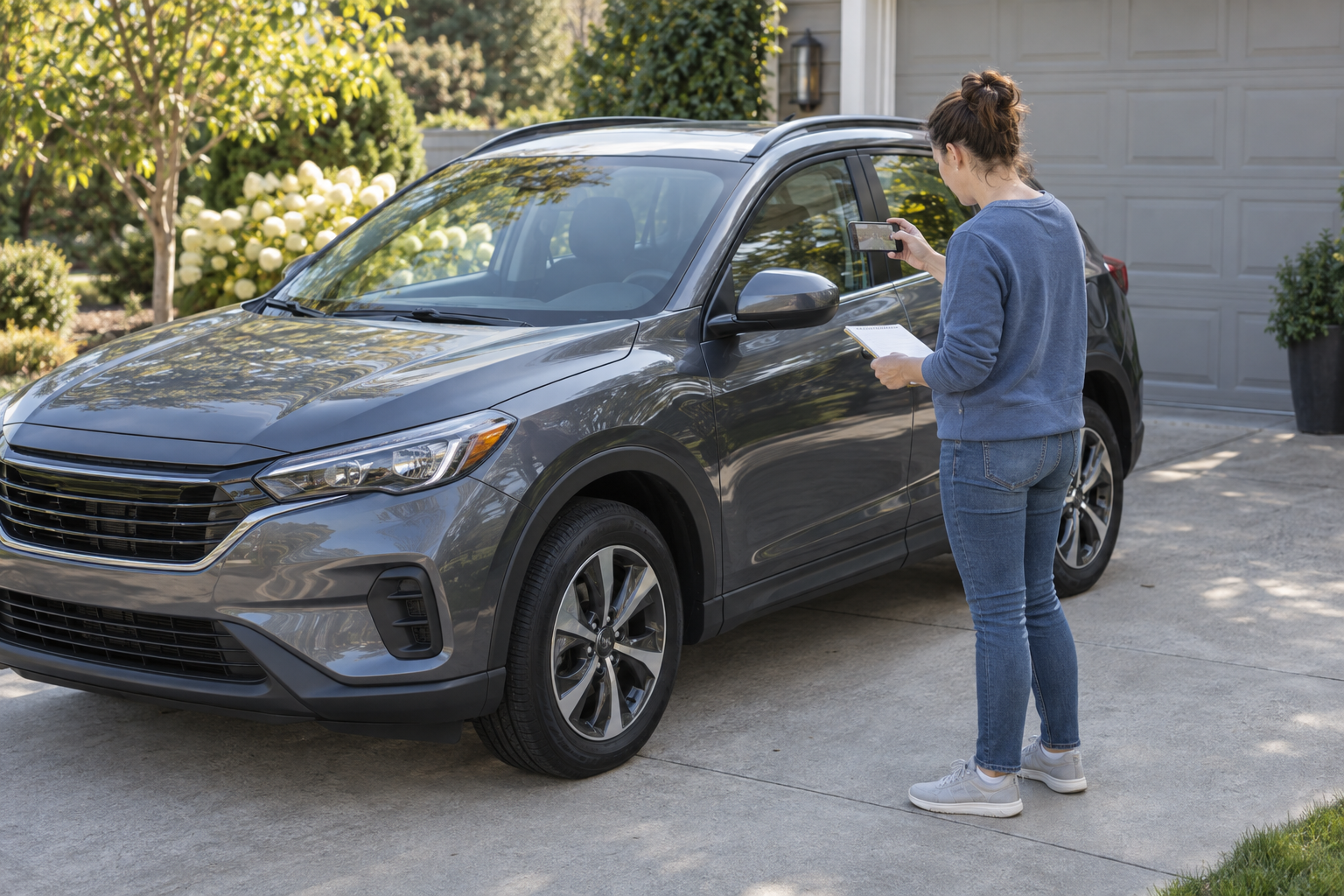
A car advertisement is a snapshot, but the vehicle keeps changing. The odometer increases, a wheel can be scratched, a warning light may appear, a repair can be completed, and an accessory shown in the photos may no longer be included. When one fact changes, the listing text, photos and buyer messages can fall out of sync.
This guide gives private sellers a practical way to update a live advertisement without erasing what changed or turning a recent observation into a guarantee. It does not assume that AutoDream or another marketplace automatically detects, copies or publishes your corrections. The illustration above is fictional and is not a real listing, inspection or condition record.
1. Record the listing's last verified state
Before editing, save a simple dated snapshot of the current advertisement. Record the listing URL, current mileage and unit, asking price and currency, published photo set, included accessories, known condition notes and the date each item was last checked. A screenshot can help, but a short text record is easier to compare.
Use the actual vehicle and your records as the source of truth—not memory and not a copy of the public ad. If the listing says 72,400 miles but the dashboard now shows 72,816, start with the dashboard observation. If the photo gallery shows a second key that is no longer available, start with what will actually be transferred to the buyer.
Label uncertain facts. “Air conditioning worked during a test on September 18” is a dated observation. “Air conditioning has no problems” is a broader claim. A useful update keeps those two statements separate.
2. Use clear triggers instead of waiting for a buyer to notice
Review the ad whenever one of these events occurs:
- the vehicle is driven enough that the displayed mileage is no longer a fair current description;
- new visible damage, interior wear, a warning light, leak, noise or other condition issue appears;
- a repair, service or recall remedy is completed;
- wheels, tires, keys, charging cables, floor mats or other included items change;
- the price, currency, vehicle location or viewing availability changes;
- new records or an inspection result correct an earlier assumption;
- a buyer identifies a mismatch between the listing and the vehicle.
Do not use a single mileage threshold for every vehicle. A car that remains parked may need no mileage edit for weeks, while a daily-driven car can become outdated quickly. The practical question is whether a reasonable buyer would understand the current vehicle from the published number and its date.
3. Update mileage from a direct, dated reading
Park safely, switch the display to the odometer rather than a trip meter, and record the number, unit, date and time. If the vehicle can display miles and kilometers, identify the original display unit and do not silently convert or round the number downward. A recent dashboard photo can support the update, but it does not replace checking the reading carefully.
Write the listing in a way that acknowledges continued use:
Odometer showed 72,816 miles on September 21, 2026. The vehicle is still being driven, so mileage may increase before sale.
Replace the fictional number and date with your own verified information. If you discover that an earlier listing used the wrong unit or number, correct it visibly and tell active buyers rather than editing quietly and hoping nobody noticed.
For U.S. ownership transfers, the online advertisement is not the odometer disclosure itself. NHTSA's odometer-fraud guidance explains that federal law generally requires the seller to provide a written mileage disclosure on the title at transfer and to state when the mileage is incorrect, subject to listed exemptions. Follow the current title and transfer requirements for the vehicle's jurisdiction; a marketplace field or dashboard photo does not replace the required document.
4. Change the words and photos together
If the condition changes, update the description and the relevant image set in the same work session. New wording with old photos creates one kind of mismatch; new close-ups with a description that still says “no damage” creates another.
Use three views for a new visible issue:
- a wide image showing where the issue is on the vehicle;
- a context image showing the full panel, seat, wheel or cargo area;
- a close image showing the visible detail in ordinary light.
Describe what you can observe without diagnosing beyond your evidence:
- “A new scrape is visible on the lower passenger-side rear door; photographed September 21.”
- “The tire-pressure warning light appeared on September 20. Cause has not yet been diagnosed.”
- “The windshield received a small chip near the lower passenger side; no repair has been completed as of this update.”
Do not call a warning light “just a sensor,” a fluid spot “nothing serious” or a repaired panel “perfect” without a reliable basis. The FTC's advertising guidance states that advertising claims must be truthful, not deceptive or unfair, and evidence-based. The safest editing habit is to match every important statement to a current observation, record or qualified assessment.
5. Describe repairs as completed work, not a promise of future condition
After a repair or service, keep the old condition note until you verify the current vehicle and documentation. Then replace it with a dated statement that names the completed work and the evidence you have:
Front brake pads were replaced on September 19, 2026. Invoice available for review. I have not made a broader claim about the condition of the entire braking system.
If a shop gave an estimate but did not perform the work, label it as an estimate. If a warning light went out after service, say what the invoice reports and what you observed; do not promise that it can never return. If bodywork changed the vehicle's appearance, make a new photo set rather than continuing to use pre-repair images.
For safety recalls in the United States, NHTSA's recall lookup searches a specific vehicle by VIN or license plate. A zero-result search, an open recall and a completed manufacturer remedy are different facts. If your listing mentions recall status, recheck the specific vehicle and retain the completion record before claiming that a remedy was performed.
6. Reconcile every item shown or promised
Photos often show objects that buyers may reasonably think are included: a second key, charging cable, cargo cover, roof rack, spare wheel, winter-wheel set, tool kit, manuals or floor mats. If an item is removed, lost, replaced or added, revise the written list and the relevant photo.
Use a simple included/not-included table:
| Item | Current status | Evidence |
|---|---|---|
| Primary key | Included | Physically checked September 21 |
| Second key | Not currently available | Listing text and key photo updated |
| Cargo cover | Included | Current vehicle photo |
| Portable charger | Not included | Removed from gallery and description |
The example is fictional. Inventory the actual items before promising them, and avoid copying an equipment list from another vehicle with the same model or trim.
7. Tell active buyers before they travel or rely on the old ad
Editing the public page is not enough when someone already received the earlier information. Contact any active buyer whose decision or travel plans could reasonably be affected. State what changed, when you learned it, what evidence is available and whether the planned viewing should be reconfirmed.
Before your visit, I want to update you on the car. The odometer showed [current number and unit] on [date], and [specific condition or included-item change] occurred after the original photos. I updated the listing and added current images. Please review them and let me know whether you still want to keep the appointment.
Do not hide the update inside a long message or pressure the buyer to continue. If you do not yet know the cause or repair cost, say that it is unknown. A buyer can decide whether to proceed, request an inspection or cancel.
8. Correct every copy you control
Make a list of every marketplace, social post, dealer page or saved advertisement where the vehicle appears. Update each one separately and record the time. Do not assume that changing one source automatically changes copied listings, partner feeds or screenshots.
After editing, open the public page through the channel's approved review method and verify:
- the mileage and unit are correct;
- the description contains the new condition or repair wording;
- the current photos appear in the intended order;
- removed accessories are no longer shown as included;
- the price, currency and location still match your plan;
- no old headline, thumbnail or cached field contradicts the page.
If a platform keeps showing an old value, record the problem and pause claims that depend on the correction until the public result is clear. Keep the old and new versions for your own audit trail instead of overwriting the only record.
A complete fictional update example
A seller publishes a fictional 2019 hatchback at 61,200 miles. Five days later, the odometer shows 61,487 miles, a small scrape appears on the right rear wheel, and the second key can no longer be located.
The seller photographs the current odometer and wheel in daylight, saves the previous listing snapshot, and changes the advertisement to:
Odometer showed 61,487 miles on September 21, 2026; the car is still being driven. A new cosmetic scrape is visible on the right rear wheel and is shown in the last three photos. One key is currently included; the previously pictured second key is not available.
The seller updates every active channel, checks the public result and sends the change summary to two buyers who had arranged viewings. The message does not claim the wheel is safe, diagnose the scrape or predict the final mileage. It gives each buyer the current facts before travel.
Car-ad update checklist
- Save the current listing URL and dated snapshot.
- Read the odometer directly and record the unit.
- State that mileage may increase if the vehicle is still driven.
- Correct a wrong number or unit clearly.
- Photograph new visible condition in wide, context and close views.
- Describe observations without unsupported diagnosis.
- Keep estimates separate from completed repairs.
- Verify the vehicle after repair before changing the claim.
- Recheck any advertised recall status against the specific vehicle.
- Inventory every key, cable, wheel set and accessory shown.
- Update wording and photos in the same session.
- Tell active buyers about material changes before a visit.
- Correct every listing copy you control.
- Verify the public result instead of assuming the edit worked.
- Keep a dated change log and the prior version.
- Use the correct title and transfer disclosures at the sale.
A trustworthy listing is not one that never changes. It is one that changes when the vehicle does—and leaves a clear record of what was updated, why and when.
Ready to list your car?
Put your vehicle details and photos together, then start your listing on AutoDream.
Create your listing

