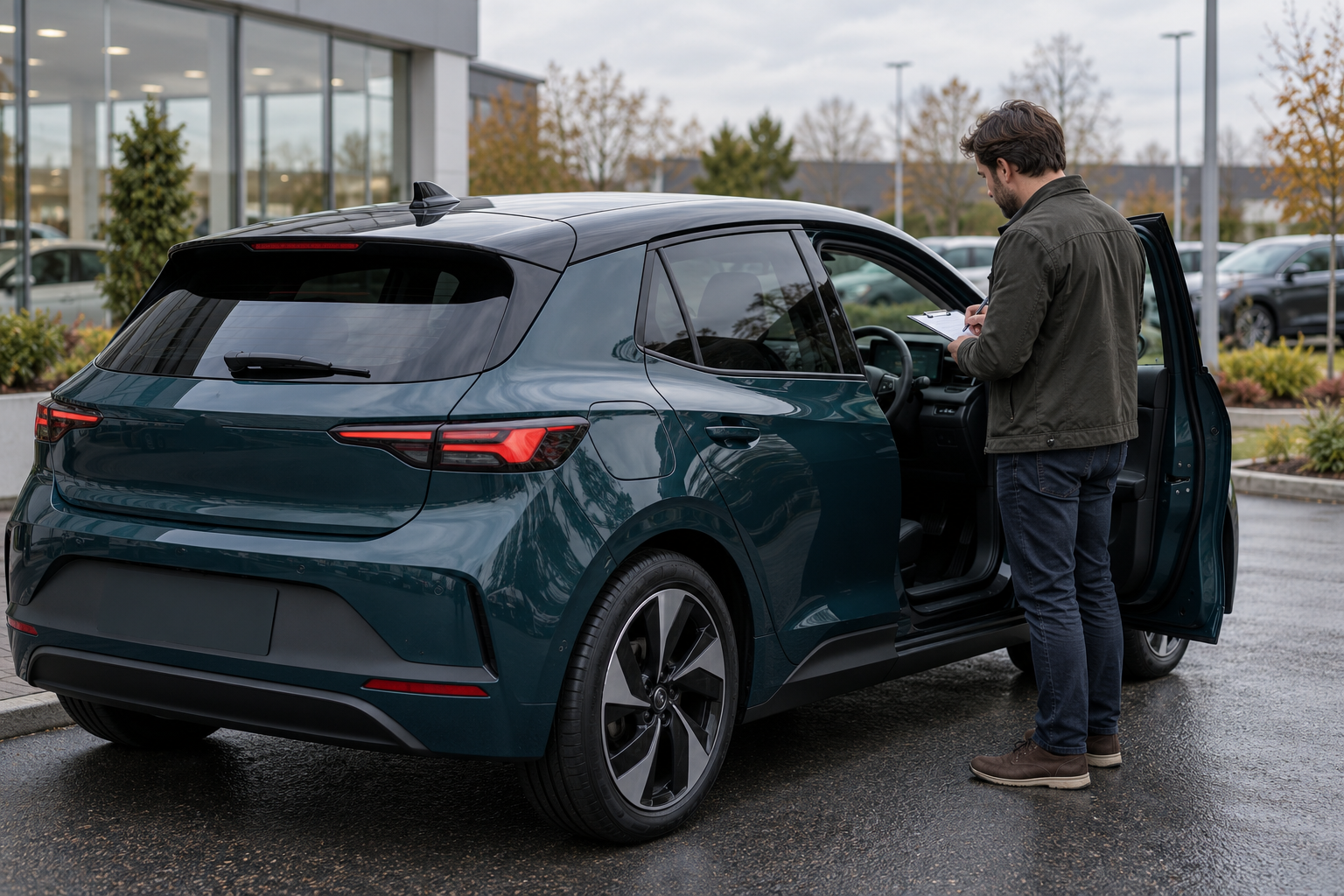
Why does a 2026 Ford Mustang GT cost nearly $28,000 more in Berlin than it does in Detroit? It's a staggering disparity that leaves many buyers wondering if they're simply looking in the wrong hemisphere. When you attempt to compare car prices Europe vs USA, the sticker price is rarely the final word. You've likely felt the frustration of calculating local taxes against the 25% tariff the US imposed on European imports in May 2026. This complexity often breeds hesitation, making global sourcing feel like a logistical gamble rather than a strategic move.
This guide dismantles those barriers, offering a visionary look at how global connectivity can work in your favor. We promise to reveal the structural reasons behind these price gaps and teach you how to leverage market arbitrage to secure your ideal vehicle at the best possible value. You'll learn to decode the gap between Germany's 19% VAT and the US average 6.35% sales tax while mastering a logic-driven framework for calculating total landed costs. We're moving beyond traditional retail limits to show you how to source vehicles with professional precision across 15 global markets.
Key Takeaways
- Master the four-pillar framework to calculate total landed cost, ensuring you account for purchase price, duties, and compliance before committing to a global purchase.
- Understand the structural delta that allows you to compare car prices Europe vs USA, uncovering why high-volume US markets often offer lower base margins than their European counterparts.
- Decode the complexities of European VAT and regulatory hurdles like WLTP to identify where true value resides in the 2026 global market.
- Utilize AI-powered tools such as multilingual negotiation and automated distance insights to remove traditional logistical friction from cross-border transactions.
- Capitalize on the 2026 trade landscape and exchange rate fluctuations to turn regional price disparities into a strategic sourcing advantage.
Table of Contents
The Global Price Delta: Comparing US and European Car Markets
The 2026 automotive landscape reveals a widening chasm between continents. For instance, a 2026 Ford Mustang GT starts at approximately $46,560 in the United States, yet the same model in Germany commands 64,800 euros, which translates to roughly $74,268. This disparity isn't an anomaly. It's a structural feature of the global market. When you compare car prices Europe vs USA, you're observing the intersection of trade policy and consumer culture. The US market operates on a high-volume, lower-margin philosophy, while Europe faces aggressive emissions penalties and higher manufacturing overheads. In June 2026, the European Union eliminated import duties on most US industrial goods, creating a unique arbitrage window for American-made performance vehicles.
The 2026 Snapshot: Average Transaction Prices
Current transaction data shows a stark divide. In the US, the average used car price sits above $30,000, while European buyers often find similar models closer to 20,000 euros. While US "sticker prices" appear lower, they exclude regional sales taxes that average 6.35%. Conversely, European prices are inclusive of VAT, which ranges from 19% in Germany to 22% in Italy. This transparency is crucial for understanding car ownership costs on a global scale. Stricter emissions standards in 2026 have also pushed the price of internal combustion engines (ICE) upward across Europe, making the US a sanctuary for traditional high-displacement vehicles.
Market Dynamics: Volume vs. Customisation
The US "off-the-lot" culture prioritizes immediate availability and standardized trims, which streamlines dealer costs and drives down the final price for the consumer. In contrast, European buyers favor bespoke configurations, leading to longer lead times and premium pricing structures. Market arbitrage in the context of vehicle sourcing is the strategic practice of purchasing a car in a lower-cost region to capitalize on price inefficiencies caused by currency fluctuations, tax variations, or regional supply surpluses. Regional saturation also plays a role. In 2026, the US market sees a surplus of large SUVs, while Europe’s urban-centric saturation drives down the cost of compact electric vehicles, creating a perfect environment for intelligent cross-border sourcing.
Why European Cars Often Carry a Premium
European pricing isn't just a number on a window sticker. It's a complex reflection of social policy and technical rigor. When you compare car prices Europe vs USA, you'll find that the primary culprit for the price gap is often the Value Added Tax (VAT). Unlike the US, where sales tax is added at the point of sale, European prices are inclusive of VAT. This tax ranges from 19% in Germany to 22% in Italy, and even up to 25% in Nordic regions. For a premium vehicle, this single line item can represent $15,000 to $20,000 of the total cost, creating an immediate psychological barrier for those accustomed to American pricing structures.
Taxation and Duties: The Invisible Costs
The tax landscape becomes even more intricate when you look at specific national policies. While Germany maintains a standard 19% rate, nations like Denmark and Norway have historically applied luxury taxes that can effectively double the price of a high-end internal combustion vehicle. However, there's a strategic advantage for global buyers. If you're exporting a vehicle from the EU to a non-EU country, you can often claim a VAT refund, instantly slashing the purchase price by up to 25%. Understanding these mechanisms is the key to mastering market arbitrage. Exploring these variables is easier when using the AI-powered dealer dashboard to filter for compliant international listings.
Homologation: The Technical Barrier
Beyond taxes, the technical requirements for different regions add significant overhead. A car built for the US market must meet EPA standards, while European models adhere to the Worldwide Harmonised Light Vehicles Test Procedure (WLTP). These testing cycles aren't just administrative; they dictate engine tuning and exhaust hardware. Converting a vehicle between these standards involves more than just swapping a speedometer. It requires:
- Lighting adjustments: Replacing US-spec red turn signals with EU-standard amber lights and installing rear fog lamps.
- Software regionalisation: Updating infotainment systems to support local cellular bands, GPS maps, and AI-driven voice assistants.
- Emissions compliance: Modifying particulate filters to meet the strict 2026 Euro 7 standards, which are often more stringent than US federal requirements.
These homologation costs can range from $2,000 to $10,000 depending on the model's complexity. In 2026, the divergence in software features has become a major factor. American vehicles often feature autonomous driving capabilities that aren't yet fully approved in all European jurisdictions, requiring software locks or hardware modifications that further complicate the pricing comparison.
The Total Landed Cost: A Comparison Framework
To accurately compare car prices Europe vs USA, you must look past the dealership window and calculate the "total landed cost." This framework consists of four essential pillars: the purchase price, international shipping, import duties, and technical compliance. While a lower sticker price in the US might seem like an immediate win, the profitability of a cross-border transaction depends on the synergy of these variables. In 2026, the math usually favors the buyer when the price delta exceeds $15,000, a threshold that accounts for the logistical friction of transatlantic movement.
Currency fluctuations remain a pivotal factor in your buying power. As of August 2026, the exchange rate sits at approximately 1 EUR to 1.17 USD. This relatively strong Euro makes American vehicles particularly attractive for European buyers, though you must also factor in "soft costs." These include secure escrow services, professional documentation fees, and independent vehicle history reports. These expenses don't just add to the budget; they provide the security required for high-value global transactions.
Shipping and Logistics
In 2026, you'll choose between two primary transport methods. Roll-on/Roll-off (Ro-Ro) is the most cost-effective solution, where the vehicle is driven onto a specialized vessel. However, for premium models like a Tesla Model S or a high-end Mercedes-Benz, container shipping offers superior protection against the elements and port-side handling. Beyond the ocean freight, you'll need to budget for inland transport from the seller to the port, as well as port handling fees on both sides of the Atlantic. Comprehensive transit insurance is non-negotiable, typically costing 1% to 2% of the vehicle's declared value.
Calculating Duties and VAT for 2026
The trade landscape shifted significantly in May 2026 when the United States implemented a 25% tariff on all European car imports. This makes sourcing a European vehicle for the US market a premium endeavor reserved for high-margin luxury models. Conversely, the European Union's June 2026 decision to eliminate duties on most US industrial goods has opened a frictionless path for American exports. While duties may be zero, you must still account for local VAT, such as Germany's 19% or Italy's 22%, calculated on the combined value of the car and shipping costs. In 2026, vehicles manufactured before 1996 qualify for the 30-year classic car exemption, allowing them to enter the US duty-free while often benefiting from reduced VAT rates in several EU member states.
Leveraging AI and Smart Platforms for Global Sourcing
The digital transformation of the automotive sector has turned a once-fragmented market into a unified global ecosystem. When you compare car prices Europe vs USA, the logistical hurdles often seem insurmountable until you integrate intelligent platform solutions into your search. AutoDream serves as this high-tech bridge, utilizing AI-powered tools to streamline what was previously a manual and error-prone process. By connecting buyers and professional sellers across 15 key global markets, the platform ensures that geographic distance is no longer a barrier to securing the best market value.
Multilingual Negotiation with AI
Negotiating across borders often fails due to simple linguistic nuances. AutoDream’s AI-powered multilingual chat removes this friction by facilitating seamless, real-time communication between US-based sellers and European buyers. This isn't just about basic translation; it’s about technical precision. The system ensures that critical specifications, such as torque ratings, battery health metrics, or emissions compliance data, are accurately understood in the buyer’s native language. This level of clarity builds the trust necessary to finalize five-figure transactions without the need for expensive third-party intermediaries.
Data-Driven Sourcing Strategies
Efficiency in 2026 is defined by data, not just availability. Smart platforms now provide automatic distance insights that allow you to calculate logistical feasibility the moment you view a listing. By understanding the physical distance between the vehicle’s location and the nearest international port, you can better estimate the inland transport component of your landed cost. You can learn more about optimizing your search in our guide on Essential Online Car Shopping Tools for the visionary 2026 global buyer.
Leveraging platform analytics also allows you to track vehicle history and mileage across disparate international databases. This unified view prevents the "mileage washing" that sometimes occurs in cross-border used car sales. By identifying verified professional dealers through the AI Dealer Dashboard, you gain access to a curated inventory that meets high standards for transparency and reliability. This data-centric approach transforms a complex global search into a streamlined, results-oriented experience.
Executing Your Vision: The AutoDream Advantage
AutoDream functions as a high-tech catalyst, transforming the way you compare car prices Europe vs USA from a research project into a tangible acquisition. By connecting buyers and sellers across 15 countries, we've built a bridge that bypasses regional limitations. Our platform prioritizes transparency, especially through Featured Listing Placement, which highlights export-ready vehicles from established sellers. This ensures you're not just finding a car, but identifying a high-quality asset that fits your specific global sourcing strategy. We provide the intelligence; you provide the vision.
Navigating the European used car market requires a level of precision that traditional search engines can't provide. If your goal is to buy a used Tesla internationally, you'll need to verify battery health and software compatibility across borders. AutoDream provides the digital infrastructure to make these assessments with confidence, turning complex data into actionable insights for the modern buyer.
A Sophisticated Ecosystem for Buyers
Our unified interface allows you to browse 15 countries without switching tabs or losing your search context. You can filter inventory by fuel type, mileage, and international shipping readiness to ensure every result aligns with your logistical plan. Detailed pricing insights help you validate your arbitrage strategy by showing real-time market averages. This level of automation means you spend less time on manual comparisons and more time securing value in a competitive global arena.
Next Steps: From Comparison to Acquisition
Success in the 2026 market belongs to those who move with speed and intelligence. You can set up custom alerts for specific US or European models to ensure you're the first to know when a price drop occurs. Before initiating contact, use the AI-Powered Dealer Dashboard to verify seller credentials through our professional network. Once you've identified your vehicle, follow this final checklist: confirm the VAT status, verify the title documentation, and coordinate your independent logistics provider. You're now ready to finalize your first cross-border transaction with professional-grade confidence.
Mastering the Global Automotive Arbitrage
The ability to compare car prices Europe vs USA with precision is no longer a luxury; it's a strategic necessity for the visionary buyer. You've seen how the 2026 trade landscape has redefined value, moving the focus from sticker prices to total landed costs. By understanding the interplay between Germany's 19% VAT and the US duty-free classic car thresholds, you can identify arbitrage opportunities that others overlook. Success in this complex market depends on the tools you use to bridge the gap between continents.
AutoDream provides that bridge. With AI-powered multilingual chat and advanced dealer analytics, we remove the friction of cross-border negotiation. Our global reach across 15 countries ensures you have access to a curated ecosystem of professional sellers. It's time to move beyond regional constraints and secure the vehicle you've always wanted at its true global value. Explore global inventory and compare prices on AutoDream today and take command of your sourcing journey.
Frequently Asked Questions
Why are cars so much cheaper in the US compared to Europe?
Cars in the US are more affordable due to a high-volume, lower-margin sales philosophy and significantly lower taxation. While European prices include VAT between 19% and 25%, US sticker prices exclude a national average sales tax of just 6.35%. This structural difference, combined with intense market competition and a preference for standardized inventory, allows American dealerships to maintain lower price points than their European counterparts.
What is the average cost of shipping a car from the USA to Europe in 2026?
Shipping costs in 2026 fluctuate based on the transport method and current fuel surcharges. Roll-on/Roll-off (Ro-Ro) remains the most economical choice for standard vehicles, while container shipping provides a secure, enclosed environment for luxury models. You should also budget for transit insurance, which typically costs 1% to 2% of the vehicle's value. Total logistics expenses depend heavily on the distance between the origin dealership and the destination port.
Do I have to pay VAT when importing a car from the US to the EU?
You must pay the destination country's standard VAT rate when importing a vehicle into the European Union. This tax is calculated based on the total value of the car plus the cost of shipping and any applicable duties. For example, importing into Germany incurs a 19% VAT, while Italy requires 22%. It's a critical component when you compare car prices Europe vs USA to determine the final landed cost of your investment.
Is it possible to import a used Tesla from the US to Europe?
Importing a used Tesla is possible, but it requires specific technical adaptations for the European market. US models utilize the NACS charging port, whereas Europe standardizes on CCS2; this necessitates a hardware conversion or a reliable adapter. Additionally, you'll need software regionalization to ensure the navigation, cellular connectivity, and AI features function correctly. Verification of battery health through digital tools is essential before finalizing the purchase.
What are the main differences between US and European car specifications?
Technical specifications diverge primarily in lighting, emissions, and software logic. US vehicles often use red rear turn signals, which you must replace with amber lights to meet EU standards. European Euro 7 emissions requirements in 2026 are also more stringent than many US federal regulations, potentially requiring exhaust modifications. Certain autonomous driving features approved in the US may be restricted or require software locks in specific European countries.
Can I use a US car warranty in Europe?
Manufacturer warranties are almost always regional and don't transfer across the Atlantic. If you buy a car in the US and move it to Europe, the local European dealers aren't obligated to honor the original American warranty. To mitigate this risk, sophisticated buyers often secure third-party international warranty coverage or budget for potential out-of-pocket repairs as part of their overall market arbitrage strategy. It's a vital factor in long-term ownership costs.
How long does the international car import process take?
The entire international import process generally spans 6 to 10 weeks from the initial purchase to final registration. Ocean transit across the Atlantic accounts for approximately 3 to 4 weeks, while the remaining time is divided between inland transport, customs clearance, and technical homologation. Using smart platforms to coordinate with professional dealers can reduce administrative delays, but logistical timelines remain subject to port congestion and vessel availability.
Is it worth importing a car if the price difference is less than 20%?
Importing a vehicle is rarely profitable if the price delta is below 20%. The combined costs of shipping, import duties, VAT, and technical compliance typically range from 15% to 25% of the car's value. When you compare car prices Europe vs USA, the most successful sourcing strategies target a price difference of at least $15,000. This margin ensures the transaction remains financially viable after accounting for all logistical and regulatory expenses.
Ready to list your car?
Put your vehicle details and photos together, then start your listing on AutoDream.
Create your listing