The border is no longer a barrier for the modern collector; it's a digital gateway that rewards intelligence over luck. You've likely faced the headache of fragmented information on regional portals or the looming dread of unexpected customs duties. Trying to align vehicle specifications with strict local emission zones can feel like solving a puzzle with missing pieces. Mastering international car sale documents is the catalyst you need to turn a complex logistical challenge into a seamless acquisition.
This guide delivers a sophisticated framework for regulatory alignment and frictionless delivery. We'll detail the impact of China's 180-day rule, the UK's shifting duty landscape, and how AI-powered tools are now the standard for verifying compliance. You're about to gain a clear roadmap for moving through 2026's global vehicle market with total confidence. From understanding the U.S. 25-year import eligibility for 2001 models to utilizing automated verification, we've mapped out the path to a successful vehicle delivery.
Key Takeaways
- Understand the evolution of international car sale documents as they transition into a digital-first framework designed for global standard harmonization.
- Master the essential logistics of cross-border transfers by identifying the specific functions of title documents like the Bill of Lading and Commercial Invoice.
- Navigate technical barriers with foresight by aligning vehicle specifications with the latest Euro 7 emission standards and regional safety requirements.
- Architect a precise financial strategy for your purchase by accurately decoding Harmonized System (HS) codes and regional tax variations.
- Leverage the AutoDream platform's AI-driven communication tools to remove linguistic and regulatory friction from your international sourcing strategy.
Table of Contents
- The Evolving Landscape of International Car Sale Documents in 2026
- Essential Documentation for Seamless Cross-Border Vehicle Transfers
- Technical Compliance: Navigating Safety and Emission Standards
- Calculating the Financial Architecture of Import Taxes and Duties
- Leveraging AutoDream for Frictionless Global Sourcing
The Evolving Landscape of International Car Sale Documents in 2026
The global automotive market has moved beyond the era of static paperwork. In 2026, we define international car sale documents as a dynamic fusion of digital and physical proof certifying a vehicle's safety, environmental, and fiscal compliance. This evolution reflects a broader shift toward global harmonization, where vehicle standards are increasingly validated through real-time digital data-sharing between customs authorities. The days of waiting weeks for physical mail are ending; regulations are now data-centric, prioritizing the speed of information over the weight of a folder.
For the modern, tech-savvy buyer, this transition demands a new skill: Regulatory Intelligence. It's no longer enough to simply possess the titles. You must understand how digital signatures and automated verification systems interact with international databases. This intelligence allows buyers to anticipate hurdles before they arise, ensuring that every piece of data aligns with the destination's specific entry requirements. By treating documentation as a strategic asset rather than a bureaucratic hurdle, you gain a significant advantage in the global marketplace.
Why Regional Compliance Matters for Global Sourcing
Success in cross-border purchasing requires a clear distinction between temporary and permanent vehicle importation rules. While temporary entry might offer lower initial barriers, permanent importation demands a comprehensive vehicle registration certificate and proof of local standard adherence. The rise of regional Green Zones, such as the strict Euro 7 zones expanding across Europe in 2026, has added a layer of complexity. If a vehicle's digital environmental profile doesn't match these local zones, it may be barred from entry regardless of its mechanical condition. Achieving secure cross-border vehicle transactions depends entirely on this precise regulatory alignment, ensuring the vehicle you buy is actually legal to drive upon arrival.
The Role of Reciprocity in 2026 Trade Agreements
Modern trade agreements have fundamentally simplified the movement of used vehicles through the principle of mutual recognition. Trade blocs now frequently share Type Approval data, allowing a vehicle certified in one jurisdiction to be accepted in another with minimal friction. For instance, the UK-Japan Comprehensive Economic Partnership Agreement has streamlined imports by recognizing shared safety benchmarks, often reducing import duties to 0% for eligible cars. This reciprocity ensures that the technical specifications of a vehicle are respected across borders without requiring repetitive testing. Ultimately, reciprocity reduces the need for expensive physical vehicle modifications by acknowledging that high-quality standards in one market meet the safety requirements of another.
Essential Documentation for Seamless Cross-Border Vehicle Transfers
Transitioning a vehicle across borders in 2026 requires more than physical transport; it demands a synchronized digital identity. Your international car sale documents act as the definitive proof of ownership and compliance. The core of this set is the Bill of Lading, which serves as the primary title document for maritime transit. Without it, you don't legally control the cargo during its journey across the ocean. This document is the anchor of your logistics strategy.
Next is the Commercial Invoice. This isn't just a receipt. It provides the precise transaction value that customs officers use for assessment. For those looking into U.S. import requirements, this document is vital for establishing the vehicle's tax base correctly. You'll also need a Certificate of Conformity (CoC) to prove the car meets regional technical and environmental specs. Finally, an Export Certificate from the origin country verifies that the vehicle is formally cleared for departure. These four documents form the baseline of a successful transfer.
By 2026, digital customs declarations have become the global standard. This technology allows you to pre-clear inventory before the ship even docks. It removes the friction of physical inspections and keeps your timeline on track. Smart buyers use these digital filings to ensure their international car sale documents are verified by customs AI long before the vehicle arrives at the port of entry.
Verifying Vehicle Title and Provenance
Ensuring the VIN matches digital ownership records across international databases is critical. You must check for outstanding liens or encumbrances in the origin country to avoid legal traps. Using an AI-powered dealer dashboard allows you to access distance insights, verifying a vehicle's physical history against its paperwork with surgical precision. This level of transparency eliminates the risk of purchasing "ghost" inventory or vehicles with clouded titles.
The Emergence of Digital Passports for Used Vehicles
We're seeing a rapid shift from paper logs to blockchain-based digital passports. These passports aggregate service history, accident reports, and ownership changes into a single, unalterable file. This technology speeds up the dutiable entry process because customs AI can verify the data instantly. Storing these digital copies ensures you're ready for immediate verification at any stage of the sale, providing a frictionless experience for both the buyer and the seller.
Technical Compliance: Navigating Safety and Emission Standards
Technical compliance represents the most rigorous phase of the sourcing process. It's where the physical reality of the vehicle meets the strict legal requirements of the destination country. Your international car sale documents must provide granular evidence that the vehicle adheres to specific safety and environmental benchmarks. While a car might be legal in Tokyo, it could require significant modifications to clear customs in Los Angeles or Berlin. This isn't just about mechanical parts; it's about the data profiles that govern how these machines operate in different jurisdictions.
Safety standards vary significantly between major markets. The US DOT (Department of Transportation) focuses heavily on crashworthiness and occupant protection, whereas the European Euro-NCAP emphasizes pedestrian safety and active safety technology. These differences often manifest in physical requirements for bumpers and lighting. You might need to swap out red rear indicators for amber ones or adjust headlight aim to suit right-hand drive environments. Additionally, software compliance has become a critical hurdle. Infotainment and GPS systems must be compatible with destination networks, or they risk becoming expensive, non-functional hardware upon arrival.
Environmental regulations are also tightening. The 2026 Euro 7 standards have fundamentally changed the import landscape for used petrol and diesel cars in Europe. These rules target not just exhaust emissions, but also particles from brakes and tires. If your documentation doesn't explicitly verify compliance with these evolving thresholds, the vehicle may be denied entry to major urban Green Zones.
Importing Electric Vehicles: Battery and Software Audits
Electric vehicles introduce unique logistical challenges. When importing a used electric vehicle internationally, you must account for regional software lockouts and charging standard variations, as specific manufacturers may implement such restrictions. EU and UK markets now require specific battery health certifications for customs clearance to ensure the vehicle meets long-term sustainability targets. Buyers must also verify that Over-The-Air (OTA) features and safety updates will continue to function across borders, as some manufacturers restrict software functionality based on the vehicle's original sale region.
Physical Inspections and Pre-Shipment Verifications
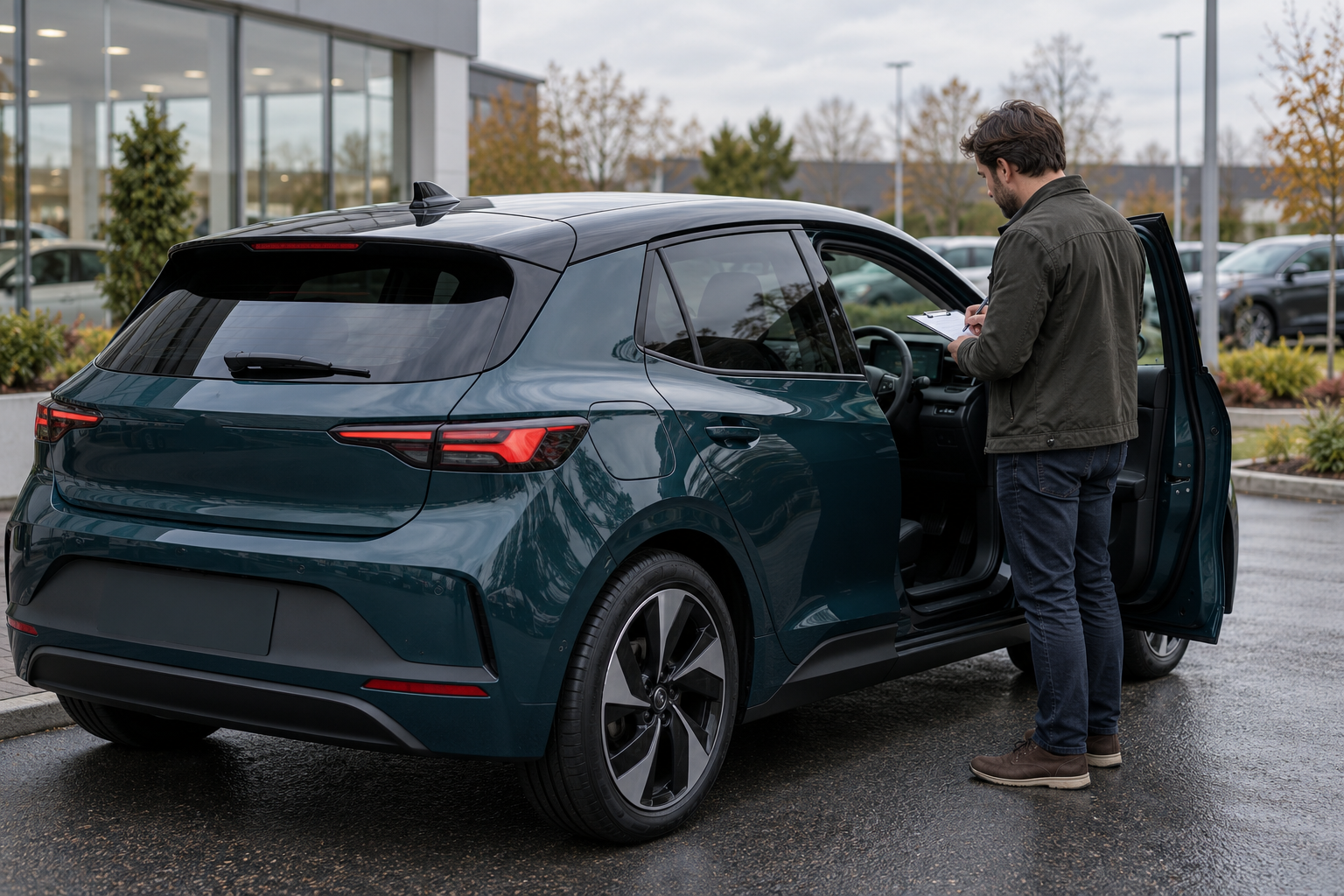
A third-party inspection is your best defense against documentation fraud. These specialists verify that the VIN on the chassis matches the international car sale documents provided by the seller. Beyond mechanical health, you must satisfy the Cleanliness Rule. Customs agencies, particularly in the US and Australia, will trigger quarantine delays if a vehicle arrives with foreign soil or pests in the undercarriage. Following the correct vehicle export procedures includes a deep steam clean before the vehicle is loaded. By 2026, the industry has moved toward remote virtual inspection standards, where high-resolution sensors and AI verify the vehicle's condition for global trade databases before it even leaves the port.
Calculating the Financial Architecture of Import Taxes and Duties
Mastering the financial architecture of a cross-border purchase requires a shift from simple price-checking to sophisticated data analysis. At the core of this process are the global Harmonized System (HS) codes, which customs authorities use to categorize your vehicle and determine its duty rate. Your international car sale documents must reflect the correct HS classification to avoid overpayment or costly delays at the border. In 2026, these calculations have become increasingly complex as governments integrate environmental performance directly into their fiscal policies.
Analyzing VAT and GST variations is equally critical for maintaining your margins. For instance, importing a vehicle into the UK typically involves a 10% customs duty and a 20% VAT on the combined value of the car and shipping. However, under the UK-Japan Comprehensive Economic Partnership Agreement, Japanese-manufactured cars enjoy a 0% import duty as of 2026, though the 20% VAT remains applicable. Meanwhile, the base import duty for passenger cars into the U.S. stands at 2.5%, while trucks face a much higher 25% rate. You also need to account for the environmental levies of 2026, often called gas guzzler taxes, which penalize high-emission vehicles. Optimizing for these levies involves choosing inventory that meets the latest efficiency thresholds, turning environmental compliance into a financial advantage.
Protecting your budget also means managing currency fluctuation with foresight. The gap between purchasing a vehicle and clearing customs can span 30 days or more. Significant shifts in exchange rates during this window can erode your capital. Sophisticated buyers use financial hedging or fixed-rate agreements to lock in their acquisition costs early, ensuring the final price remains within their visionary budget despite market volatility.
The True Cost of Ownership: Beyond the Listing Price
The sticker price is merely the starting point of a global transaction. A visionary buyer factors in port handling fees, agent commissions, and potential storage costs during the clearance phase. Utilizing online car shopping tools allows you to estimate the total landed cost with high precision before committing funds. Don't forget to identify potential tax exemptions. Returning residents, diplomatic staff, or those importing certified classic vehicles (like those manufactured in 2001 now eligible for the U.S. 25-year rule) can often bypass standard duty rates with the correct supporting paperwork.
Smart Financial Hedging for International Transactions
Security is paramount in high-value global sourcing. We recommend using secure escrow services that protect your funds until both regulatory and document clearance are achieved. Modern platforms now utilize AI to predict tax liabilities by analyzing real-time trade and tariff data, providing a level of foresight previously unavailable to individual collectors. Preparing a comprehensive Total Landed Cost spreadsheet is no longer optional; it's the blueprint for a successful acquisition. To streamline your next transaction and verify your international car sale documents with precision, explore our AI-powered dealer dashboard and take control of your global sourcing logic.
Leveraging AutoDream for Frictionless Global Sourcing
AutoDream serves as the intelligent facilitator for the modern automotive era, connecting buyers and sellers across more than 15 countries with surgical precision. While the logistical hurdles of 2026 remain complex, our platform acts as a high-tech bridge between expansive global inventory and the rigid demands of local regulatory compliance. We've replaced the traditional, fragmented approach to sourcing with a streamlined ecosystem designed for speed and reliability. This isn't just about finding a car; it's about mastering the data that allows that car to cross borders without delay.
Communication is often the primary point of failure in international trade. Our AI-powered multilingual chat removes the language barrier entirely, allowing for nuanced discussions regarding international car sale documents and specific regional requirements. Whether you're clarifying tax liabilities in Italian or verifying safety certifications in Japanese, the platform translates technical jargon in real time. For professional importers managing high-volume inventory, our AI-Powered Dealer Dashboard provides a centralized command center to track every document's status. It ensures that your international car sale documents are always audit-ready and aligned with the latest trade protocols. This movement towards digital efficiency is mirrored in other sectors; for example, healthcare providers looking to optimize their operations can discover Healthcare Automations to see how AI is transforming administrative workflows.
Finding Compliant Inventory with Smart Filters
The search for a global vehicle should start with compliance, not just aesthetics. AutoDream's smart filters allow you to isolate vehicles that already meet specific regional safety and emission standards, such as Euro 7 or US DOT. By integrating distance insights into the search process, you can identify vehicles with the lowest logistical friction and the lightest documentation load. This foresight is essential for anyone analyzing the European used car market trends for 2026 sourcing, where environmental zones shift rapidly. Choosing the right vehicle from the start prevents the need for costly modifications later.
Connecting with Verified International Dealers
Trust is the foundation of any high-value transaction. The AutoDream Verified Seller badge is a critical tool for reducing the risk of document fraud, signaling that a dealer has met our rigorous standards for transparency and data accuracy. Many of our professional partners utilize AI for auto dealers to automate the generation and verification of essential paperwork, ensuring a frictionless handoff. This synergy between buyer and seller platforms creates a secure environment for even the most complex acquisitions. Ready to start your journey? Discover your next compliant vehicle on AutoDream and experience the future of global sourcing.
Secure Your Global Automotive Future
The transition to a data-centric market has redefined the acquisition process. We've analyzed how international car sale documents have evolved into a digital-first framework where real-time verification and technical alignment take precedence over manual paperwork. By mastering the financial architecture of duties and the strict safety standards of 2026, you've moved from being a participant to an expert in the cross-border landscape. This knowledge is your primary tool for achieving a frictionless purchase.
AutoDream acts as the intelligent facilitator for your next acquisition. Our platform features AI-powered multilingual chat for seamless negotiation and distance insights for smarter sourcing decisions. Trusted by professional dealers across 15 countries, we ensure your transition into the global market is both sophisticated and secure. Explore the global marketplace on AutoDream today and confidently navigate the next horizon of vehicle ownership. Your vision for a world-class vehicle is now within reach.
Frequently Asked Questions
Can I import a car that does not meet local emission standards in 2026?
Importing a vehicle that fails to meet local emission standards is generally prohibited for permanent registration. In 2026, the Euro 7 standards impose strict limits on exhaust and non-exhaust emissions across Europe. Unless the vehicle qualifies as a classic under the 30-year rule in the EU or the 25-year rule in the U.S., it will likely be denied entry. Always verify the vehicle's technical profile against destination green zone requirements before initiating the transfer.
How much does it typically cost to modify a car for international import compliance?
Modification costs depend on the technical gap between the origin and destination standards. Common adjustments include re-aiming headlights, installing amber indicators, or modifying bumpers to meet regional safety benchmarks. While minor lighting changes might cost several hundred dollars, complex engine or structural modifications can reach significantly higher amounts. It's essential to factor these compliance expenses into your total landed cost spreadsheet to maintain a sophisticated acquisition budget.
What is the 25-year rule for car imports, and does it still apply to modern EVs?
The 25-year rule allows vehicles manufactured in 2001 to enter the U.S. in 2026 without meeting modern safety or EPA standards. This exemption applies to any propulsion system, including early electric vehicles or hybrids produced that year. While most 2001 imports are classic internal combustion models, the rule provides a legal pathway for any vehicle that has reached the quarter-century milestone, regardless of its original software or battery configuration.
Is a Certificate of Conformity required for every international vehicle purchase?
A Certificate of Conformity (CoC) is not universally required but is a cornerstone of the international car sale documents needed for EU and UK registrations. It provides the technical data necessary to prove the vehicle meets European Type Approval. If you're importing from outside these regions, you may need an Individual Vehicle Approval (IVA) test instead to verify that the car's specifications align with local safety and environmental laws.
How long does the regulatory clearance process typically take for a used car?
Regulatory clearance typically spans 14 to 30 days depending on the port of entry and the accuracy of your digital filings. In the UK, importers must notify HMRC via the NOVA system within 14 days of the vehicle's arrival. Utilizing digital customs declarations can accelerate this timeline significantly. By pre-clearing your international car sale documents through AI-powered platforms, you reduce the risk of manual inspection delays and ensure a more efficient delivery.
What happens if my imported vehicle fails the local safety inspection?
If a vehicle fails a local safety inspection, it cannot be registered for road use until the identified faults are corrected. In the UK, vehicles under 10 years old must pass an Individual Vehicle Approval (IVA) test, which costs approximately £199. Failure requires a re-test after repairs are made. If the vehicle cannot be brought into compliance, customs authorities may mandate its destruction or re-exportation at the owner's expense.
Do I need to pay VAT on a used car imported from another country?
You're almost always required to pay Value Added Tax (VAT) when importing a used car from a non-domestic market. For example, the UK applies a 20% VAT on the combined total of the vehicle's value and shipping costs. Even if customs duties are reduced to 0% under trade agreements like the UK-Japan CEPA, the VAT remains a mandatory fiscal requirement. Accurate commercial invoices are vital for ensuring this tax is calculated correctly.
How can AI tools help me verify car import regulations before I commit to a purchase?
AI tools provide foresight by analyzing real-time trade data and regional regulatory databases before you commit capital. These intelligent systems can instantly flag potential compliance issues, such as China's 180-day rule for used car exports or specific battery health requirements in the EU. By leveraging automated verification, you can confirm that your inventory is eligible for import, removing the logistical friction that typically plagues manual cross-border transactions.
Ready to list your car?
Put your vehicle details and photos together, then start your listing on AutoDream.
Create your listing