What if the $40,000 price tag on that vintage European sports car is actually just the opening bid in a high-stakes logistical auction? Most buyers enter the global market with a clear vision of their dream vehicle, only to find themselves stalled by a maze of shifting maritime regulations and unpredictable port surcharges. It's frustrating to watch a perfect acquisition lose its luster as you encounter the hidden costs of buying a car overseas. You deserve a strategy that matches your ambition with technological precision and forward-thinking logic.
This guide empowers you to master the complexities of cross-border vehicle transport. You'll learn to calculate a precise Total Landed Cost by accounting for the 0.3464% Merchandise Processing Fee and the latest Section 301 tariff structures. We'll explore how 2026 environmental maritime regulations influence freight volatility and provide strategies to minimize expenses through intelligent sourcing. By the end, you'll have the confidence to acquire vehicles across fifteen international markets with the efficiency of a seasoned logistics professional, ensuring every transaction is as seamless as it is profitable.
Key Takeaways
- Experience the evolution of digital-first logistics and learn how automated customs clearing is transforming the speed and efficiency of international vehicle acquisitions in 2026.
- Compare the pragmatic benefits of RoRo transport against the high-security environment of containerized shipping to select the optimal freight method for your specific vehicle.
- Master the Total Landed Cost framework to identify and mitigate the hidden costs of buying a car overseas, from maritime surcharges to complex regional import duties.
- Optimize your acquisition strategy by leveraging advanced distance insights to source from global regions that naturally minimize freight expenses and logistical friction.
- Utilize AI-driven negotiation tools and sophisticated data dashboards to streamline documentation and make calculated logistical decisions before the transport process begins.
Table of Contents
- Decoding the Architecture of Global Vehicle Logistics and the Hidden Costs of Buying a Car Overseas
- The Primary Cost Drivers: From Ocean Freight to AI Precision
- Calculating Total Landed Cost: Beyond the Freight Quote
- Strategic Optimization: Reducing Friction and Freight Expenses
- Seamless Sourcing: Integrating Logistics into the Smart Marketplace
Decoding the Architecture of Global Vehicle Logistics and the Hidden Costs of Buying a Car Overseas
The global automotive market has undergone a radical transformation. Sourcing a vehicle no longer requires physical presence in a foreign showroom. Instead, sophisticated buyers utilize digital-first logistics and automated clearing systems to bridge the gap between continents. Success in this borderless environment depends on your ability to identify the hidden costs of buying a car overseas before the first invoice arrives. In 2026, shipping costs aren't just line items. They're the strategic pivot point that determines whether an acquisition is a visionary investment or a logistical liability.
The Evolution of Cross-Border Connectivity
Smart marketplaces have dismantled the traditional barriers to international sourcing. By integrating real-time data and distance insights, platforms allow you to filter global inventory with surgical precision. Modern buyers prioritize this transparency over the lowest possible quote. They understand that a cheap rate often masks systemic inefficiencies. Whether you're dealing with Grey import vehicles or manufacturer-certified exports, the goal is a frictionless transition. High-tech facilitators now provide the intelligence needed to predict logistical timelines with remarkable accuracy. This turns a complex cross-border journey into a streamlined sequence of events.
Regulatory Shifts Affecting 2026 Freight Rates
The 2026 logistical landscape is defined by new maritime environmental standards. Green shipping lanes and carbon taxes have introduced dynamic surcharges that fluctuate based on the vessel's fuel efficiency. While these regulations support global sustainability, they add layers to the hidden costs of buying a car overseas that many buyers overlook. Automated port systems are also changing the game. These facilities use AI to manage containers, which can reduce handling time but often involve updated technology fees.
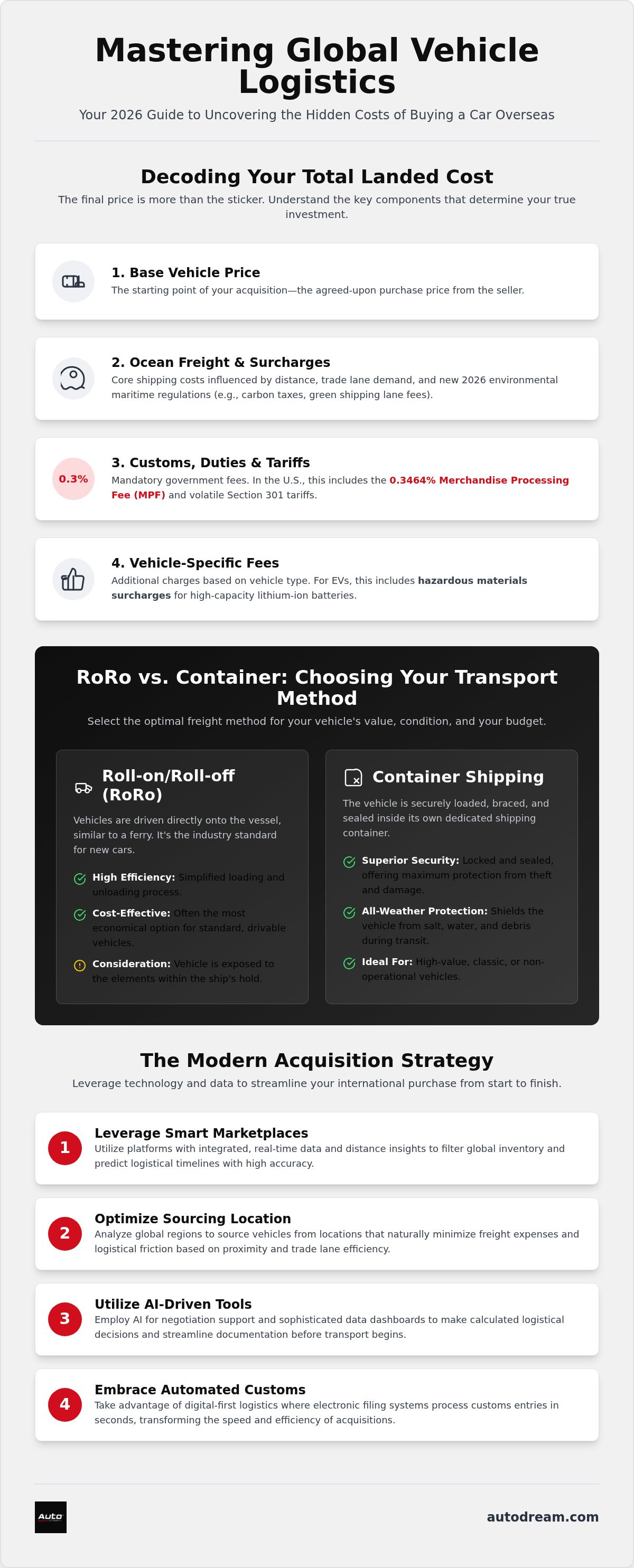
Staying ahead requires a grasp of specific regulatory data points. For instance, the U.S. Customs and Border Protection charges a Merchandise Processing Fee (MPF) of 0.3464% for 2026. Combined with the volatility of Section 301 tariffs, these small percentages can significantly impact your total expenditure. Fortunately, the digitization of documentation is finally reducing administrative overhead. Electronic filing systems now process customs entries in seconds, replacing the paper-heavy workflows of the past and allowing for faster, smarter capital allocation.
The Primary Cost Drivers: From Ocean Freight to AI Precision
Logistical efficiency in 2026 relies on a deep understanding of the variables that dictate your final invoice. While the purchase price is visible, the hidden costs of buying a car overseas often reside in the physical dimensions and technological requirements of the vehicle itself. Distance remains a primary factor, but the complexity of the trade lane and the specific method of transport carry equal weight in your financial strategy. Sophisticated buyers don't just look at the map; they analyze the entire logistical ecosystem to find points of optimization.
Electric vehicles (EVs) have introduced a new layer of complexity to global transport. Shipping modern electric vehicles in 2026 involves specific hazardous materials surcharges due to high-capacity lithium-ion batteries. These specialized fees reflect the rigorous handling and fire-suppression protocols required on modern car carriers. Understanding these technical requirements allows you to calculate a more accurate total landed cost before committing to a purchase. Additionally, trade lane demand fluctuates throughout the year. Identifying 'off-peak' windows allows you to capitalize on lower demand and more predictable vessel availability, turning a standard purchase into a calculated logistical win.
RoRo vs. Container: Choosing Your Transport Tier
Roll-on/Roll-off (RoRo) remains the high-efficiency standard for drivable vehicles. It's often the most cost-effective solution for standard passenger cars because it simplifies the loading process. However, containerized shipping offers a superior tier of security and protection from the elements. You can choose between sole-use containers for maximum privacy or shared containers to balance protection with budget. For high-value luxury assets where speed is the most critical variable, air freight provides a premium service that justifies its cost through rapid delivery and reduced handling.
Vehicle Specifications and Their Financial Impact
Your freight quote is fundamentally tied to the vehicle's curb weight and cubic volume. Larger SUVs or heavy armored vehicles occupy more space and require more energy to transport, leading to higher base rates. Accuracy in your documentation is vital. Misreporting fuel types or mileage can lead to significant delays and storage fees at the port of export. Beyond the physical transport, you must account for duty rates and import taxes which vary significantly by vehicle classification.
Non-running or classic vehicles often require specialized winching equipment, adding another layer to the hidden costs of buying a car overseas. You can proactively manage these variables by using the AI-powered tools on AutoDream to source vehicles from regions with more favorable logistical profiles. This data-driven approach ensures that your acquisition remains within budget while moving toward its destination with maximum efficiency.
Calculating Total Landed Cost: Beyond the Freight Quote
The freight quote is merely a fragment of your financial equation. To achieve true logistical foresight, you must master the Total Landed Cost (TLC) framework. This comprehensive metric aggregates the purchase price, international shipping, insurance, and every local levy required to move a vehicle from a foreign port to your driveway. Failing to account for the hidden costs of buying a car overseas can turn a calculated acquisition into an expensive oversight. Intelligent buyers treat the freight quote as a starting point, not the final sum.
Marine insurance is a non-negotiable component of this framework. While it typically represents 1% to 2% of the vehicle's declared value, it provides essential protection against the unpredictable nature of ocean transit. Without this coverage, you're exposed to total loss scenarios that can derail your investment. Beyond insurance, port handling charges and terminal fees represent the silent multipliers of international trade. These expenses cover the physical movement of the vehicle within the port and are often excluded from basic shipping estimates.
The Tax and Duty Landscape
Taxation remains the most complex variable in the TLC calculation. Most jurisdictions utilize an Ad Valorem duty system, where the tax is a percentage of the vehicle's value. For example, as of August 2026, the standard U.S. import duty for passenger cars remains 2.5%, while light trucks are subject to a 25% tariff. However, global trade is dynamic. Effective July 1, 2026, the European Union eliminated duties on U.S. industrial goods, including cars, provided specific origin requirements are met.
Strategic sourcing also involves leveraging Free Trade Agreements (FTAs) to reduce or eliminate acquisition costs. In 2026, "green" vehicles frequently qualify for reduced import levies or VAT exemptions in many markets, rewarding buyers who prioritize sustainable technology. Understanding these regional nuances allows you to choose origin countries that offer the most favorable tax profiles.
Administrative and Indirect Expenses
Expert compliance is a service worth the investment. Customs brokerage fees ensure that your documentation meets every regulatory standard, preventing costly delays. In the U.S., you must account for the 0.3464% Merchandise Processing Fee and potential Section 301 tariffs, which vary by the vehicle's country of origin.
Administrative friction often leads to storage fees, also known as demurrage. These costs accumulate daily when a vehicle remains at the port due to title validation issues or incomplete export filing. By utilizing sophisticated dealer tools for documentation, you can bypass these hurdles and ensure a seamless transition through customs. Precision in the planning phase is the most effective way to eliminate the hidden costs of buying a car overseas and maintain the integrity of your budget.
Strategic Optimization: Reducing Friction and Freight Expenses
Logistical optimization in 2026 is a data-driven discipline. Successful acquisitions rely on the synergy between market intelligence and logistical proximity. By selecting the right origin country, you can effectively mitigate the hidden costs of buying a car overseas before the vehicle ever reaches the dock. This strategic foresight separates the casual buyer from the sophisticated investor who views every purchase as a streamlined logistical operation. Sourcing strategically isn't just about finding the right car; it's about finding the right car in the most efficient location.
Consolidation remains a cornerstone for high-volume dealers and savvy individual buyers. By sharing container space, you distribute the fixed costs of ocean freight across multiple units, significantly lowering the barrier to entry for international trade. This approach requires precise coordination but offers a substantial reduction in per-unit expenses. Additionally, the rise of high-fidelity virtual tours allows you to verify assets remotely with absolute confidence. This 'Sight Unseen' advantage ensures you don't waste capital shipping a vehicle that fails to meet your quality standards, effectively eliminating the risk of a bad investment before it leaves the port.
Geographic Arbitrage in Car Buying
Geographic arbitrage involves identifying 'Hub' ports that benefit from high-frequency, low-cost shipping lanes. Sourcing a vehicle near a major export terminal like Rotterdam or Jebel Ali drastically reduces inland transport fees and transit times. These savings are a critical component in neutralizing the hidden costs of buying a car overseas. With an active presence in 15 international markets, AutoDream allows you to compare shipping potential across diverse regions. This global connectivity ensures you start your search in the most logistically favorable locations, maximizing your capital's reach.
Managing the Logistics Chain with Smart Tools
Modern sourcing requires tools that move as fast as the market. You can leverage AI-powered multilingual chat to verify seller documentation and export readiness in real-time. This immediate verification prevents the administrative delays that lead to port storage fees and logistical friction. Automatic distance insights integrated into every search allow you to filter potential purchases by their proximity to major shipping hubs, ensuring your acquisition is as close to the water as possible. Logistics Transparency in 2026 is defined as the immutable, real-time visibility of a vehicle’s transit status through decentralized blockchain tracking.
Ready to optimize your global sourcing strategy with high-tech precision? Explore the AI-powered dealer dashboard on AutoDream to gain the insights needed for high-efficiency international acquisitions.
Seamless Sourcing: Integrating Logistics into the Smart Marketplace
While logistics providers focus on the physical transit, the success of your acquisition depends on the intelligence gathered before the car ever leaves the lot. AutoDream acts as the high-tech bridge between global inventory across 15 countries and your local delivery point. By providing the data needed to identify hidden costs of buying a car overseas, the platform ensures you aren't just buying a vehicle, but executing a calculated logistical maneuver. The right marketplace provides the foresight to solve problems before they manifest as delays or surcharges. This visionary approach transforms a complex cross-border transaction into a streamlined, frictionless experience.
Using AutoDream for Global Market Intelligence
Precision filtering is your first line of defense against regulatory friction. You can instantly sort listings by fuel type and mileage to ensure compliance with your destination's specific import rules, such as the 25-year rule in the U.S. or strict environmental standards in the EU. Utilizing online car shopping tools allows you to compare global pricing and identify markets where the base price compensates for higher freight rates. The platform's AI assists in facilitating secure cross-border vehicle transactions, providing the multilingual support needed for clear, professional negotiation with international dealers without the need for traditional intermediaries.
Next Steps for the Global Buyer
Your 2026 action plan begins with creating a shortlist of vehicles backed by automatic distance insights. This feature allows you to prioritize assets located near major export hubs, naturally reducing the hidden costs of buying a car overseas. If your vision includes sustainable technology, you must know how to buy a used tesla international while accounting for the specific battery surcharges that define modern EV shipping. These technical variables are easily managed when you have the right data at your fingertips during the initial search phase.
Transitioning from search to acquisition requires a shift from exploration to execution. By leveraging the AI-powered dealer dashboard, you can verify export documentation and finalize terms with the confidence that every variable has been accounted for. This integrated approach removes the traditional friction of global trade, allowing you to focus on the value of the asset rather than the complexity of the journey. The future of car buying is borderless, intelligent, and entirely within your control. Success is no longer about finding the cheapest boat, but about choosing the smartest starting point.
Mastering the Global Horizon: Your Path to Logistical Precision
You've explored the architecture of 2026 logistics, from the impact of green shipping lanes to the specific duty rates that define international trade. Success in this borderless market requires moving beyond the sticker price to master the Total Landed Cost. By accounting for the 0.3464% Merchandise Processing Fee and leveraging geographic arbitrage, you effectively neutralize the hidden costs of buying a car overseas. Sourcing from regions with high-frequency shipping lanes isn't just a preference; it's a strategic necessity for maintaining capital efficiency. Technology has finally closed the gap between global ambition and local reality.
AutoDream empowers you to navigate this complexity with the world’s most sophisticated smart car marketplace. You can browse listings across 15 countries with integrated distance insights and utilize AI-powered tools for seamless international communication. This platform acts as your intelligent facilitator, removing the friction from cross-border acquisitions and allowing you to focus on the value of the asset. Explore global inventory and start your visionary car search on AutoDream. The future of the international automotive market is yours to command.
Frequently Asked Questions
How much does it typically cost to ship a car overseas in 2026?
Starting costs for ocean container transport begin at approximately $2,750, though final figures fluctuate based on the specific trade lane and vehicle dimensions. You must account for dynamic variables like fuel surcharges and port handling fees which vary by region. While transport is a major expense, the true financial picture only becomes clear when you integrate these figures into a Total Landed Cost framework. Sophisticated buyers use distance insights to source from markets that naturally minimize these baseline expenses.
What is the cheapest way to ship a car internationally?
Roll-on/Roll-off (RoRo) remains the most cost-effective method for shipping drivable vehicles. This high-efficiency system involves driving the vehicle onto a specialized vessel, reducing the labor and equipment costs associated with containerization. If you require more protection, shared container shipping offers a middle ground by splitting the fixed costs of a container among multiple units. Strategic sourcing near major export hubs further slashes inland transport fees, ensuring your acquisition remains within its logistical budget.
Do I have to pay import duties on top of shipping costs?
Yes, import duties and taxes are separate from freight quotes and represent significant hidden costs of buying a car overseas. In the U.S., passenger cars incur a 2.5% duty, while light trucks are subject to a 25% tariff. You must also factor in the 0.3464% Merchandise Processing Fee and potential Section 301 tariffs. Conversely, as of July 2026, the EU has eliminated duties on many U.S. industrial goods, illustrating the importance of regional market intelligence.
Can I ship personal items inside my car when sending it overseas?
Shipping personal items inside a vehicle is generally prohibited for RoRo transport due to security and safety protocols. While sole-use containers may permit some contents, customs authorities often impose strict regulations that can lead to inspections or delays. It's smarter to ship personal effects separately to maintain a clean export declaration. This approach prevents administrative friction and ensures your vehicle moves through the port system with the speed and efficiency that modern global logistics require.
How long does international car shipping usually take?
Transit times typically range from two to six weeks depending on the origin and destination ports. Major high-frequency lanes between global hubs move faster, while complex routes involving multiple transshipments require more time. You should also account for the administrative phase, including title validation and customs clearing, which can add several days to the timeline. Utilizing real-time data and sophisticated tracking tools helps you predict these windows with the precision needed for a successful acquisition.
Is marine insurance mandatory for international vehicle transport?
While marine insurance isn't legally mandatory, it's a critical investment that typically costs between 1% and 2% of the vehicle's value. This coverage protects your capital against the unpredictable risks of ocean transit, including total loss or environmental damage. Given the complexity of global logistics, skipping insurance is a high-risk gamble that can derail an otherwise successful purchase. Professional buyers view this fee as a necessary component of a secure and visionary cross-border transaction.
What documents do I need to export a car to another country?
You'll need an original Certificate of Title, a Bill of Lading, and a detailed Commercial Invoice to clear customs. Exporting also requires a Shipper’s Export Declaration and specific documentation verifying the vehicle’s fuel type and mileage for 2026 environmental compliance. Sophisticated marketplaces now provide AI-driven tools to help you organize these documents before the shipping process begins. Ensuring every form is accurate prevents the storage fees and administrative delays that often plague poorly planned international acquisitions.
How do 2026 environmental regulations affect my car shipping quote?
2026 environmental standards have introduced dynamic carbon taxes and green shipping lane surcharges that directly impact freight rates. Vessels utilizing low-emission fuels often pass these costs to the buyer, though they may benefit from faster port processing in some regions. Additionally, electric vehicles like Teslas now incur specific battery handling surcharges due to high-capacity lithium-ion safety protocols. These regulations make it essential to identify the hidden costs of buying a car overseas during your initial sourcing phase.
Ready to list your car?
Put your vehicle details and photos together, then start your listing on AutoDream.
Create your listing