By 2026, the primary risk to your automotive investment isn't a hidden mechanical flaw, but a sophisticated digital shadow. You recognize the immense potential of the global market, yet the fear of losing a life-changing sum to a ghost seller remains a constant barrier. It's natural to feel overwhelmed by international documentation or the inability to physically touch a vehicle located thousands of miles away. Avoiding scams buying cars online requires more than just caution; it demands a strategic shift toward intelligent verification and technological foresight.
This guide provides the master key to navigating these digital corridors with total security. You'll gain a foolproof verification checklist and a deep understanding of secure payment methods that protect your capital at every stage. We're moving beyond traditional anxiety toward a future where distance across 15 countries is no longer a vulnerability. By leveraging AI-powered insights and global connectivity, you can execute a cross-border purchase with the same confidence as a local transaction. Prepare to transform the way you source vehicles by turning logistical hurdles into a streamlined, secure path to your next acquisition.
Key Takeaways
- Understand the shift from simple ghost ads to sophisticated AI-generated listings that target high-value global assets.
- Adopt a visionary approach to remote verification by integrating professional third-party inspections into your cross-border trade strategy.
- Equip yourself with the technical foresight for avoiding scams buying cars online by identifying inconsistent photo metadata and irregular payment anomalies.
- Implement a secure transaction framework that prioritizes centralized communication and a rigorous audit of all international documentation.
- Leverage smart marketplace architecture and AI-powered communication tools to filter high-risk listings and navigate the global market with absolute confidence.
Table of Contents
The Evolution of Online Car Scams in 2026
Digital automotive fraud has transcended the era of clunky, poorly spelled advertisements. In 2026, the threat has matured into a sophisticated network of AI-generated listings that mimic legitimate dealerships with startling precision. This shift makes avoiding scams buying cars online a matter of technological literacy rather than just intuition. Bad actors now target the global marketplace specifically because high-value assets and cross-border complexities provide a convenient veil for their activities. They rely on the friction of international trade to mask their tracks.
Traditional common sense is failing. We've entered a period known as the "Trust Gap," where deepfake vehicle photography and synthetic maintenance records can deceive even experienced buyers. It's no longer enough to look for grainy photos or bad grammar. The move from unvetted local classifieds to smart car marketplaces is a security necessity for anyone looking to source a vehicle internationally. These platforms act as a high-tech bridge, replacing blind trust with verified data and intelligent oversight.
Understanding Modern Ghost Listings
Scammers now utilize generative AI to produce ultra-realistic vehicle photos and fabricated service histories that appear flawless. These ghost listings often rely on psychological triggers, such as stories of urgent overseas deployments or diplomatic relocations, to explain why a physical inspection isn't possible. If you encounter a price that seems impossibly low for a used Tesla Model S, you're likely looking at a high-tech mirage designed to exploit your ambition. These listings are engineered to bypass standard filters, making manual verification more difficult than ever.
The Rise of Escrow and Shipping Fraud
Financial deception has evolved alongside visual fraud. Modern bad actors often direct buyers toward fraudulent escrow services that perfectly replicate the branding of established financial institutions. They may even offer "included shipping" to maintain control over the entire transaction timeline and prevent you from hiring your own agents. Escrow fraud is a middleman scam designed to intercept high-value wire transfers by creating a false sense of security.
To protect your capital, you must maintain control over the logistics. Relying on unverified third parties often leads to vehicle matching scams, where fraudsters claim to have a buyer or seller ready just to extract upfront fees. Avoiding scams buying cars online requires a proactive stance. You must dictate the shipping terms and use platforms that offer integrated, verified communication channels to bypass these sophisticated traps. Success in the 2026 market depends on your ability to outsmart these digital shadows with better tools and sharper logic.
Remote Verification: Beyond the 'See It in Person' Rule
The traditional advice to "kick the tires" has become obsolete in a globalized economy. For those focused on avoiding scams buying cars online, the challenge isn't the distance; it's the quality of your data. You can't always fly across continents to inspect a vehicle, but you can deploy sophisticated digital tools to verify its integrity. Digital transparency is the new "test drive," particularly within the European used car market, where cross-border trade has become a standard operation. By shifting your perspective, you turn a logistical hurdle into a strategic advantage.
The Power of the Live Virtual Tour
Static, high-gloss photos are no longer sufficient evidence of a car's existence or condition. You must demand a live video walk-around. Ask the seller to perform specific, timestamped actions, such as pointing to a specific interior detail or showing the current date on a digital screen. During this tour, focus your attention on the VIN plate, the uniformity of panel gaps, and a "cold start" where you watch the engine ignite for the first time that day. According to Experian's guide to online car-buying scams, financial fraud often thrives in the absence of real-time interaction. AI-powered multilingual chat tools can bridge this gap, allowing you to ask complex technical questions in your native language while the seller responds in theirs, ensuring total clarity during the process.
Leveraging Professional Inspection Networks
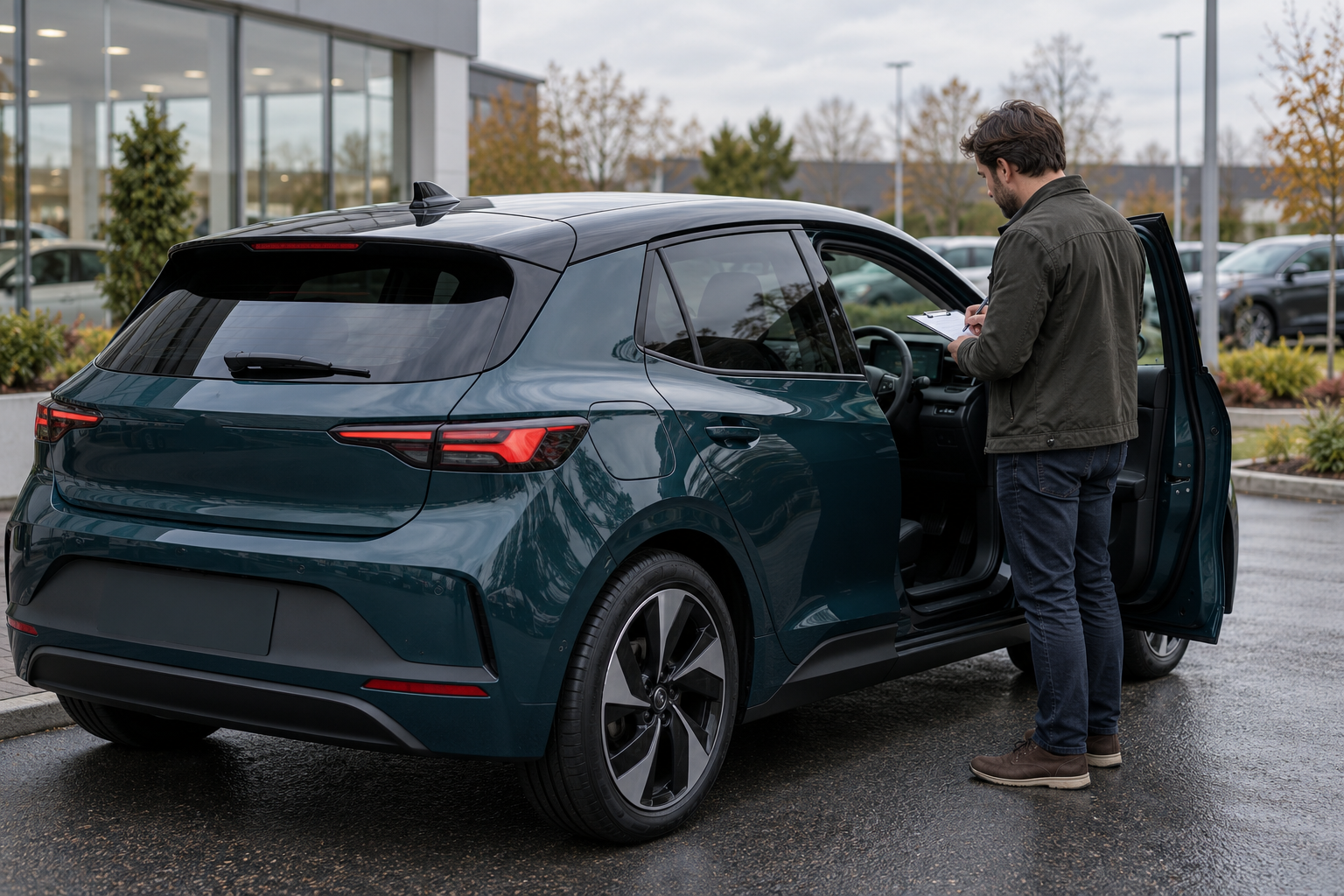
True security in a high-stakes transaction requires "boots on the ground." You should hire an independent, local expert to conduct a professional assessment that goes deeper than a visual check. A visionary inspection report includes OBD-II diagnostic scans to detect cleared fault codes and paint depth measurements to reveal hidden structural repairs. This level of scrutiny removes the friction of distance and provides a clear picture of the vehicle's health. Integrated distance insights then allow you to calculate the true cost of moving a verified vehicle across borders. By utilizing a platform built for global connectivity, you can browse verified listings with the confidence that every technical detail has been accounted for. This structured approach replaces blind trust with empirical evidence, ensuring your investment remains secure from the first click to the final delivery.
The Red Flags of 2026: Identifying Sophisticated Fraud
Identifying a fraudster in 2026 requires looking past the high-resolution pixels and into the digital fingerprints of the listing. Sophisticated scammers often fail at the technical level. You should check the metadata of provided vehicle images; if the GPS coordinates embedded in the file don't align with the listed location, you've encountered a primary red flag. Avoiding scams buying cars online is a process of elimination where inconsistent data points reveal the truth behind a polished facade. Listings that lack transparent pricing or omit critical details like fuel type and verified mileage are often designed to lure you into a high-pressure conversation where logic is secondary to emotion.
Payment anomalies remain the most definitive indicator of a fraudulent transaction. Any request for cryptocurrency, gift cards, or unverified wire transfers should end the negotiation immediately. These methods offer no recourse for the buyer. While a secure private sale framework often involves cash or bank checks for local deals, global trade necessitates higher levels of digital security and escrow-like protections. If a seller discourages independent VIN checks or third-party inspections, they're actively trying to hide a vehicle matching scam or a non-existent asset. Professionalism in this market is defined by a seller's willingness to be scrutinized.
Analyzing Seller Reputation and Digital Footprint
Verifying a dealership's credentials across 15 countries requires more than a simple search. You need to distinguish between a featured listing on a smart marketplace and an unvetted social media advertisement. Smart platforms vet their participants, providing a layer of security that social apps lack. You can gain a significant advantage by cross-referencing VINs across essential online car shopping tools to detect duplicate listings. If the same Mercedes-Benz appears in three different cities under different names, you've identified a digital shadow. This level of foresight is what separates a successful global buyer from a victim of fraud.
EV-Specific Scams: Tesla and BYD Focus
The rise of high-demand electric vehicles like Tesla and BYD has created a new frontier for deception. Unlike traditional cars, EV verification must focus on battery health reports and software authenticity rather than just engine noise. Scammers frequently advertise "transferable" Full Self-Driving (FSD) capabilities or premium software upgrades that may actually be tied to the original owner's account or voided upon sale. You must also verify the international warranty status to avoid "gray market" pitfalls where a vehicle's software cannot be updated in your home country. Avoiding scams buying cars online in the EV sector means demanding a digital health certificate directly from the manufacturer's portal. This ensures that the high-tech asset you're buying is exactly what it claims to be, with no hidden software locks or battery degradation issues.
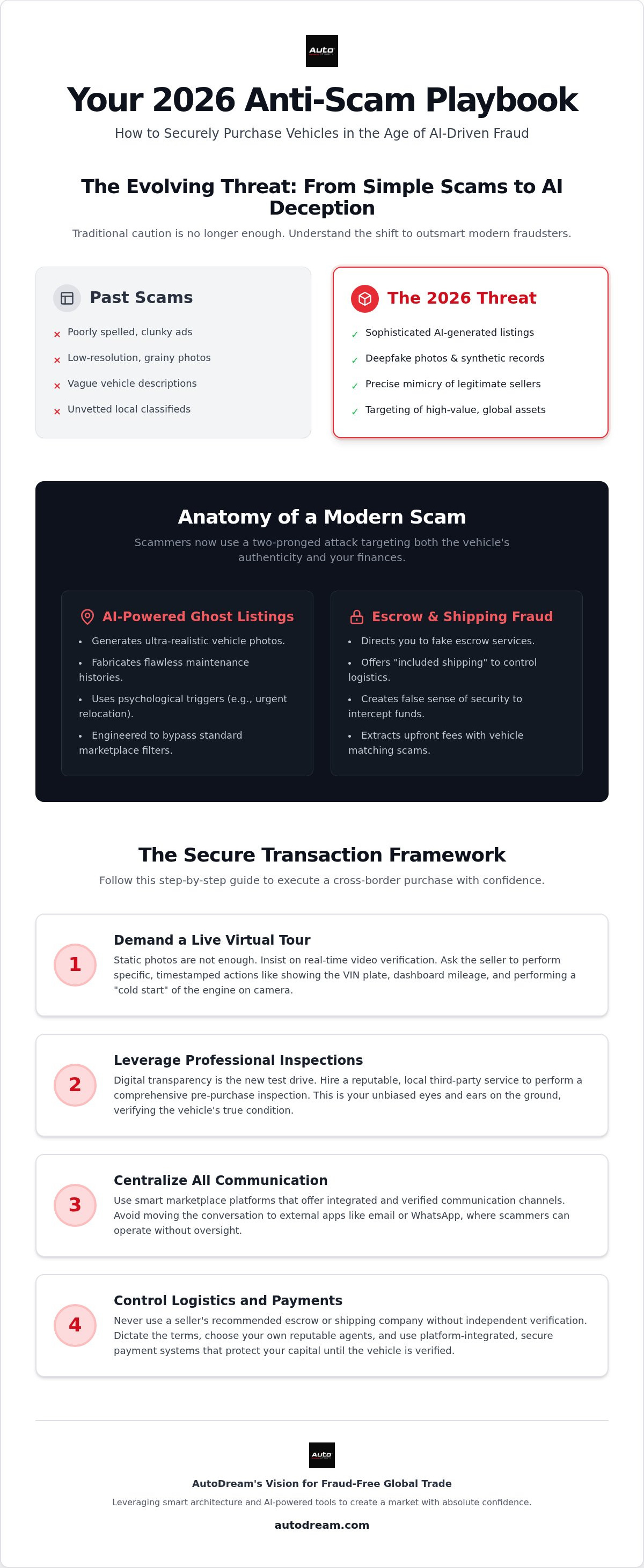
The Secure Transaction Framework: A Step-by-Step Guide
Once you've identified a legitimate opportunity, the focus shifts to the architecture of the deal itself. A visionary approach to avoiding scams buying cars online requires a centralized communication ecosystem. By keeping all dialogue within a smart marketplace, you create a traceable record that discourages bad actors who typically try to lure victims onto unencrypted third-party apps. This secure line of communication is the foundation of a successful cross-border transaction, ensuring that every promise and technical detail is documented and verifiable.
The transition from negotiation to execution must be clinical and data-driven. You aren't just buying a car; you're managing a complex international asset transfer. This framework ensures that logistics, title transfers, and financial commitments move in a synchronized, logical progression that prioritizes your capital's safety above all else.
Step 1: The Documentation Deep Dive
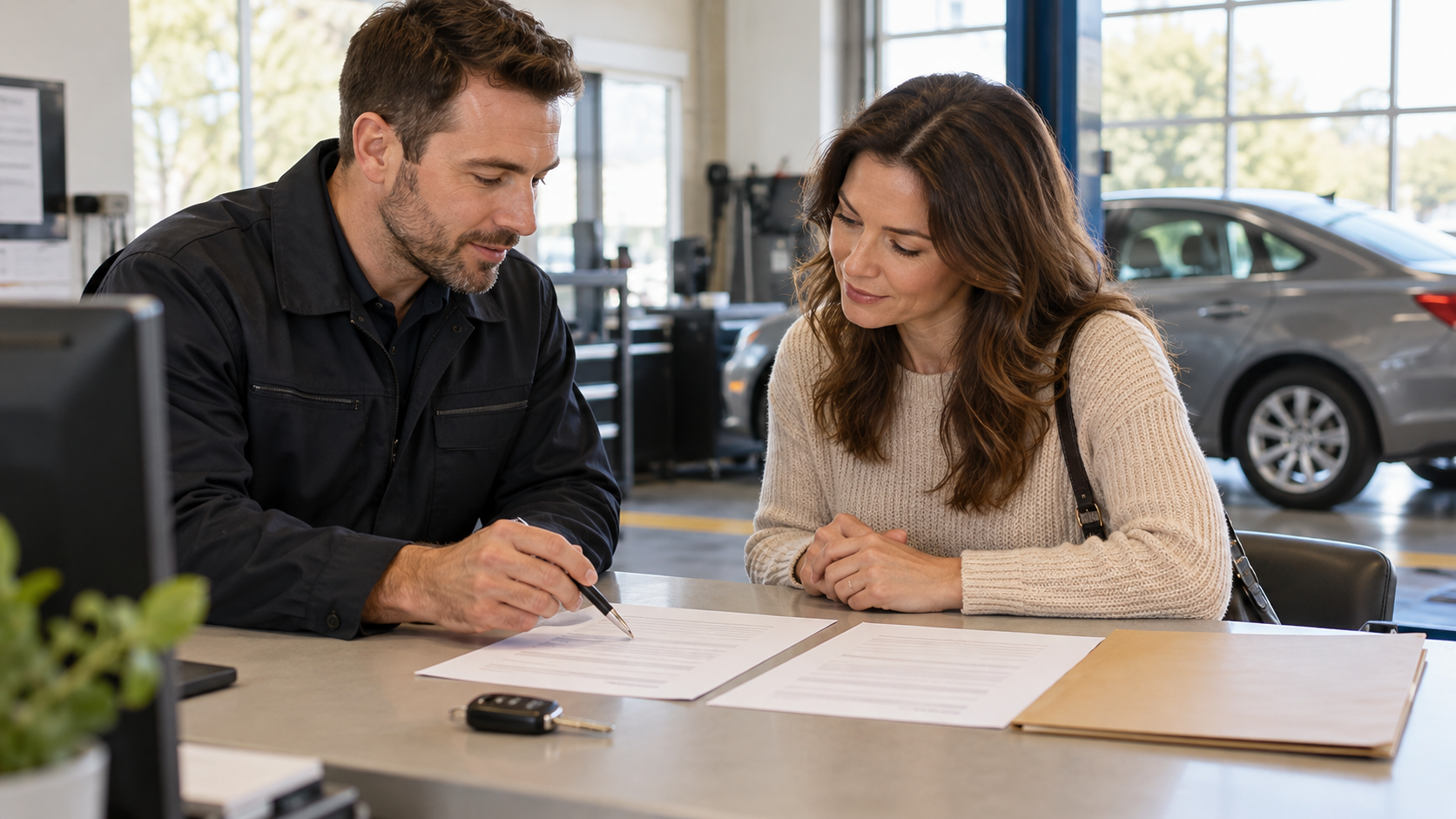
Every secure transaction begins with a rigorous audit of the vehicle's legal identity. You must verify the Title or V5C against the seller's official identification to ensure they have the legal right to sell the asset. It's essential that secure cross-border vehicle transactions include a notarized Bill of Sale that clearly outlines the terms of the trade. You must cross-reference the VIN on the chassis, dashboard, and all legal paperwork to ensure absolute consistency. Any discrepancy in these numbers, no matter how small, is a signal to halt the process immediately. This level of scrutiny removes the friction of doubt and establishes a clear, legal path for the vehicle to enter your home country.
Step 2: Intelligent Payment Strategies
Financial movement should be the final step in your verification journey, never the first. Bank-to-bank wire transfers are efficient, but they should only occur after you've successfully completed the document audit and received confirmation from a third-party inspector. Utilizing legitimate, platform-integrated escrow services provides an additional layer of smart logic; these services hold your funds in a neutral environment until the vehicle's arrival is confirmed. Be particularly wary of the "overpayment" scam, where a seller claims to have accidentally sent extra funds and asks for a partial refund. This is a classic tactic used to exploit the delay in international banking systems. By maintaining a disciplined payment schedule, you ensure that your investment is always protected by verifiable milestones.
Ready to source your next vehicle with total confidence? View our Standard Vehicle Listings to connect with sellers across 15 countries within a secure, AI-monitored environment.
AutoDream’s Vision for Fraud-Free Global Trade
AutoDream represents the next evolution in automotive commerce, where security is built into the foundation of every interaction. We've designed a smart car marketplace architecture that proactively filters out low-quality and high-risk listings before they ever reach your screen. By shifting the burden of verification from the buyer to our intelligent systems, we've created an environment where avoiding scams buying cars online becomes an automated standard rather than a manual chore. Our ecosystem connects 15 countries, providing a bridge for those seeking premium brands like Mercedes-Benz and BYD without the typical friction of unvetted markets.
Our commitment to transparency extends to the very data that powers our listings. Every vehicle on the platform is accompanied by automatic distance insights and detailed specifications, including fuel type and verified mileage. This clarity removes the ambiguity that scammers often exploit to hide a vehicle's true history or location. We're not just facilitating transactions; we're building a global community of verified sellers and sophisticated buyers who value efficiency and smart logic.
AI-Driven Security Features
The core of our platform's integrity lies in its ability to identify anomalies through intelligent communication monitoring. Our AI-powered multilingual chat doesn't just remove language barriers; it actively flags suspicious communication patterns that often precede fraudulent activity. This proactive oversight is supported by our dealer analytics dashboard, which empowers professional sellers to maintain high standards of transparency and performance. Because our marketplace requires a high level of accountability, professional dealers choose AutoDream as their primary channel for high-visibility, secure sales. They recognize that a clean, well-regulated marketplace attracts the most serious global investors.
Your Journey to a Global Dream Car
Your path to a global acquisition should be a progressive, rewarding experience. It begins with the discovery of a verified asset and moves seamlessly through a secure transaction framework supported by our integrated tools. You don't have to navigate the complexities of international trade alone. By leveraging our distance insights and secure communication channels, you can source your ideal vehicle with the absolute confidence that the logistical hurdles have already been solved. The visionary future of car buying is here, and it's defined by connectivity and total peace of mind. You're ready to take the next step. Browse verified global listings on AutoDream today and experience the security of a platform designed for the modern world.
Securing Your Global Automotive Future
The digital landscape of 2026 offers unparalleled access to the global car market, but success depends on your ability to outpace sophisticated fraud. You've learned how to dismantle AI-generated ghost listings and implement a secure transaction framework that prioritizes empirical data over blind trust. By focusing on technical verification and professional inspection networks, you transform a high-risk endeavor into a strategic acquisition. Mastering the art of avoiding scams buying cars online is no longer about restriction; it's about empowerment through intelligent tools.
AutoDream facilitates this journey across 15 countries with advanced AI-powered seller verification and multilingual support that identifies suspicious patterns before they impact your capital. Our platform provides detailed distance and logistics insights, ensuring every step of your purchase is transparent and efficient. It's time to move beyond the limitations of local markets and embrace a secure, worldwide perspective. Explore Verified Global Listings on AutoDream and bridge the gap between your current location and your next high-performance asset. The world is your showroom when you possess the right security vision.
Frequently Asked Questions
What is the most common scam when buying a car online?
The ghost listing remains the most prevalent fraud tactic. Scammers copy photos from legitimate ads and offer them at a lower price to create a sense of urgency. They typically demand an immediate deposit to hold the vehicle before you can inspect it. Avoiding scams buying cars online starts with refusing to send funds before verification is complete. Always verify the seller's digital footprint through the platform's history.
How can I verify a car's VIN for free in 2026?
You can utilize the National Insurance Crime Bureau (NICB) VINCheck or local government transport portals for a free initial screening. These databases reveal if a vehicle has been reported stolen or totaled. For a global purchase, check the official registry of the car's origin country. This step ensures the digital VIN provided matches the physical asset's history. It is a vital first step in your due diligence process.
Is it safe to buy a car from another country without seeing it?
It is safe if you replace physical presence with professional remote verification. Hire a local inspector to perform an OBD-II scan and paint depth test. Using a smart marketplace that connects 15 countries ensures you're dealing with verified sellers. This approach mitigates the risk of buying a non-existent or defective vehicle from thousands of miles away. Technology now bridges the trust gap that once required a flight.
Can AI be used to spot fake car listings?
AI-powered systems can detect fraudulent patterns by analyzing listing metadata and communication styles. These tools flag inconsistent GPS data in photos or suspicious language shifts in chat. By utilizing a platform with integrated AI logic, you gain a layer of security that traditional classified sites don't offer. It is a proactive way of avoiding scams buying cars online through technological foresight and smart logic that identifies risks early.
What should I do if I suspect a car seller is a scammer?
Stop all contact and report the listing to the marketplace administrators right away. Don't provide any personal or financial information. If you've already shared data, contact your bank to freeze potential transactions. Reporting these accounts helps the community by allowing platforms to refine their AI-driven fraud filters and remove bad actors. Quick action prevents others from falling victim to the same sophisticated digital shadow.
Are social media car ads safer than dedicated marketplaces?
Dedicated marketplaces offer superior security because they vet sellers and monitor transactions. Social media platforms often lack the specialized architecture needed to verify automotive data or dealer credentials. Smart marketplaces provide a focused environment where AI tools and distance insights work together to protect your investment. This structured oversight is absent on general social platforms. You're far more likely to encounter unvetted ghost listings on social apps.
How do I know if an online escrow service is legitimate?
Legitimate escrow services are typically integrated directly into the purchase platform rather than suggested via a third-party link. Check the service's credentials against financial regulatory bodies in their home country. Scammers often create fake websites that mirror real institutions. If a seller insists on a specific, unknown escrow site, it's a major red flag. Always use established, traceable payment methods that offer documented buyer protection.
What documents are required for a secure cross-border car purchase?
A secure transaction requires a notarized Bill of Sale, the vehicle's original title, and a valid export certificate. You should also obtain a professional inspection report and a shipping manifest if the vehicle is in transit. Verifying these documents against the seller's ID ensures a legal and transparent transfer of ownership across international borders. Proper documentation is your best defense against title fraud or ownership disputes in a global market.
Ready to list your car?
Put your vehicle details and photos together, then start your listing on AutoDream.
Create your listing