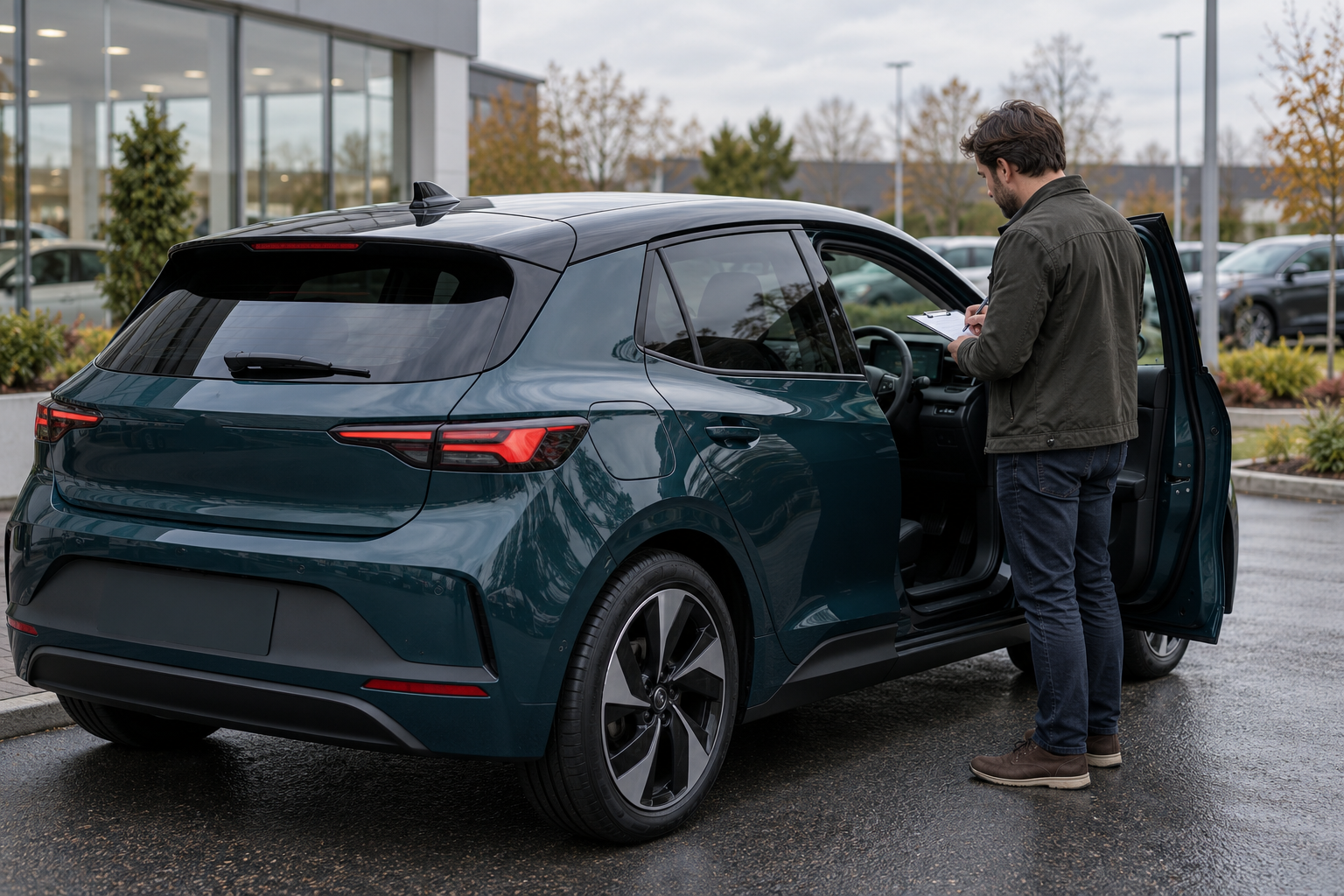
China's car exports surged by 42.2% recently, signaling a permanent shift in how the world sources its vehicles. If you're identifying the best countries to import cars from, you've likely noticed that traditional leaders now face aggressive competition from emerging EV powerhouses. It's natural to feel a sense of hesitation when facing the logistics of global trade. You're probably concerned about opaque regulatory requirements, language barriers with sellers, or the fear of hidden vehicle history. These friction points have historically turned ambitious sourcing goals into complex challenges.
This guide provides a visionary look at the most strategic international markets for 2026. You'll discover how digital innovation is dismantling traditional barriers to create a seamless cross-border experience. We'll identify the top sourcing nations and break down the 2026 regulatory environment, including the EU's elimination of the 10% import duty on American vehicles. You'll also learn how AI-powered intelligence and sophisticated dealer dashboards are transforming global sourcing into a transparent, high-efficiency process. The future of vehicle acquisition isn't just about finding the right car; it's about leveraging the right technology to bring the world to your doorstep.
Key Takeaways
- Understand why 2026 marks a turning point in global trade, where digital transparency and EV dominance reshape the sourcing landscape.
- Discover the best countries to import cars from by comparing traditional German luxury engineering with the high-tech EV innovation emerging from China.
- Apply the Total Landed Cost (TLC) framework to navigate the 2026 regulatory environment and uncover the true cost of international vehicle acquisition.
- Leverage AI-driven multilingual platforms to dissolve language barriers and facilitate seamless communication with global dealers across 15 strategic markets.
- Use the "Trust Index" to evaluate national vehicle registries, ensuring every transaction is backed by verified history and transparent maintenance data.
Table of Contents
- Navigating the 2026 Global Automotive Import Landscape
- European Excellence: Sourcing from Germany and the United Kingdom
- The Asian Frontier: Japan and China’s Export Dominance
- Strategic Evaluation: Comparing Costs, Compliance, and Connectivity
- Seamless Sourcing: Utilizing Smart Platforms for Global Transactions
Navigating the 2026 Global Automotive Import Landscape
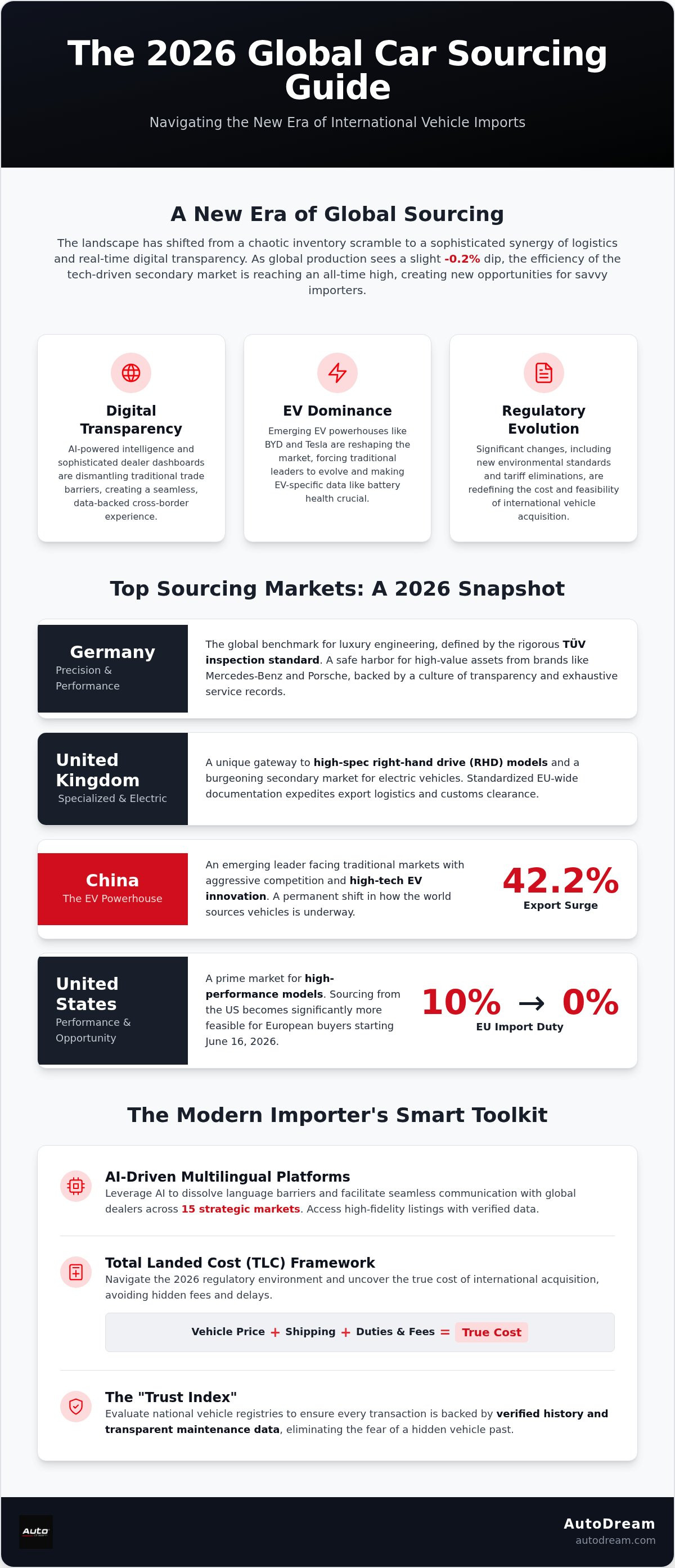
The global trade environment has shifted from a chaotic scramble for inventory to a sophisticated synergy of logistics and real-time digital transparency. In 2026, identifying the best countries to import cars from requires more than just a list of manufacturers; it demands a strategic understanding of how connectivity is erasing geographical borders. This year marks a definitive turning point as the dominance of electric vehicle (EV) giants like Tesla and BYD forces traditional markets to evolve. For the modern buyer, importing is no longer a last resort for the desperate, but a tactical move to access rare specifications and competitive pricing that domestic markets simply cannot match.
Smart sourcing has replaced the outdated "blind import" model, where users once crossed their fingers and hoped for the best. While global production of motor vehicles is expected to see a slight decrease of 0.2% in 2026, the efficiency of the secondary market is reaching an all-time high. This evolution allows savvy importers to leverage AI-powered intelligence to find specific models across 15 strategic nations, ensuring that every transaction is backed by data rather than guesswork.
According to recent Global vehicle export data, the hierarchy of trade power is being rewritten by nations that prioritize digital integration and frictionless cross-border movement.
The Evolution of Cross-Border Connectivity
Traditional brokers are becoming relics of a slower era. Digital marketplaces now provide the infrastructure once reserved for high-volume shipping conglomerates. By utilizing real-time data, buyers can make informed international bids with the same confidence they would have at a local dealership. This connectivity allows for a frictionless exchange where distance insights and logistics planning are baked into the initial search process. Today, 15 key countries dominate the smart export market, offering high-fidelity listings that include everything from battery health diagnostics for EVs to verified maintenance logs.
Regulatory Shifts to Watch in 2026
Compliance is the new currency in international trade. The 2026 landscape is defined by significant shifts, such as the European Union's June 16, 2026, decision to eliminate the 10% import duty on American-made passenger cars. This change alone has transformed the feasibility of sourcing high-performance US models for European enthusiasts. Simultaneously, stricter environmental standards are influencing how vehicles move across borders. Understanding these Harmonized Tariff System (HTS) updates is vital. Transparency isn't just a feature; it's a requirement for navigating the modern regulatory environment without falling into the trap of hidden costs or unexpected delays.
European Excellence: Sourcing from Germany and the United Kingdom
Europe remains the undisputed epicenter for automotive prestige and engineering integrity. When evaluating the best countries to import cars from, Germany and the United Kingdom consistently rise to the top of the list for sophisticated buyers. Germany serves as the global benchmark for luxury engineering, while the UK provides a unique gateway to high-spec right-hand drive models and a burgeoning secondary market for electric vehicles. The primary advantage of sourcing from this region lies in the rigorous maintenance cultures and the unified EU-wide documentation standards that expedite export logistics. These standardized forms reduce the administrative friction that often plagues international trade, allowing for faster customs clearance and more predictable shipping timelines.
The reliability of the European market is particularly evident when sourcing premium brands like Mercedes-Benz or Porsche. Unlike markets where history can be obscured, European sellers often provide exhaustive service records that are verified by national registries. This culture of transparency, combined with a dense network of specialized exporters, makes the continent a safe harbor for those looking to secure high-value assets without the typical risks of cross-border transactions.
Germany: Precision and Performance
The German market is defined by the TUV inspection standard, a comprehensive biennial check that serves as a built-in trust factor for international buyers. This transparency ensures that premium brands are maintained to a standard that often exceeds other regions. Buyers who monitor European used car market trends can identify specific periods when fleet rotations lead to a surge in high-performance inventory at competitive rates. Because Germany exported $176.61 billion worth of vehicles in 2025, the infrastructure for moving cars out of the country is exceptionally mature and efficient. It's a system built for speed, where precision isn't just in the engine, but in the paperwork as well.
The UK Market: Strategic Spec Sourcing
The UK is more than just a source for classic Jaguars; it's a strategic point for finding European specifications that are often more loaded with features than their North American counterparts. A major financial incentive for non-UK residents is the ability to reclaim Value Added Tax (VAT) on eligible vehicles, which can significantly lower the final transaction price. Additionally, the UK has emerged as a high-volume secondary market for used Tesla inventory, offering a diverse selection for buyers transitioning to electric mobility. While the specs are enticing, buyers targeting the American market must verify compliance with U.S. import regulations regarding emissions and safety standards before finalizing a deal. You can easily track the latest Standard Vehicle Listings across these nations to find the perfect balance of luxury and value.
The Asian Frontier: Japan and China’s Export Dominance
The Asian market currently represents the most dynamic segment of the global automotive trade. While European engineering holds its prestige, the efficiency found in the East is redefining what it means to be among the best countries to import cars from. This region is anchored by two distinct powerhouses: Japan, the long-standing champion of mechanical integrity, and China, the visionary leader of the electric revolution. Both nations have optimized their logistical infrastructure, utilizing massive hubs like Yokohama and Shanghai to ensure that vehicles move from port to destination with surgical precision.
As seen in recent global car import and export data, the volume of trade flowing through these corridors has reached unprecedented levels. China's car exports surged by 42.2% between 2023 and 2025, allowing it to surpass Japan as a dominant global force. This isn't just about quantity; it's about the quality of the digital and physical systems that support these transactions. The synergy between high-volume manufacturing and advanced shipping technology makes Asia a primary destination for those who value both innovation and reliability.
Japan’s Reputation for Reliability
Japan remains a top choice for global collectors and pragmatic buyers alike because of its unrivaled vehicle condition. The rigorous Shaken inspection system forces owners to maintain vehicles to an exacting standard, often resulting in low-mileage inventory that feels brand new. Japanese auctions have become the global benchmark for transparency, utilizing a strict grading system that removes the guesswork for international bidders. This transparency is particularly valuable when sourcing early-generation hybrids or meticulously kept Japanese Domestic Market (JDM) classics. The combination of high-tech auction data and meticulous ownership makes Japan a fortress of reliability in the import world.
The Rise of Chinese EV Exports
By 2026, China has solidified its position as the global epicenter for New Energy Vehicles (NEVs). If you're looking for advanced tech and aggressive pricing, China is now the primary source for BYD EV models and NIO’s smart vehicle ecosystem. The price advantages are significant, as China’s manufacturing scale allows for a level of affordability that Western markets are still struggling to match. Navigating the unique export documentation for Chinese-made vehicles can be complex, but the rewards are substantial for those seeking the latest in battery technology and autonomous features. AutoDream facilitates this transition by providing active listings and AI-powered multilingual chat, bridging the gap between innovative Chinese dealers and global buyers who demand progress without friction.
Strategic Evaluation: Comparing Costs, Compliance, and Connectivity
Determining the best countries to import cars from requires a rigorous framework that looks beyond the initial listing price. A sophisticated buyer calculates the Total Landed Cost (TLC). This formula integrates the vehicle price with international shipping, insurance, and specific national duties. For example, importing a passenger car into the United States typically incurs a 2.5% duty, while light trucks are subject to a 25% tariff. Understanding these variables prevents unforeseen financial friction and ensures that your global acquisition remains a high-value investment.
Connectivity also relies on what we call the "Trust Index." This is a comparison of how transparent and accessible a nation's vehicle registries are. While some markets offer digitized, real-time maintenance logs, others remain opaque. Shipping routes and container availability also dictate the viability of a source. A vehicle located near a major terminal like Shanghai or Jebel Ali will often have a lower TLC than one requiring extensive inland transport. Prioritizing secure cross-border vehicle transactions is the final pillar of a visionary sourcing strategy, ensuring that capital and assets move safely across jurisdictions.
The UAE and USA: High-Volume Luxury Hubs
Dubai serves as a global nexus for high-end re-exports. The port of Jebel Ali is engineered for speed, often processing luxury and exotic machinery faster than traditional Western gateways. Conversely, the US market is the primary source for large SUVs and unique Tesla Model S configurations that aren't available in other regions. When comparing the speed of export, Dubai's duty-free zones often provide a more streamlined path for international buyers than the more regulated corridors of Los Angeles or Savannah. Both hubs offer massive volume, but your choice should depend on whether you prioritize exotic variety or specific North American specifications.
Compliance Check: EPA, DOT, and Euro 7 Standards
Regulatory alignment is non-negotiable. In the US, the "25-year rule" remains a vital exemption, allowing vehicles from the year 2001 to enter the country without meeting current FMVSS or EPA standards in 2026. For newer models, the shift toward Euro 7 standards in Europe is already influencing resale values. These strict emissions requirements can make certain European models more expensive to maintain but significantly more desirable in eco-conscious markets. Digital verification tools now allow buyers to confirm emissions compliance before the vehicle ever leaves the port, removing the risk of costly modifications or seizure at customs.
Optimize your global sourcing strategy today by accessing our AI-Powered Dealer Dashboard to manage listings and insights across 15 nations.
Seamless Sourcing: Utilizing Smart Platforms for Global Transactions
The final hurdle in global sourcing isn't the physical distance, but the digital friction that occurs during the transaction. While you've identified the best countries to import cars from based on value and compliance, executing that vision requires a platform that acts as a sophisticated bridge. The AutoDream ecosystem operates across 15 strategic nations, providing the infrastructure needed to turn a global search into a local acquisition. By integrating distance insights directly into the search experience, the platform allows for automated logistics planning that removes the guesswork from shipping timelines and port delivery. This level of foresight is essential in a market where shipping container availability and port congestion can fluctuate overnight.
A smart car marketplace is the essential tool for the 2026 global buyer, moving beyond simple listings to provide a comprehensive transaction environment. It's about empowering the user with data that was previously locked behind the doors of traditional brokerage firms. Whether you're looking for a specific European spec or an emerging Asian EV brand, the ability to view distance insights and logistics data in one dashboard transforms the entire import process from a gamble into a calculated success.
Removing Friction with AI
Language barriers have historically been the greatest obstacle to precise negotiation. Our AI-powered multilingual chat dissolves these borders, allowing a buyer in London to discuss battery degradation or paint thickness with a dealer in Shanghai in real-time. Utilizing online car shopping tools, users can verify seller reputations and filter inventory by specific 2026 metrics, such as real-world EV range or autonomous driving hardware versions. This targeted sourcing ensures that you're not just buying a car, but acquiring a vehicle that meets the exact technological standards of your home market. Automated translation ensures that technical nuances, like the difference between LFP and NMC battery chemistries in Chinese EV models, aren't lost in the exchange.
Finalizing Your Global Purchase
The transition from discovery to ownership is a streamlined progression designed for the high-volume importer and the individual enthusiast alike. Once a vehicle is identified, the platform facilitates the movement toward secure escrow payments, protecting capital until the title and shipping documents are verified. For professionals looking to scale their operations, leveraging AI for auto dealers within our AI-Powered Dealer Dashboard provides the intelligence needed to source high-volume inventory across multiple borders simultaneously. This capability is particularly vital for sourcing 2026 BYD models or international Tesla inventory where demand often outstrips local supply. This isn't just a marketplace; it's a catalyst for achieving global connectivity in the automotive sector. Start your search on the AutoDream marketplace today and utilize a Standard Vehicle Listing to experience the future of frictionless trade.
Mastering the Global Market: Your Visionary Sourcing Future
Global vehicle acquisition has evolved into a strategic exercise in digital transparency and logistical precision. Identifying the best countries to import cars from is no longer just about searching for the lowest sticker price; it's about aligning with markets that offer verified history and innovative technology. Whether you're targeting the precision of German engineering or the rapid advancement of Chinese EV models, the 2026 landscape rewards those who leverage intelligence over traditional brokerage.
AutoDream serves as your visionary bridge, providing the tools necessary to navigate this complex environment with confidence. By utilizing our AI-powered multilingual chat and distance insights technology, you can engage with verified dealer inventory across 15 strategic nations without the historical friction of language or distance. The world's most desirable vehicles are now within your reach, backed by a platform designed for your empowerment.
Explore global car listings across 15 countries on AutoDream and start your journey toward a frictionless import experience today. The horizon of international trade is open, and your next vehicle is ready for discovery.
Frequently Asked Questions
Which country is the cheapest to import a car from in 2026?
Identifying the cheapest source depends on your specific destination and the vehicle's age. For many, Japan remains the most cost-effective option due to low initial purchase prices and a highly efficient auction system. However, China is rapidly becoming a price leader for new energy vehicles. You must also consider the Total Landed Cost, including shipping and duties, as these variables often redefine which are the best countries to import cars from for your specific region.
Is it safe to buy a car sight unseen from another country?
Safety in international transactions is now driven by digital transparency and verified data. While buying sight unseen once carried significant risk, modern platforms provide exhaustive inspection reports, high-definition video walkthroughs, and verified maintenance histories. Utilizing a marketplace with a robust trust index ensures that the vehicle's condition is documented accurately. By prioritizing sellers with transparent registries and using secure transaction protocols, you can acquire global inventory with the same confidence as a local purchase.
What are the most popular cars to import internationally right now?
The 2026 market is dominated by a mix of high-performance electric vehicles and timeless luxury engineering. Tesla and BYD models are the primary targets for those seeking advanced battery technology and autonomous features. Simultaneously, premium European brands like Mercedes-Benz and Porsche remain highly sought after for their engineering integrity. Collectors also continue to target Japanese Domestic Market classics from the early 2000s, leveraging the 25-year rule for entry into markets like the United States.
How do I handle the language barrier when talking to an overseas dealer?
Language barriers are no longer a hurdle to global trade thanks to integrated AI communication tools. Sophisticated platforms now feature real-time, AI-powered multilingual chat that translates technical automotive specifications instantly. This ensures that negotiations regarding battery health, service history, and export documentation are precise and clear. By using these intelligent facilitators, you can communicate with dealers in 15 different countries as if you were speaking the same language, removing friction from the negotiation phase.
Are there specific regulations for importing electric vehicles like Tesla or BYD?
Importing electric vehicles requires attention to battery safety certifications and regional charging standards. In 2026, you must also be aware of specific trade policies, such as the EU's evolving tariff structures for non-EU EV imports. While the core mechanical inspections are similar to internal combustion vehicles, software compatibility and battery health diagnostics are critical. Verifying that the vehicle's charging hardware aligns with your local infrastructure is a vital step before finalizing any international EV acquisition.
What documents are universally required for vehicle export?
While specific requirements vary by nation, several documents are fundamental to the global export process. You will universally need the original vehicle title or ownership certificate, a commercial invoice or Bill of Sale, and an Export Certificate from the origin country. Once the vehicle is on the move, the Bill of Lading becomes the essential document for tracking and customs clearance. Ensuring these documents are verified and digitally accessible is key to a frictionless transition through international ports.
How does AutoDream facilitate international car transactions?
AutoDream acts as a visionary bridge by providing a centralized ecosystem for global sourcing. Our platform integrates AI-powered multilingual chat to dissolve communication barriers and uses distance insights technology to automate logistics planning. We feature verified dealer inventory across 15 strategic countries, ensuring that every listing meets a high standard of transparency. By providing the digital infrastructure for discovery and communication, we empower buyers to navigate the best countries to import cars from with unprecedented speed and efficiency.
Can I import a car from China to Europe or the US easily?
China's export infrastructure has made importing from the region significantly more efficient, though ease depends on your local compliance standards. For European buyers, China's massive EV export corridors offer a streamlined path for brands like BYD. In the US, newer Chinese models must meet strict Federal Motor Vehicle Safety Standards, which can be a complex hurdle. However, for vehicles that meet these requirements, the logistics from major ports like Shanghai are highly optimized, making China a global powerhouse.
Ready to list your car?
Put your vehicle details and photos together, then start your listing on AutoDream.
Create your listing