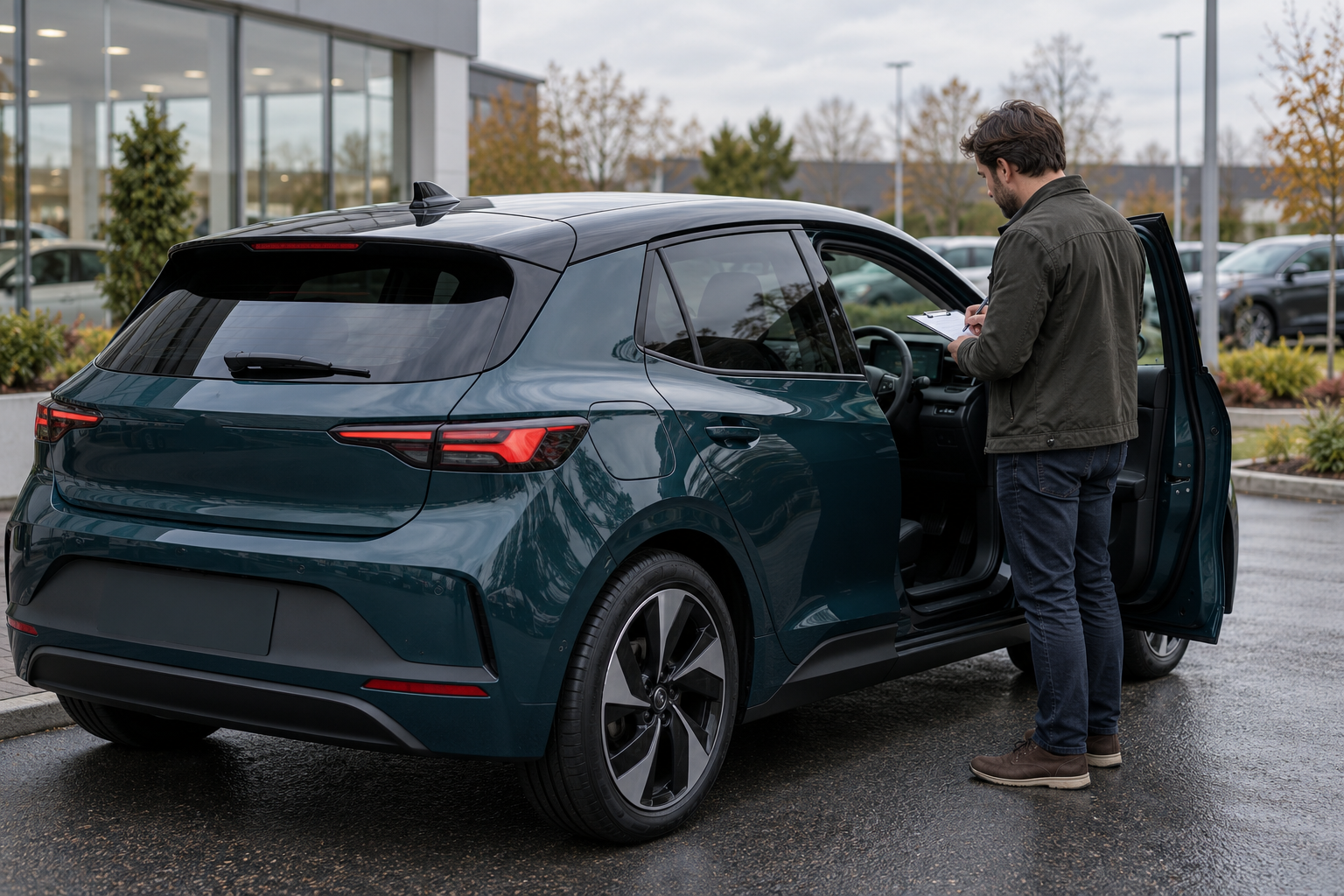

By mid-2026, 43% of car dealerships have integrated AI into their core operations to master how to sell a car internationally at scale. You likely recognize that local markets often fail to reflect a vehicle's true global value, yet the prospect of cross-border logistics can feel like a regulatory minefield. It's natural to feel uncertain about secure international payments or the technicalities of HS code classification for exports. You want the premium price that market arbitrage offers without the headache of language barriers or customs delays.
This guide provides a blueprint for executing global sales with surgical precision and modern efficiency. You'll master the mechanics of the international marketplace, from leveraging AI-powered marketing to navigating complex shipping logistics. We'll examine essential documentation like mandatory AES filing requirements and explain how to achieve a frictionless transaction from the initial listing to the final handover. Prepare to transform a complex logistical challenge into a streamlined, high-yield digital process.
Key Takeaways
- Identify high-demand markets to secure premium pricing by leveraging regional supply gaps and strategic market arbitrage.
- Learn the technical mechanics of how to sell a car internationally by mastering Harmonized System (HS) codes, including the 8703.80 identifier for electric vehicles.
- Utilize AI-powered multilingual chat and intelligent dashboards to eliminate language barriers and manage global inquiries with professional precision.
- Protect your transaction using international escrow services to ensure secure cross-border currency exchange and financial compliance.
- Optimize your handover strategy by selecting the ideal shipping method and utilizing professional port documentation for a seamless sale.
Table of Contents
The New Frontier of Global Automotive Arbitrage
Selling a vehicle in 2026 is no longer restricted by your local zip code. It's a strategic exercise in market arbitrage. When you understand how to sell a car internationally, you aren't just looking for a buyer; you're looking for the specific geographic hub where your vehicle's value is maximized. Regional supply shortages and currency fluctuations create windows of opportunity where a car might command a significant premium in one country compared to another. This visionary seller mindset moves beyond traditional local classifieds toward intelligent ecosystems that facilitate global connectivity and empower you to capture that hidden value.
Why Sell Globally in 2026?
The global automotive market has shifted toward a high-tech, borderless model. In 2026, strict environmental regulations in major hubs like Riyadh or Oslo have created a massive surge in demand for specific powertrains. While a popular electric vehicle model might face stiff competition in its home market, it becomes a high-value asset in regions rapidly expanding their charging infrastructure. Sellers can capitalize on these shifts by monitoring Grey Market Vehicle Regulations to identify where demand outstrips official manufacturer supply. Utilizing a Standard Vehicle Listing with a reach across 15 countries allows you to bypass local price ceilings and tap into this international hunger for innovation.
The Architecture of Valuation: CIF vs. FOB
Success in international sales requires a sophisticated understanding of valuation logic. Most sellers start with FOB (Free on Board), which represents the price of the vehicle once it's loaded onto the transport vessel. It's your primary baseline. However, to negotiate with professional buyers, you must grasp CIF (Cost, Insurance, and Freight). This represents the total "landed cost" before duties. Sophisticated sellers use an AI-Powered Dealer Dashboard to calculate these variables with precision, ensuring their price remains attractive even after the buyer adds shipping costs. This valuation logic directly dictates the buyer's final tax liability and import duty calculations at the destination port.
By positioning your vehicle as a global asset rather than a local commodity, you unlock a larger pool of high-intent buyers. A Featured Listing Placement can accelerate this process, putting your vehicle in front of international dealers who are actively looking to fill inventory gaps caused by regional manufacturing delays. The transition from a local seller to a global participant is a matter of adopting the right tools and understanding the data that drives modern automotive demand.
Strategic Preparation: Documentation and HS Codes
Precision in documentation is the bridge between a theoretical sale and a successful handover. When you're learning how to sell a car internationally, the Harmonized System (HS) acts as your universal language. It classifies every vehicle type to ensure customs officials across 15 countries understand exactly what's crossing their borders. In 2026, this classification has become even more granular, demanding that sellers provide specific data points to avoid costly delays at the port of exit.
The critical identifier for the modern seller is HS Code 8703.80, which specifically denotes pure electric vehicle exports. Beyond simple hardware, the 2026 market introduces the complexity of digital value. Software upgrades, such as autonomous driving packages or permanent battery range unlocks, now impact export duty calculations. Customs agents increasingly scrutinize the digital configuration of a vehicle, meaning your declared value must account for these intangible assets. Ensuring your title and ownership documentation meet Vehicle Export Documentation Requirements is essential for a seamless transition from your driveway to the global stage.
Decoding Vehicle Classification
Customs declarations in 2026 distinguish sharply between passenger, commercial, and special-purpose classifications. Autonomous driving features influence these declarations, as some jurisdictions now require specific safety certifications for vehicles with Level 3 autonomy or higher. You must verify engine displacement for internal combustion engines or battery capacity for EVs on all official forms. This technical accuracy ensures your vehicle is processed under the correct tariff bracket, preventing unexpected fees for the buyer. Managing these intricate details is simplified when you utilize an AI-Powered Dealer Dashboard to track compliance across different territories.
Essential Export Documentation Package
A sophisticated documentation package starts with a Bill of Sale that meets international legal standards. This contract must clearly state the agreed-upon Incoterms, whether you're selling on an FOB or CIF basis, to define where your liability ends. Equally important is the Certificate of Origin, which often serves as the primary key for your buyer to claim duty exemptions under regional trade agreements. For a comprehensive look at safeguarding your assets during the sale, refer to our visionary guide to secure cross-border vehicle transactions in 2026. By centralizing these documents early, you project a professional image that builds immediate trust with high-intent international buyers.
Sophisticated Marketing: Leveraging AI for Global Reach
Static images and basic text descriptions no longer suffice in a market where buyers are thousands of miles away. If you want to master how to sell a car internationally, your marketing strategy must pivot toward interactive, data-rich presentations. High-intent buyers in 2026 expect more than a simple gallery; they require proof of value that transcends physical distance. Utilizing featured car listings allows your vehicle to dominate search results across 15+ countries, ensuring visibility in the exact hubs where demand is peaking. AI-powered multilingual chat further removes friction by translating complex negotiations in real time, allowing you to close deals with global partners without a language barrier.
Visual Excellence for Remote Buyers
Remote buyers rely entirely on your digital representation to justify a high-value purchase. High-definition virtual tours are now a necessity for 'sight unseen' transactions, providing a 360-degree immersive view that replicates a physical inspection. In your digital gallery, you should highlight specific software versions and smart features, especially for electric vehicles where digital assets are as valuable as the hardware. Building trust requires absolute transparency regarding mileage and fuel type. While you curate these visuals, ensure your technical specs align with U.S. Customs and Border Protection vehicle export requirements to maintain consistency between your marketing and official export filings.
Engaging the Intelligent Marketplace
The AutoDream ecosystem functions as an intelligent bridge, connecting sellers with a global network of verified buyers through seamless connectivity. By adopting the AI for auto dealers framework, you can manage global inventory with the same ease as a local sale. This system utilizes automatic distance insights to provide buyers with instant logistics context, calculating the proximity to major ports and estimating transit windows. These data points convert casual inquiries into firm sales by removing the uncertainty that often stalls international transactions. A Featured Listing Placement ensures your vehicle stays at the forefront of this intelligent marketplace, while the AI-Powered Dealer Dashboard provides the pricing insights needed to stay competitive on a global scale. This sophisticated approach transforms a standard listing into a high-performance sales tool that works across borders and time zones.
Navigating Cross-Border Transactions and Secure Payments
High-value vehicle sales demand a secure financial architecture that transcends regional banking limitations. When you're mastering how to sell a car internationally, the complexity of currency exchange and cross-border transfers often creates unnecessary friction. Sophisticated sellers eliminate this by utilizing international escrow services. These services act as a neutral third party, holding funds in a secure environment until all export conditions and documentation requirements are satisfied. This protects both parties from market volatility and ensures the transaction remains transparent from start to finish.
In 2026, digital trade documentation has streamlined the verification process, but identifying a buyer's intent still requires professional scrutiny. Red flags often include requests for overpayment or a sudden reluctance to use verified, platform-integrated tools. Intelligent facilitators look for buyers who provide clear proof of funds and adhere to a structured payment logic. This typically involves a non-refundable deposit to secure the vehicle, followed by a verification window, and a final transfer before the logistics handover. Following this sequence ensures you don't commit to shipping commitments without guaranteed capital.
Securing the Funds
Wire transfers remain the gold standard for high-value trade, yet they require a dedicated 'verification window' to clear international compliance protocols. You should avoid casual digital wallets or payment apps that carry high chargeback risks or lack robust seller protections. Utilizing an AI-Powered Dealer Dashboard allows you to monitor payment status in real time, ensuring that funds are fully cleared before the vehicle leaves your possession. This professional approach removes the anxiety of global trade and guarantees that your financial interests are prioritized throughout the entire transition.
Negotiation Strategies for Global Sellers
A frequent friction point in global sales is the 'shipping cost' objection. You can effectively counter this by providing data-backed freight estimates and explaining how market arbitrage still favors the buyer's final landed cost. Understanding the buyer's perspective is a powerful tool in your negotiation arsenal. For example, reviewing our guide on how to buy used tesla international provides valuable insights into the specific incentives and logistical hurdles your buyer faces. This knowledge allows you to position your vehicle as a strategic asset, making it easier to transition from the price agreement to the physical handover.
To ensure your vehicle gains maximum exposure to these verified global buyers, explore our Featured Listing Placement options for premium visibility across our 15-country network.
Executing the Handover: Logistics and Compliance
The physical execution of the sale is the final hurdle in your journey of how to sell a car internationally. This stage requires a high level of coordination between you, the buyer's freight forwarder, and the port authorities. Selecting the right shipping method is a strategic decision that reflects the vehicle's value. Roll-on/Roll-off (RoRo) remains the most cost-effective solution for standard vehicles, generally costing between $900 and $2,000. However, for luxury models or pure electric vehicles, containerized shipping provides superior protection from the elements, with shared containers starting around $1,200. This choice should be explicitly detailed in your sales contract to ensure there's no ambiguity regarding the condition of the vehicle upon arrival or the allocation of transit insurance.
During a 'sight unseen' handover, professional photo-documentation at the port is your ultimate safeguard. You should capture high-resolution images of the vehicle's exterior, interior, and odometer at the moment of delivery to the warehouse or terminal. This digital evidence protects you from liability once the freight forwarder takes possession of the keys. While you'll coordinate closely with the buyer's logistics team, your primary responsibility remains ensuring the vehicle is 'export-ready' according to the 72-hour U.S. Customs and Border Protection review period. Using an AI-Powered Dealer Dashboard helps you organize these visual assets and time-stamped logs, creating a transparent record that builds confidence for both parties.
The Logistics Hand-Off
Executing a frictionless hand-off involves three distinct operational steps. First, finalize the export-clearing documentation with a customs broker, ensuring the Electronic Export Information (EEI) is filed through the AES system to generate your mandatory Internal Transaction Number. Second, deliver the vehicle to the designated port or warehouse facility, verifying that the fuel level meets the carrier's safety requirements, which is typically less than a quarter tank. Finally, provide the buyer with the original Bill of Lading and tracking data. This document serves as the official receipt of shipment and the essential key for the buyer to claim the vehicle at the destination port.
Post-Sale Compliance and Scaling
Your work isn't finished once the ship leaves the harbor. You must de-register the vehicle in your home country to terminate your liability for ongoing taxes, registration fees, and insurance. Finalizing this digital paper trail ensures a clean break and allows you to move on to your next strategic move. Many visionary sellers use their success as a catalyst to scale their operations, utilizing online car shopping tools to identify their next global flip. For those looking to expand, the European used car market remains a prime target for sophisticated sellers due to its high demand for premium North American inventory and evolving environmental standards. By mastering these logistics, you transform a one-time sale into a repeatable, high-efficiency business model that leverages global demand.
Master Your Global Sales Evolution
The transition from a local seller to a global participant is defined by the integration of technical precision and intelligent marketing. You've gained the insights necessary to navigate Harmonized System codes and execute secure cross-border payments with total confidence. By moving beyond regional constraints, you unlock the true value of your inventory through strategic market arbitrage. Mastering how to sell a car internationally is no longer a logistical burden; it's a sophisticated data exercise that rewards foresight and professional efficiency.
AutoDream acts as your intelligent bridge, facilitating smart car sales across 15 countries with unparalleled reach. Our platform empowers you with AI-powered multilingual chat for frictionless negotiation and advanced analytics designed for professional global dealers. It's time to leverage these tools to achieve the premium outcomes your assets deserve. Explore the Global Marketplace on AutoDream today and join the vanguard of the borderless automotive era. The world is ready for your next vehicle; go forth and capture the opportunity.
Frequently Asked Questions
How do I determine the best price for my car in a foreign market?
Determining the optimal price requires an analysis of regional supply gaps and currency-driven market arbitrage. You should research the "landed cost" in the buyer's country, including import duties and VAT, to ensure your vehicle remains competitive. Utilizing an AI-Powered Dealer Dashboard provides real-time pricing insights across 15 countries, allowing you to set a premium price that reflects global demand rather than local ceilings. This data-centric approach is essential when learning how to sell a car internationally for maximum yield.
What is the safest way to receive payment from an international buyer?
Utilizing a dedicated international escrow service is the most secure method for high-value vehicle transactions. These services hold the buyer's funds in a neutral account until all contractual obligations, such as the delivery of the Bill of Lading, are satisfied. You should avoid casual digital payment apps that lack robust seller protections or carry high chargeback risks. Ensure a "verification window" for wire transfers to clear international compliance protocols before initiating the logistics handover at the port.
Do I need a customs broker to sell my car overseas?
While not strictly mandatory in every jurisdiction, engaging a professional customs broker is highly recommended to manage the complexities of 2026 export regulations. A broker ensures your Electronic Export Information (EEI) is correctly filed through the Automated Export System (AES) to generate the mandatory Internal Transaction Number (ITN). This professional oversight prevents costly delays during the 72-hour U.S. Customs and Border Protection review period, ensuring your vehicle clears the port without administrative friction or legal complications.
How do HS codes affect the sale of my electric vehicle in 2026?
HS Code 8703.80 is the primary identifier for pure electric vehicle exports in 2026, and its correct application is vital for duty accuracy. This classification tells customs officials exactly what tech is crossing the border, impacting the buyer's final tax liability. Beyond hardware, you must account for the "digital value" of software upgrades or autonomous features, as these now influence the declared value. Correct classification ensures a frictionless transition through international customs checkpoints without unexpected tariff adjustments.
Who is responsible for the shipping costs in an international car sale?
Responsibility for shipping costs is defined by the Incoterms established in your Bill of Sale, typically categorized as FOB or CIF. Under FOB (Free on Board) terms, you are responsible for delivering the vehicle to the port, while the buyer assumes all freight and insurance costs. Conversely, a CIF (Cost, Insurance, and Freight) agreement includes these expenses in your final sale price. Sophisticated sellers use these terms to negotiate effectively and clarify liability boundaries during transit.
What documents must I provide to the buyer for successful import?
A successful import requires a comprehensive documentation package including the original vehicle title, a signed Bill of Sale, and a Certificate of Origin. You must also provide the buyer with the AES filing confirmation and the Bill of Lading once the vehicle is loaded onto the vessel. These documents serve as the legal proof of ownership and compliance required for the buyer to clear customs and register the vehicle in their home country without administrative delays.
How can I verify if an international car buyer is legitimate?
Verifying a buyer's legitimacy involves requesting a formal proof of funds and utilizing platform-integrated communication tools to track interaction history. You should look for high-intent indicators, such as a willingness to use secure escrow services and compliance with a structured deposit schedule. AI-powered multilingual chat helps eliminate language barriers, allowing you to ask technical questions that confirm the buyer's intent. Learning how to sell a car internationally includes recognizing red flags like requests for overpayment or unverified transfers.
Are there specific 2026 regulations for exporting smart or autonomous vehicles?
2026 regulations introduced stricter oversight for vehicles with Level 3 autonomy or higher, often requiring specific safety certifications for export. Customs agents increasingly scrutinize the digital configuration of smart vehicles, meaning your documentation must reflect the current software version and any active autonomous packages. You must ensure that the vehicle's connectivity features comply with the destination country's data privacy and telecommunications laws. This high-tech compliance ensures your vehicle isn't impounded due to regional software restrictions or safety standards.
Ready to list your car?
Put your vehicle details and photos together, then start your listing on AutoDream.
Create your listing