Online car scams surged by 35% in 2025 as criminals began using AI-generated listings and deepfake vehicle tours to deceive even seasoned collectors. If you're feeling overwhelmed by the complexity of cross-border documentation or the fear of "ghost" listings, you aren't alone. Identifying the safest way to buy a car overseas in 2026 requires moving beyond traditional brokers toward an intelligent, tech-driven approach. You deserve a process that replaces uncertainty with precision and turns global sourcing into a seamless experience.
This guide empowers you to master the sophisticated protocols and AI-driven tools necessary to secure your international vehicle purchase with absolute confidence. We'll examine the critical 2026 regulatory shifts, including the expiration of the 10% global import surcharge on July 24 and the strict nuances of the U.S. 25-year rule. By the end of this article, you'll understand how to leverage real-time verification and multilingual transparency to bridge the distance gap, ensuring your next vehicle arrives exactly as promised.
Key Takeaways
- Master the 5-step sourcing protocol to replace traditional broker uncertainty with automated, high-precision verification.
- Discover why leveraging an AI-integrated marketplace is the safest way to buy a car overseas by bridging the "Distance Gap" with real-time data.
- Utilize multilingual chat tools to eliminate negotiation friction and protect yourself from sophisticated social engineering scams.
- Identify high-compliance regions and professional dealers using tiered listing systems that separate verified inventory from private risks.
- Access automated distance insights across 15 countries to streamline your logistical planning and documentation requirements.
Table of Contents
- Navigating the Risks and Rewards of International Car Sourcing
- Leveraging AI and Digital Verification to Eliminate Overseas Scams
- Comparing Sourcing Channels: Where to Find Secure Listings
- The 5-Step Protocol for a Frictionless Cross-Border Purchase
- Future-Proofing Your Purchase: The AutoDream Vision
Navigating the Risks and Rewards of International Car Sourcing
The 2026 landscape for automotive procurement has shifted from local convenience to global strategy. Sourcing a vehicle from another continent was once a gamble reserved for high-stakes collectors, but it's now the standard for buyers seeking specific electric vehicle (EV) configurations or rare performance models. The safest way to buy a car overseas is no longer defined by a physical handshake; it's defined by the strength of the digital ecosystem you use to verify the asset.
Bridging the "Distance Gap" is your primary challenge. This gap represents the psychological and logistical hurdles that arise when you can't touch the steering wheel before sending a payment. While the rewards are significant, often resulting in 15-20% savings compared to domestic prices, the complexity of international laws requires a disciplined approach. You're balancing the thrill of a global find against the reality of cross-border documentation and shifting regulations.
The Evolution of the Global Automotive Marketplace
Technology has collapsed borders, moving us from fragmented local classifieds to integrated smart platforms. These ecosystems reduce friction by providing immediate transparency. For those sourcing high-demand EVs like specific BYD or Tesla models, using essential online car shopping tools for the visionary 2026 global buyer is a necessity. This digital evolution is also critical for understanding grey market vehicles, as market dynamics and legalities vary significantly between regions. Modern buyers now rely on automated logic to confirm that a vehicle meets both their personal standards and domestic compliance laws.
Common Pitfalls in Overseas Transactions
Scams have become increasingly sophisticated, making traditional verification obsolete. The "Ghost Listing" phenomenon is a major risk, where criminals use AI-generated descriptions and stolen high-resolution photos to create fake ads. Engaging with these listings often leads to escrow fraud, where buyers are pressured into direct wire transfers without any verified security.
Beyond fraud, logistical traps like the U.S. 25-Year Rule can stall your progress. It's vital to remember that this rule is based on the exact month and year of manufacture, not just the model year. Missing this detail by even a few weeks can result in costly penalties or the vehicle being denied entry at the port. Identifying the safest way to buy a car overseas means accounting for these granular details before the first dollar leaves your account.
Leveraging AI and Digital Verification to Eliminate Overseas Scams
Digital verification represents a fundamental shift from manual, error-prone checks to a system of automated logic. It involves cross-referencing seller identities, digital footprints, and vehicle histories against global databases to ensure every listing is legitimate. Deploying these sophisticated tools is the safest way to buy a car overseas because it removes the human element from initial risk assessment. Scams evolve. Data doesn't. By filtering listings through an AI-driven lens, you can identify red flags long before a single dollar is committed to a transaction.
Modern platforms utilize tiered listing systems to create a natural hierarchy of trust. While a Standard Vehicle Listing provides a baseline, a Featured Listing Placement often indicates a seller with more skin in the game. This distinction acts as a primary risk-management layer. Additionally, automated distance insights provide immediate clarity on logistical feasibility. If a vehicle is located in a high-compliance region with established trade routes to your home port, the logistical friction drops significantly. This data allows you to focus your energy on high-probability, low-risk assets.
Automated Trust: The Role of AI in Seller Verification
AI analyzes listing patterns to identify high-risk behavior instantly. It looks for anomalies in photo metadata, pricing inconsistencies, and suspicious account activity that a human eye might miss. Platform-native communication tools are essential here. Moving a conversation to an external messaging app like WhatsApp is a common tactic for scammers seeking to bypass security protocols. Utilizing an AI-powered dealer dashboard centralizes seller data, allowing you to review a dealer's history and performance metrics in one secure environment. This transparency is a catalyst for buyer empowerment.
Breaking the Language Barrier Safely
Language barriers are often exploited by bad actors. Scammers may use intentional "translation errors" as a cover for hidden vehicle defects or predatory contract terms. AI-powered multilingual chat eliminates this friction by providing real-time, accurate translations that ensure both parties understand the precise legal terms of the sale. This technology is also vital for verifying service records and foreign registration papers. While AI handles the negotiation, you must still ensure your paperwork aligns with official U.S. import requirements to prevent delays at the port. Automated translation tools transform complex foreign documentation into clear, actionable data, ensuring your purchase remains frictionless from the first chat to the final delivery.
Comparing Sourcing Channels: Where to Find Secure Listings
Selecting the right channel for your acquisition is just as critical as the vehicle's condition itself. While several avenues exist for international procurement, the safest way to buy a car overseas involves choosing a partner that provides a structured, high-transparency environment. You are generally choosing between global marketplaces, professional dealerships, or private sellers. Each path offers a different balance of risk and reward, but only a few provide the technological safeguards required in 2026.
Global marketplaces offer the most robust security by acting as a centralized hub. They standardize listing formats and integrate the digital verification tools necessary for modern trade. Professional dealerships represent the second tier of safety. These established businesses have physical showrooms and reputations to maintain, making them highly reliable for handling export documentation. Private sellers, while often offering the lowest prices, carry the highest risk profile due to a lack of legal recourse if the transaction sours.
For those looking to maximize their budget while maintaining high standards of verification, you can discover Marhaba Auctions to explore a vast selection of vehicles in the UAE market, which is a key hub for international car sourcing.
The Smart Marketplace Advantage
Platforms like AutoDream provide a critical buffer between you and the potential risks of international trade. By utilizing a tiered system, these platforms help you distinguish between a casual seller and a professional entity. For instance, a Featured Listing Placement often signals a dealer with a proven track record. This ecosystem is explored further in the visionary guide to secure cross-border vehicle transactions in 2026, which details how integrated technology protects your capital during every phase of the purchase.
Vetting International Dealerships Remotely
When you step outside of a marketplace, vetting becomes a manual necessity. You must verify a dealer's physical existence through digital footprints, such as real-time showroom tours or verified mapping locations. Professional dealers are typically well-versed in the official vehicle import regulations required to move a car across borders. They understand the nuances of bills of lading and commercial invoices, which are essential for a smooth handover.
In 2026, the safest way to buy a car overseas also relies on analyzing dealer analytics. Look for response times and historical performance data provided through an AI-Powered Dealer Dashboard. If a dealer is located in one of the 15+ countries where localized inventory is tracked, you can use distance insights to calculate shipping feasibility before making an offer. This data-driven approach ensures you are choosing a partner who can actually deliver the vehicle to your port without administrative delays. Reputation is currency. Data is proof.
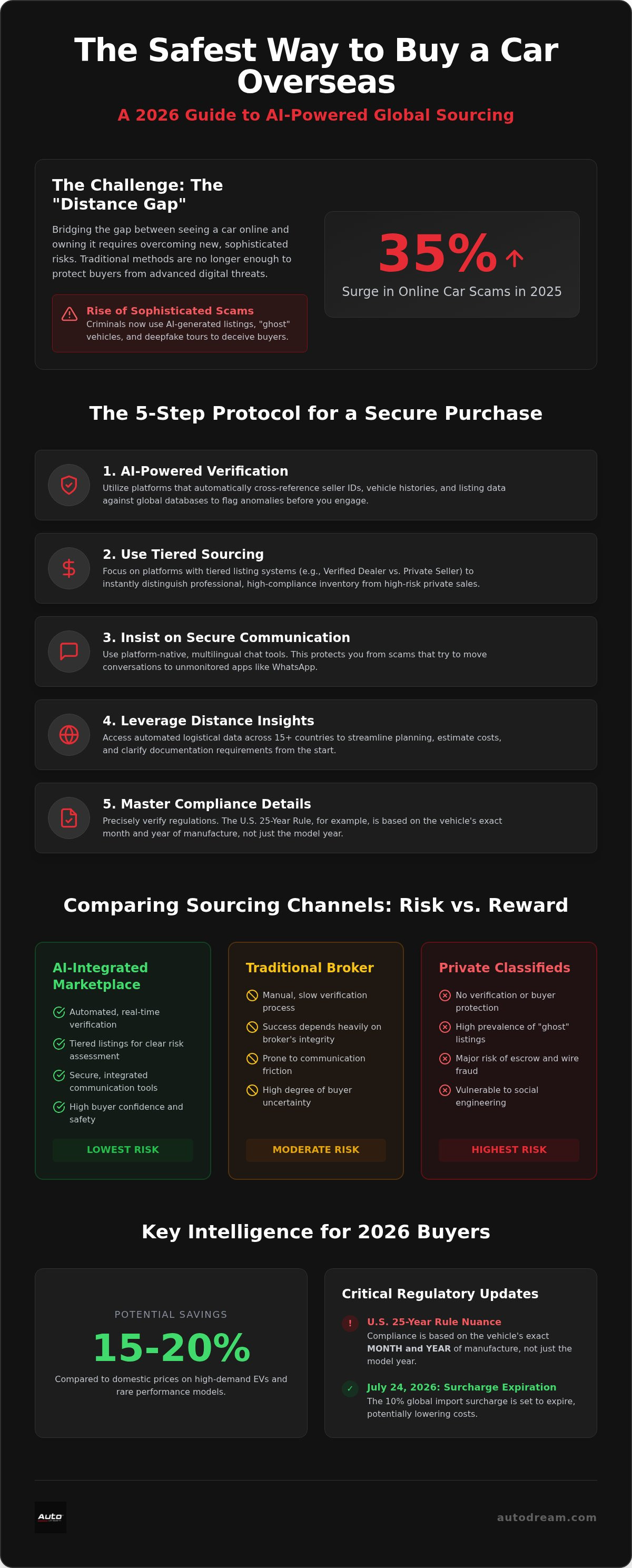
The 5-Step Protocol for a Frictionless Cross-Border Purchase
Success in global trade is built on a rigid, tech-enabled framework. Identifying the safest way to buy a car overseas requires moving away from fragmented searching toward a unified, five-step protocol. This sequence ensures every logistical and financial variable is accounted for before the vehicle leaves its origin. By following these stages, you eliminate the ambiguity that bad actors rely on to hide defects or falsify listings. Precision is your best defense against fraud.
- Step 1: Intelligent Discovery. Leverage smart filters to identify inventory in high-compliance regions across our 15-country network. Focus on markets with transparent title histories.
- Step 2: Digital Vetting. Engage through AI-powered chat and request comprehensive digital service records to verify maintenance history and ownership.
- Step 3: Secure Negotiation. Finalize price and terms within the platform ecosystem to maintain a digital audit trail of every agreement and specification.
- Step 4: Transaction Security. Utilize international escrow services or verified bank transfers. Factor in the 2.5% U.S. import duty and merchandise processing fees early to avoid budget overruns.
- Step 5: Logistics Integration. Coordinate with export specialists and customs brokers to manage physical transit and ensure compliance with the 25-year rule.
Verification and Documentation Hierarchy
Validating the "Golden Trio" of documents is non-negotiable. This set includes the Bill of Lading, Commercial Invoice, and Certificate of Origin. The Bill of Lading is the primary title document in maritime transit. You must also cross-reference the VIN against international databases to ensure the vehicle isn't flagged as stolen, salvaged, or under lien. This level of digital scrutiny turns a high-risk purchase into a calculated, professional acquisition. Data doesn't lie, but paperwork can if it isn't verified at the source.
Safe Payment Mechanisms for 2026
Financial security is the cornerstone of a successful import. You should never use "Friends & Family" payment options for international assets. These platforms lack the buyer protection required for multi-thousand-dollar transactions and offer zero recourse for fraud. For luxury vehicles, a Letter of Credit (L/C) remains a sophisticated tool that ensures the seller is only paid once specific shipping conditions are met. Be mindful of currency exchange risks when buying in Euros or Yen, as market volatility can quickly shift your final cost. You can manage these risks and verify seller legitimacy by using the AI-powered dealer dashboard to secure your deal. Protecting your capital is just as important as finding the right car.
Future-Proofing Your Purchase: The AutoDream Vision
The safest way to buy a car overseas is a strategy that extends far beyond the shipping port. AutoDream redefines this process by integrating continuous innovation into every layer of the marketplace. It's about building a high-tech bridge that supports your vehicle long after it clears customs. Choosing a platform that understands the European Used Car Market in 2026 ensures you're aligned with the latest technological trends and regulatory shifts. This foresight allows you to manage a complex global market with the precision of a local buyer.
AI's role doesn't end when the keys are handed over. Sophisticated algorithms now assist in sourcing rare parts and identifying specialized service centers for imported electric vehicles (EVs). By leveraging these tools, you maintain the value and performance of your asset. This long-term focus on user convenience and friction removal is what separates a standard transaction from a visionary acquisition. You aren't just buying a car; you're joining a globally connected ecosystem designed for progress.
Sourcing Specific Brands: The Tesla and BYD Case Studies
Strategic advantages exist when you source EVs from regions with high adoption rates. These markets often feature better-maintained inventory and more comprehensive service histories. If you're looking for specific models, our How to Buy a Used Tesla Internationally: The Visionary 2026 Global Sourcing Guide provides the granular detail needed for a secure purchase. Understanding warranty portability is crucial. While many EV manufacturers offer global support, you must verify that your specific VIN is eligible for service in your home country before finalizing the deal. This verification prevents unexpected maintenance hurdles after the vehicle arrives.
Your Next Step in Global Connectivity
Your journey begins with a sophisticated buyer profile. This digital identity attracts high-quality international sellers who prioritize serious, verified inquiries. By setting up Smart Alerts, you can monitor inventory changes across 15 different countries in real time. This ensures you're the first to know when a rare model hits the market. Professional photography remains a vital verification tool. Always insist on high-definition, multi-angle shots that include the VIN plate and odometer. This visual data, combined with our AI-Powered Dealer Dashboard, creates a comprehensive safety net for your investment.
Final Checklist for the Visionary Buyer:
- Is the seller verified through a tiered listing system separating dealers from private risks?
- Have you cross-referenced the VIN against international databases for theft or salvage flags?
- Does the documentation include the 'Golden Trio' (Bill of Lading, Commercial Invoice, and Certificate of Origin)?
- Are you utilizing secure, platform-native communication and verified payment tools?
- Have you accounted for all 2026 import duties, merchandise processing fees, and the July 24 surcharge expiration?
Command Your Global Automotive Future
The global automotive market in 2026 isn't defined by geographic borders, but by the digital intelligence you use to navigate it. You've discovered that the safest way to buy a car overseas is to replace manual uncertainty with automated verification and a disciplined five-step protocol. By prioritizing platforms that utilize advanced dealer verification tools and real-time distance insights, you eliminate the friction that once made international sourcing a high-risk endeavor.
Your next acquisition deserves a process as sophisticated as the vehicle itself. With localized inventory across 15+ countries and AI-powered multilingual chat to bridge every communication gap, you can engage with the world's premier listings with absolute clarity. It's time to move past the limitations of your local market and embrace a truly connected procurement experience. Discover your next vehicle on AutoDream's secure global marketplace and start your journey toward a seamless purchase today.
Frequently Asked Questions
Is it safe to buy a car overseas without seeing it in person?
It is safe if you utilize high-definition virtual tours, real-time video inspections, and verified digital records. In 2026, sophisticated digital verification has replaced the need for physical presence by providing immutable data on a vehicle's condition. Relying on an AI-Powered Dealer Dashboard ensures you are viewing verified inventory rather than "ghost" listings that often plague unmonitored marketplaces.
What is the most secure way to pay an international car seller?
The most secure method is using an international escrow service or a Letter of Credit (L/C). These financial mechanisms ensure that your funds are only released once the seller provides verified proof of shipping, such as a Bill of Lading. Avoid direct wire transfers or "Friends and Family" payment options. These methods provide zero protection against the 35% rise in online car scams reported in 2025.
How do I verify if an overseas car seller is legitimate?
Legitimate sellers are best verified through tiered listing systems that distinguish established professional dealers from private individuals. You should cross-reference their digital footprint, including showroom locations and historical response data provided by the platform. This data-driven vetting is the safest way to buy a car overseas because it filters out high-risk entities before any negotiation begins.
What documents are absolutely required for international car importing?
Mandatory documentation includes the original foreign registration, a commercial bill of sale, and the bill of lading. For U.S. imports, you must also provide EPA Form 3520-1 and DOT Form HS-7. Ensuring these documents are present and verified against the vehicle's VIN prevents costly delays or re-export penalties at the port of entry. Missing a single form can result in total vehicle seizure.
Can I use AI tools to help negotiate a car purchase in another language?
Yes, AI-powered multilingual chat tools are essential for eliminating the translation errors that scammers often use to hide vehicle defects. These tools provide real-time, accurate communication, ensuring both parties agree to the exact same legal terms. This technology acts as a high-tech bridge, removing the friction and risk of language barriers across 15+ countries in the AutoDream network.
What happens if the car arrives in a different condition than described?
If a vehicle arrives in poor condition, your primary recourse depends on having marine insurance and a clear digital audit trail. Marine insurance typically costs 1.5% to 2.5% of the vehicle's value and covers damage during transit. Without escrow protection or a verified contract, recovering funds from a private seller in another jurisdiction is nearly impossible. Professional dealers offer more accountability in these scenarios.
How do I calculate the total cost including duties and shipping safely?
You must sum the purchase price, shipping (ranging from $900 for RORO to $3,500 for sole-use containers), and mandatory government fees. In the U.S., this includes a 2.5% import duty, a 0.125% harbor maintenance fee, and a 0.3464% merchandise processing fee. Identifying the safest way to buy a car overseas involves accounting for these specific costs before the July 24, 2026, surcharge expiration.
Are there specific countries that are safer to buy cars from than others?
High-compliance regions with established export infrastructures and transparent digital record-keeping are generally safer for international buyers. Countries with localized inventory and professional dealer networks offer more reliable data for distance insights. Focusing on these markets reduces logistical complexity and minimizes the risk of encountering falsified documentation or identity fraud during the procurement process.
Ready to list your car?
Put your vehicle details and photos together, then start your listing on AutoDream.
Create your listing