What if the greatest barrier to your dream car isn't the distance, but the digital shadow of the person selling it? You likely feel the weight of this uncertainty every time you browse a foreign inventory and wonder how to verify an international seller without being able to visit the lot. It's natural to fear digital fraud or feel overwhelmed by the intricate maze of overseas business registrations. When you can't physically touch the steering wheel, the silence of a language barrier only amplifies the risk.
You deserve a transparent path to ownership that transcends borders. This article introduces a visionary framework for mastering cross-border trust, providing the definitive protocol for securing your global vehicle acquisition in 2026. We've moved past the era of blind deposits; modern automotive transactions rely on sophisticated identity verification and tools like the AI Dealer Dashboard to ensure professional legitimacy. We'll examine how digital footprint analysis and automotive-specific transparency protocols create a seamless journey from initial inquiry to final acquisition.
Key Takeaways
- Understand why the 2026 automotive landscape requires a shift from local browsing to global sourcing for high-value and specialized vehicles.
- Learn to decode a seller's professional credentials by navigating international corporate registries and analyzing their digital footprint across global platforms.
- Master the technical side of the transaction by using VIN forensics and title transparency to ensure the vehicle's digital DNA is authentic.
- Discover a precise five-step framework on how to verify an international seller, moving from initial platform validation to secure document exchange.
- Leverage AI-powered ecosystems to eliminate language barriers and identify high-tier professional sellers through intelligent dealer dashboards.
Table of Contents
The Trust Gap in Global Automotive Sourcing
International seller verification is the rigorous process of validating a merchant's identity, their legal standing within their jurisdiction, and their undisputed ownership of a vehicle. It's the digital equivalent of a background check that spans continents. In 2026, the necessity for this process has surged as the car market becomes increasingly decentralized. Whether you're tracking a specific BYD model from Asia or a bespoke Mercedes configuration from Europe, global sourcing is no longer a luxury; it's a strategic requirement for those who demand the best technology.
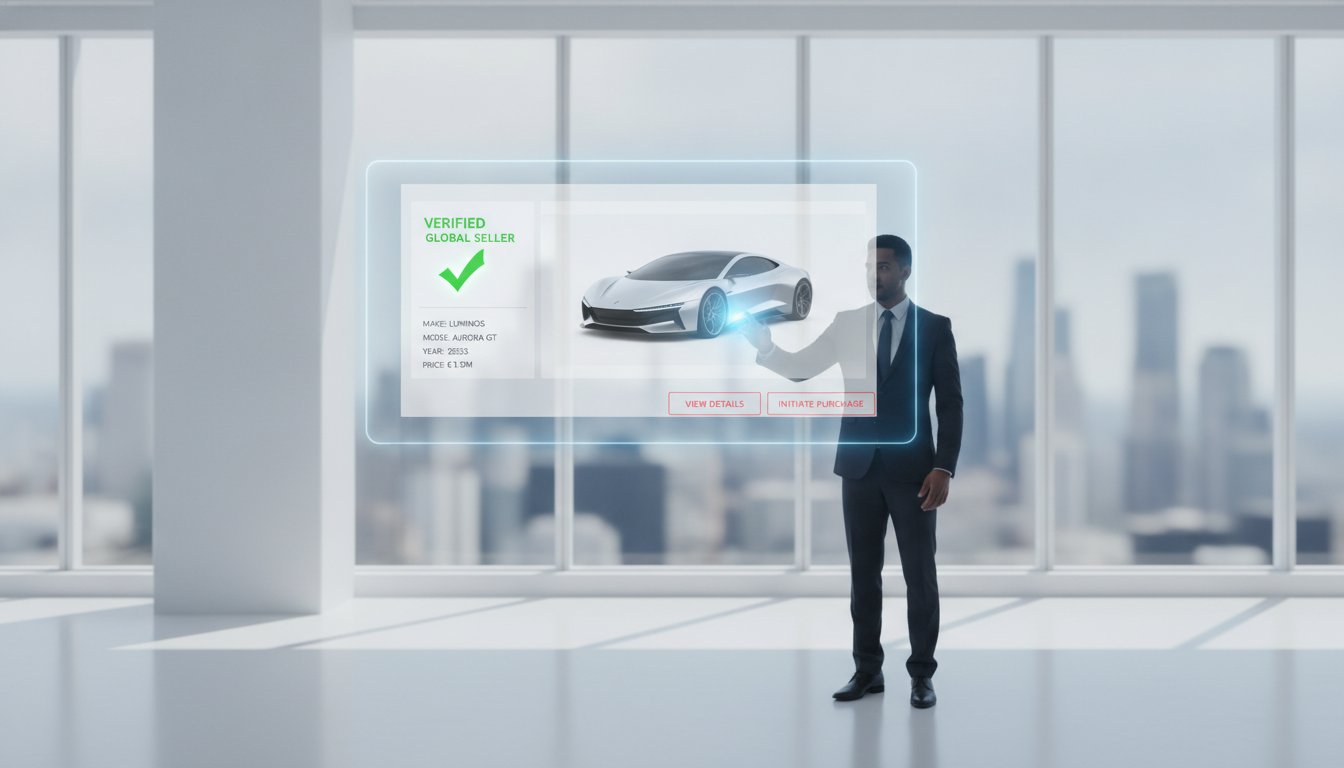
This evolution has triggered a significant psychological shift. The era of the local showroom is being replaced by a sophisticated, global digital marketplace. Buyers are moving away from the need for physical proximity, opting instead for the speed and variety of international inventories. Central to this transition is the "Verified Digital Identity." This framework ensures that every seller in the 2026 automotive ecosystem is backed by authenticated data, creating a layer of trust that makes cross-border transactions feel as safe as buying from the dealer down the street.
Why Traditional Verification Fails for Cars
Standard business checks often fall short when applied to high-ticket automotive assets. A simple registration number doesn't tell you if a seller actually possesses the car or if they understand the export laws of their own country. The challenge of "sight unseen" purchases is amplified by the complexity of international export regulations. Fraudulent actors often hide behind these bureaucratic layers, hoping that the distance and the language barrier will discourage deep investigation. Learning how to verify an international seller requires looking past the surface to find concrete proof of asset control and regulatory compliance.
The Visionary Buyer’s Advantage
Forward-thinking buyers use technology to bridge the gap between their location and the vehicle’s port of origin. Intelligent marketplaces act as facilitators, standardizing credentials so that a seller in the UAE meets the same rigorous benchmarks as one in the UK. When a seller utilizes a professional AI-Powered Dealer Dashboard, it signals a commitment to transparency and modern business standards. Verification Synergy is the blend of AI tools and manual document audits. This combination allows you to leverage automated insights while maintaining the human oversight necessary for high-value acquisitions. By adopting these tools, you turn the complexity of global trade into a competitive advantage.
Analyzing Digital Footprints and Professional Credentials
Analyzing a seller’s digital footprint is the first sophisticated step in securing a global transaction. In the 2026 market, a professional merchant leaves a trail of data across multiple automotive platforms that you can use to build a profile of reliability. Understanding how to verify an international seller involves more than checking a website; it requires a deep dive into corporate registries like the UAE Economic Departments or the EU VIES system. These official databases confirm that the entity you're dealing with is legally authorized to conduct business and export high-value assets.
Modern buyers also leverage AI-aggregated "Digital Sentiment" to evaluate historical performance. This technology scans years of listing data and reviews to identify patterns that a human eye might miss. You should prioritize sellers who display professional markers, such as an AI-Powered Dealer Dashboard. This tool is a hallmark of a sophisticated operation, suggesting the seller uses advanced logic to manage their inventory and interact with a global audience. When these digital signals align, the risk of fraud diminishes significantly.
Decoding the Professional Seller Profile
Distinguishing between a casual individual and a high-volume professional dealership is essential for risk management. Professional sellers often invest in "Featured Listing" status on premium marketplaces, which acts as a powerful trust signal. This status indicates that the platform itself has performed a baseline level of vetting. To gain a deeper perspective, you can use specialized online car shopping tools to cross-reference seller data across different regions. This ensures the business isn't just a digital facade but a functioning enterprise with a physical presence and a verifiable track record. You can explore verified listings to see these professional markers in action.
Overcoming the Language Barrier with AI
Language barriers often create friction that scammers use to their advantage. In 2026, AI-powered multilingual chat has transformed from a convenience into a critical security feature. By using real-time translation, you can test a seller’s technical knowledge and responsiveness without the nuance getting lost in translation. This transparency allows you to ask specific questions about vehicle history or export logistics and receive immediate, clear answers. A major red flag in your journey of how to verify an international seller is a merchant who refuses to use secure, platform-integrated chat tools. If a seller insists on moving the conversation to unmonitored private channels, they're likely trying to bypass the safety protocols designed to protect your investment.
Technical Verification: VIN Forensics and Title Transparency
Technical verification serves as the bridge between digital promises and physical reality. While the seller's credentials establish trust, the vehicle’s data provides the ultimate proof of value. In the 2026 market, the Vehicle Identification Number (VIN) acts as the digital DNA of the car, carrying a permanent record of its origin, specifications, and history. Understanding how to verify an international seller requires you to treat the VIN as a primary investigative tool rather than just a serial number. By auditing this code, you bypass the need for an expensive, impractical on-site visit. This data-driven approach removes the guesswork from global sourcing.
The VIN Audit Protocol
A sophisticated buyer uses international VIN decoders to verify the exact manufacturing plant, model year, and engine specifications. This ensures the car matches the listing perfectly and hasn't been modified or misrepresented. You must be vigilant against "VIN cloning," where scammers use a legitimate number from a similar car to mask a stolen or salvaged vehicle. A legitimate seller will always provide a clear, unobstructed photo of the VIN plate. If they hesitate or provide a blurry image, it's a definitive signal to pause the transaction. We recommend cross-referencing mileage and fuel type across multiple historical records to ensure the data remains consistent throughout the car's lifecycle.
Asset Ownership Proof
Securing the right documentation is the final pillar of technical verification. You must request and verify the Export Certificate, such as the V5C in the UK or the official Export Certificate in the UAE. In forward-thinking jurisdictions, you may even encounter blockchain-verified titles that provide an immutable record of ownership. It's critical to ensure the seller’s name matches the vehicle title or the business registration you verified earlier. This alignment prevents "title jumping" and other legal complications during the import process.
For those following our international car buying guide, third-party inspection reports offer an additional layer of logistical clarity. These reports, combined with a "Certificate of Conformity" for EU-based transactions, guarantee that the vehicle meets the technical standards of your home country. This multi-layered approach ensures that your global acquisition is backed by transparent, verifiable evidence, removing the friction typically associated with cross-border automotive trade.
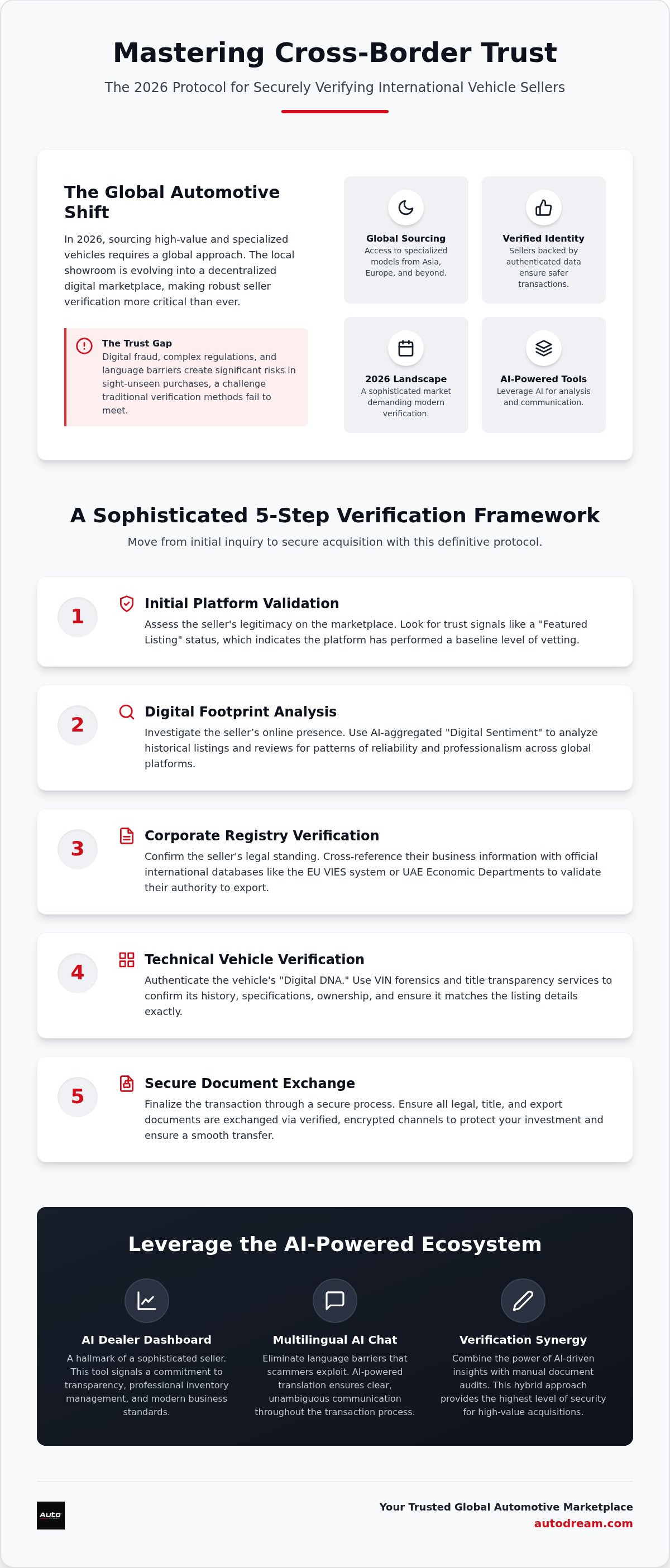
A Sophisticated 5-Step Framework for Verification
Mastering the logistics of a global acquisition requires a structured, repeatable process. In the 2026 market, a visionary buyer doesn't rely on luck; they utilize a rigorous protocol to eliminate risk. If you're wondering how to verify an international seller with absolute certainty, you must adopt a framework that blends platform security with real-time physical evidence. This five-step approach ensures that every variable, from the seller’s identity to the vehicle’s location, is cross-referenced against high-tech benchmarks.
- Step 1: Platform Validation. Ensure the seller is active on a reputable smart marketplace like AutoDream. This initial filter guarantees the merchant has already passed baseline professional standards.
- Step 2: Document Request. Secure the VIN, title, and seller’s official ID via encrypted channels. Never accept low-resolution scans; demand high-fidelity digital records that are easily legible.
- Step 3: Live Video Walkthrough. Move beyond static photos by demanding a real-time tour. This confirms the seller actually possesses the vehicle in its stated condition.
- Step 4: Logistics Cross-Check. Use distance insights to verify if the seller’s business address aligns with the intended port of export.
- Step 5: Secure Payment Escrow. Avoid direct wire transfers at all costs. Instead, utilize secure cross-border vehicle transactions to protect your capital until the asset is secured.
The Live Video "Proof of Life"
Virtual tours have become the new standard for remote buyers in 2026. During a live walkthrough, look for specific cues that prove the video is authentic and current. Ask the seller to display the current date on the dashboard screen or perform a specific steering wheel movement on command. These micro-interactions are vital for identifying "Deepfake" video scams, which have become increasingly sophisticated in automotive sales. A legitimate facilitator will welcome this request as a sign of a serious, knowledgeable buyer. You can browse professional listings that offer integrated video capabilities to simplify this step.
Logistical Alignment
A seller’s story must match their data. By matching the business address with the vehicle’s storage location, you confirm the operational logic of the transaction. You can use automatic distance insights to calculate the feasibility of the shipping quote provided. If the car is stored 500 kilometers from the port but the logistics fee is suspiciously low, it's a red flag. When available, verify the seller’s export history through customs data to ensure they have a track record of successful international deliveries. This alignment turns a complex cross-border move into a frictionless experience. Knowing how to verify an international seller means looking at the physical movement of the asset as closely as the digital paperwork.
Navigating Secure Transactions with AutoDream’s Ecosystem
AutoDream functions as a high-tech bridge between your automotive ambitions and the logistical realities of a global market. By integrating advanced security protocols into a single platform, the ecosystem simplifies how to verify an international seller without requiring you to manage multiple disparate tools. The platform’s reach across 15 countries ensures a diverse pool of verified sellers who are already accustomed to the rigorous standards of cross-border trade. This centralized approach removes the friction of manual vetting, allowing you to focus on the quality of the asset rather than the legitimacy of the merchant.
One of the most powerful trust signals within this ecosystem is the "Featured Listing Placement." This status is more than just a marketing tool; it's a marker of seller commitment and professional longevity. Sellers who invest in these placements are typically high-volume dealerships with a proven track record of successful exports. When you combine this visibility with our AI-powered multilingual chat, you gain the ability to negotiate and clarify technical details with sellers in 15+ countries in real time. This ensures that every nuance of the transaction is understood by both parties, leaving no room for the misunderstandings that scammers often exploit.
Intelligent Seller Management
Professional dealers utilize AutoDream’s AI-powered dealer dashboard to manage their global inventory with precision. This dashboard serves as a badge of sophistication, indicating that the merchant operates with the smart logic required for 2026’s digital-first economy. For the buyer, this means that automated analytics are constantly working in the background to flag inconsistent seller data or unusual listing patterns. If a seller’s historical data doesn't align with their current claims, the system identifies the anomaly before you even initiate contact. This proactive protection provides the peace of mind necessary for a high-value, global acquisition.
Your Visionary Path Forward
The empowerment that comes from a verified global search is transformative. You are no longer limited by your local geography; instead, you have the tools to source the exact vehicle you desire from a worldwide inventory. Once you have mastered the verification process, you can move toward acquisition with absolute confidence. For instance, many buyers now use these tools to buy used Tesla international models, leveraging the platform to secure premium electric vehicles from distant markets safely. By following this visionary framework, you turn a complex international purchase into a streamlined, successful reality. You can start your secure global vehicle search on AutoDream today and experience the future of automotive sourcing.
Accelerate Your Global Acquisition with Confidence
The transition from a local search to a global acquisition represents a move toward total empowerment. By mastering the synergy between digital footprint analysis and technical VIN forensics, you replace uncertainty with a repeatable, data-driven protocol. Learning how to verify an international seller acts as the catalyst for expanding your automotive horizons, allowing you to source premium assets from a worldwide inventory without the traditional risks of cross-border trade.
AutoDream facilitates this journey by providing the intelligent infrastructure needed for a decentralized market. Our ecosystem offers AI-powered multilingual chat across 15+ countries and smart distance insights for logistical accuracy, ensuring that every transaction is grounded in clarity. When you leverage sophisticated dealer management tools, you aren't just buying a car; you're participating in a modern, frictionless evolution of ownership. The path to your next vehicle is no longer restricted by borders or language barriers. It's time to step into a new era of connectivity and secure your dream car with absolute precision. Explore Verified Global Listings on AutoDream today and begin your visionary journey.
Frequently Asked Questions
How can I verify if a car seller is legitimate if they are in another country?
Cross-reference their business registration with local corporate registries like the UAE Economic Departments or EU VIES system. A legitimate merchant will have a verifiable digital footprint on global automotive platforms. You can also use an AI-Powered Dealer Dashboard to confirm they're operating with professional-grade tools. This systematic approach is the most effective way to understand how to verify an international seller before committing any capital.
What documents should I ask for when buying a car internationally?
You must secure the original vehicle title, a government-issued Export Certificate like the UK’s V5C, and a clear copy of the seller’s business license. For transactions in the EU, request a Certificate of Conformity to ensure technical compliance. These documents act as the legal foundation for the transfer of ownership. Always verify that the name on the title matches the merchant's official identification to prevent title jumping.
Is it safe to buy a car sight unseen if the seller has good reviews?
It's only safe if the reviews are backed by a multi-layered verification framework. Reviews alone can be fabricated; you need a live video walkthrough and a third-party inspection report to confirm the vehicle's condition. Sight unseen purchases in 2026 rely on data transparency rather than just social proof. High-tier marketplaces integrate these steps into their ecosystem to protect buyers from relying on sentiment alone.
Can I trust an international seller who only communicates via WhatsApp or Telegram?
No, you should avoid sellers who insist on moving conversations away from secure, platform-integrated chat tools. Professional merchants use AI-powered multilingual chat within a verified ecosystem to maintain a record of the negotiation. Unmonitored private channels are a significant red flag. They don't have the security features or translation accuracy necessary for high-value cross-border transactions. Always prioritize communication that remains within a protected digital environment.
How do I know if a VIN provided by an overseas seller is real?
Use an international VIN decoder to cross-reference the number against historical records and manufacturing data. A real VIN will perfectly match the make, model, and engine specifications of the car in the listing. You should also demand a clear, unobstructed photo of the VIN plate from the vehicle itself. This prevents VIN cloning, where scammers use a legitimate number from a different car to mask a stolen asset.
What happens if I pay an international seller and the car never arrives?
Recovering funds from a direct wire transfer is extremely difficult once the capital leaves your jurisdiction. This is why you shouldn't use direct payments. Instead, utilize secure escrow services or platform-integrated payment solutions that hold funds until the vehicle is secured. If you've already been defrauded, contact your local authorities and the seller's national police immediately, though prevention through a verified framework is the only reliable strategy.
Are there specific red flags for international car scams in 2026?
Look for Deepfake video walkthroughs, suspiciously low shipping quotes, and a refusal to provide high-resolution document scans. Another major red flag is a seller whose business address doesn't align with the port of export. Scammers often create digital facades that crumble when you apply logistical cross-checks. Understanding how to verify an international seller involves spotting these data inconsistencies before they lead to financial loss.
How does an AI-powered marketplace help in verifying sellers?
AI-powered marketplaces act as intelligent facilitators by automatically filtering for professional-grade credentials. These platforms use smart logic to scan for inconsistent listing data and verify distance insights for logistical accuracy. They bridge the trust gap by providing tools like the AI Dealer Dashboard, which signals that a seller is a legitimate, high-volume professional. This technology removes the friction from global sourcing, making cross-border transactions feel both seamless and secure.
Ready to list your car?
Put your vehicle details and photos together, then start your listing on AutoDream.
Create your listing