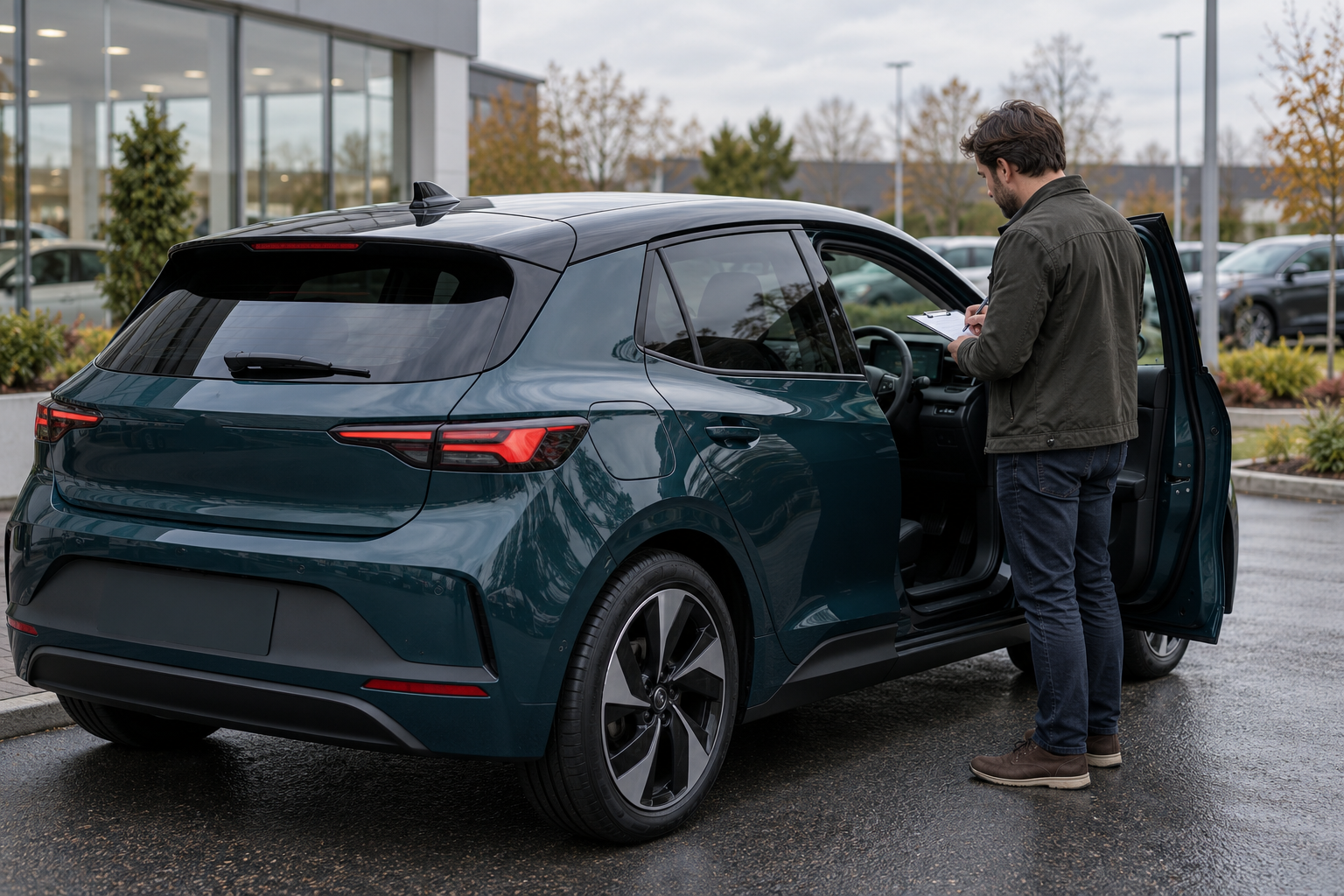

That massive price gap on your screen isn't a glitch; it's a strategic window into a complex global ecosystem of trade and policy. You've likely felt the frustration of seeing a vehicle priced affordably in one market, only to watch that figure skyrocket across a border. It's confusing to reconcile a basic sticker price with the reality of "on-the-road" costs that seem to shift with the wind. Understanding why car prices vary between countries is the first step toward mastering the international automotive market.
This guide promises to decode the sophisticated economic and regulatory factors that drive these international disparities. You'll gain a clear framework for calculating total landed cost, moving beyond surface-level numbers to find true value. We'll preview the essential mechanisms of import duties and logistics while showing you how to use modern digital marketplaces with confidence. By the end of this article, you'll possess the foresight to turn market friction into a personal or professional advantage.
Key Takeaways
- Identify the regulatory silent drivers, such as Value-Added Tax and import tariffs, that fundamentally alter the final valuation of vehicles across different jurisdictions.
- Decode why car prices vary between countries through the lens of manufacturer pricing-to-market strategies and regional supply chain dynamics.
- Establish a robust framework for calculating the total landed cost of an asset; this includes everything from marine insurance to complex logistics chains.
- Learn to mitigate the risks of currency fluctuations and economic volatility by utilizing sophisticated digital marketplaces that offer global connectivity.
- Discover how intelligent automation and AI-powered negotiation tools remove traditional friction points in cross-border automotive sourcing.
Table of Contents
The Global Landscape of Vehicle Valuation: A 2026 Perspective
The automotive world is currently witnessing a fascinating paradox. You can identify two identical vehicles, right down to the VIN, yet find their price tags separated by the equivalent of a year's salary. This isn't an accident of geography; it's the result of a complex, interconnected web of market forces. As we move through 2026, supply chain stabilization has returned inventory levels to a state of equilibrium, yet regional pricing remains as fragmented as ever. Understanding why car prices vary between countries requires looking past the metal and into the sophisticated economic logic that manufacturers use to protect their margins.
While the MSRP provides a baseline, the real story lives in the gap between the sticker price and the final transaction. In the United States, average transaction prices reached $50,326 in late 2025, driven by a specific culture of dealer markups and localized incentives. In other regions, fixed-price models or heavy government subsidies for electric vehicles create a completely different financial profile. Digital transparency is now forcing manufacturers to justify these regional disparities as buyers gain the ability to compare global data in seconds. The curtain of localized pricing secrets is falling, replaced by a demand for intelligence and smart logic in every transaction.
Regional Market Maturity and Its Impact
Established markets like the US and the European Union operate on high-volume, lower-margin strategies where competition is fierce and consumer preferences are deeply entrenched. In these regions, the dominance of SUVs in America or compact city cars in Europe dictates how manufacturers bundle features and price their fleets. Conversely, emerging hubs such as the UAE or Southeast Asia often see higher profit margins per unit. These markets may lack the sheer volume of the West, but they offer a strategic playground for luxury brands and new entrants to establish premium positioning without the baggage of legacy pricing structures. The persistent gap between these regional valuations often fuels the Grey Market and Price Arbitrage, where savvy buyers bypass official channels to secure better rates.
The Shift Toward Global Digital Platforms
The rise of sophisticated online car shopping tools has transformed the buyer from a local spectator into a global participant. AI-driven platforms now aggregate real-time data across borders, making it impossible for dealers to hide behind regional information silos. AutoDream facilitates this evolution by providing a 15-country reach that serves as the ultimate valuation benchmark. By integrating distance insights and multilingual negotiation capabilities, the platform acts as a high-tech bridge. It removes the traditional friction of international sourcing, allowing you to see exactly why car prices vary between countries and, more importantly, how to use that knowledge to your advantage. This movement toward a unified digital ecosystem ensures that your next vehicle isn't just a purchase, but a strategically executed global asset acquisition.
Tax Architectures and Regulatory Barriers: The Silent Price Drivers
While market maturity establishes the baseline, taxation serves as the most powerful invisible force in global automotive valuation. Governments use fiscal levers to protect domestic industries, accelerate environmental transitions, and generate significant revenue. These "silent" drivers often explain why car prices vary between countries more than the cost of manufacturing itself. From the moment a vehicle leaves the assembly line, it's subject to a gauntlet of regional levies that can double its final price before it ever reaches a showroom floor.
Import duties and tariffs remain the primary tools of modern protectionism. In markets with robust domestic manufacturing, high tariffs are often used to discourage foreign competition, effectively pricing out international entrants. Conversely, free trade zones may offer a deceptive sense of parity that disappears once luxury or "green" taxes are applied. Many nations now use progressive tax scales based on engine displacement or CO2 emissions, meaning a high-performance vehicle that's affordable in one territory becomes a prohibited luxury in another. This regulatory complexity is why academic studies on European Car Price Discrepancies highlight that pre-tax figures tell only a fraction of the story.
The VAT Disparity: Europe vs. The Rest of the World
Value-Added Tax (VAT) creates some of the most dramatic price gaps in the global market. In 2026, the contrast remains stark: Hungary maintains a 27% VAT threshold, while Switzerland offers a significantly lower 8.1% rate. This means an identical vehicle is fundamentally more expensive in Budapest than in Zurich before a single dealer markup is added. The United States complicates this comparison further with its Sales Tax system (ranging from 0% to 10%), which is typically added at the point of sale rather than included in the sticker price. When you're sourcing internationally, understanding how VAT is reclaimed or applied during export is essential for achieving a competitive landed cost. Utilizing an AI-powered dashboard can help you visualize these tax-adjusted valuations in real time.
Emissions Standards and Regional Compliance
Beyond fiscal policy, the cost of physical compliance adds another layer of friction to international pricing. The transition to "Euro 7" standards has forced manufacturers to integrate expensive filtration and sensor technology into internal combustion engines, costs that are passed directly to the consumer in European markets. If a vehicle isn't built to these specific regional standards, the cost of modification can be astronomical. Homologation is the process of certifying a vehicle for a specific market's regulations. This certification ensures the car meets localized safety and environmental benchmarks, but the engineering required to achieve it is a major reason why car prices vary between countries so significantly. For the visionary buyer, navigating these barriers requires more than a calculator; it requires a platform that understands the intersection of law and logistics.
Market Dynamics: Why Manufacturers Price Differently
Manufacturers don't just sell vehicles; they manage a sophisticated global portfolio through a strategy known as Pricing-to-Market (PTM). This involves a calculated balancing act where original equipment manufacturers (OEMs) adjust their MSRPs based on what a specific local economy can sustain. In high-income nations, brands often prioritize margin over volume, loading vehicles with premium features to justify a higher entry point. In contrast, in high-growth economies, the same manufacturer might strip back non-essential tech to capture market share. This strategic choice is a fundamental reason why car prices vary between countries so dramatically.
Inventory dumping also plays a critical role in these disparities. When a specific model is being phased out in one region due to updated standards or shifting tastes, manufacturers often redirect remaining stock to markets where demand remains high or regulations are more permissive. These localized clearance events create windows where identical cars are sold at a fraction of their original cost elsewhere. Additionally, the emergence of agile, direct-to-consumer pricing strategies has permanently altered this landscape. By implementing sudden, global price adjustments that bypass traditional dealer networks, these new models have forced legacy brands to move toward greater transparency, though regional price gaps still persist as a defensive measure for traditional margins.
The BYD Case Study: Aggressive Market Penetration
BYD has redefined the art of market disruption through aggressive localized pricing. By leveraging domestic government subsidies and integrated supply chains, the brand can price its exports to undercut established European manufacturers. In 2026, we see this playing out as a geopolitical chess match where why car prices vary between countries is often a reflection of a brand's desire to colonize a new market. If you're considering sourcing used electric vehicles internationally, you must monitor these OEM price wars, as a sudden price drop from a competitor like BYD often triggers a reactionary valuation shift across the entire EV sector.
Currency Arbitrage for the Visionary Buyer
The 2026 economic environment is defined by significant currency volatility, which creates unique opportunities for the empowered buyer. When a local currency weakens against the dollar or euro, high-value assets like cars become temporarily undervalued for international purchasers. This is currency arbitrage in its purest form. However, successfully navigating these waters requires foresight, as inflation-adjusted pricing can quickly close these windows during long-lead transactions. AutoDream's AI-powered chat acts as a high-tech bridge in these scenarios, allowing users to negotiate and secure deals in fluctuating markets with speed and precision. By removing the friction of language and localized market ignorance, the platform ensures that currency shifts work in your favor rather than against you.
Calculating the True Landed Cost: Beyond the Sticker
Identifying an attractive price in a foreign market is a moment of potential, but translating that potential into a tangible asset requires a sophisticated understanding of landed costs. The sticker price is merely the opening chapter. To truly grasp why car prices vary between countries, you must account for the intricate logistics chain that connects a seller in one nation to a driveway in another. This process involves a sequence of port handling charges, customs brokerage fees, and the meticulous management of secure cross-border vehicle transactions that protect your capital throughout the journey.
Hidden "destination fees" often catch the unprepared buyer by surprise. While domestic competitors might cite local delivery costs, an international acquisition involves terminal handling and documentation fees that fluctuate based on the port's efficiency. These aren't just administrative hurdles; they're the functional realities of global trade that define the final valuation. By viewing the purchase as a platform-as-a-service experience, you can anticipate these overheads before committing to a wire transfer. This foresight is what separates a simple purchase from a strategic global acquisition.
Logistics and Freight Realities
The choice between Roll-on/Roll-off (RoRo) and Container shipping is a balance of efficiency and protection. RoRo is the streamlined choice for standard inventory, moving vehicles with the speed of a modernized ferry system. Container shipping, while more costly, offers a secure environment for high-value assets, shielding them from the elements and potential transit wear. Route popularity and distance dictate the final quote, often making a car from a distant but major trade hub cheaper to ship than one from a closer, less-traversed port. AutoDream integrates automatic distance insights into its ecosystem, allowing you to estimate these transit overheads with intelligent precision and speed.
In specific regions where these logistics are further complicated by rugged terrain and high import barriers, some find that specialized rental models are more viable than permanent acquisition. For instance, in Madagascar, Mada Car Drive offers 4x4 rentals with professional guides, allowing users to navigate complex environments without the significant overhead of international shipping and local registration.
Post-Arrival Costs: Registration and Modification
The journey doesn't end at the port of entry. Local registration taxes and "first-time" license fees can vary wildly, often mirroring the fiscal protectionism discussed in earlier sections of this guide. You must also budget for physical modifications. This includes converting infotainment systems to local languages, adjusting headlight patterns for regional safety standards, or swapping charging ports to match local infrastructure. Marine insurance typically costs between 1% and 2% of the vehicle's total value, but it remains a non-negotiable safeguard for visionary buyers who refuse to leave high-value assets to chance. To manage these complexities with total confidence, you can leverage the AI-Powered Dealer Dashboard to track every variable of your global acquisition in real time.
Leveraging Global Price Variations with AutoDream
The complex variables driving international price gaps shouldn't be a barrier to your goals. AutoDream acts as the intelligent facilitator, turning market friction into a strategic advantage. While we've explored why car prices vary between countries, the real value lies in the technology that bridges these gaps. Our AI-powered multilingual chat removes the language barrier in negotiation, allowing you to converse with sellers in 15 countries as if you were in the same room. This level of connectivity ensures that you aren't just looking at data; you're actively participating in a unified global market.
By utilizing real-time global data, you can pinpoint specific European used car market sweet spots where supply and regulation align in your favor. Visionary sellers use our Featured Listing Placement to reach a global audience, ensuring that high-value assets find the buyers who truly understand their worth. This ecosystem doesn't just display prices. It provides the context needed to understand them. It's a sophisticated bridge between a user's current state and their desired outcome, removing the traditional hurdles of a complex market.
Smart Sourcing for Individuals
Accessing inventory across multiple borders no longer requires a fragmented search across dozens of localized sites. AutoDream provides a single, sophisticated interface to filter by fuel type, mileage, and international shipping readiness. Our "distance insights" tool empowers the remote buyer by providing immediate clarity on transit logistics. It's a frictionless way to solve the puzzle of why car prices vary between countries and capitalize on the results. You're no longer limited by your local geography. You're empowered by global choice.
Efficiency for Professional Dealers
For the professional, the AI-Powered Dealer Dashboard is a catalyst for growth. By leveraging AI for auto dealers, you can manage multi-country inventory from a unified command center. Automated analytics identify which models to export for maximum ROI, turning global price disparities into a reliable business model. The platform acts as a knowledgeable guide that has already solved the logistical hurdles of cross-border trade. It's time to move beyond the limitations of local inventory. Explore the AutoDream Global Marketplace today and experience the next horizon of digital automotive interaction.
Mastering the Global Automotive Horizon
Navigating the international market requires more than a casual search; it demands a sophisticated understanding of the fiscal and strategic forces at play. You now possess the insight to decode the regulatory silent drivers and manufacturer pricing models that define why car prices vary between countries. By calculating the true landed cost and anticipating regional compliance needs, you move from a position of confusion to one of empowered foresight. The global price gap is no longer an obstacle; it's a strategic window for those equipped with the right intelligence.
AutoDream stands as your high-tech bridge to this expanded inventory, offering a seamless integration of inventory across 15+ global markets. Our platform provides sophisticated distance and logistics insights alongside advanced AI-powered multilingual communication to remove every point of friction from your transaction. You can now engage with the world's most desirable vehicles with the confidence of a local expert. Discover your next vehicle on the AutoDream global marketplace and take the first step toward a truly borderless automotive future. The world is yours to drive.
Global Automotive Valuation: Frequently Asked Questions
Why are cars significantly cheaper in the US compared to the UK or EU?
Lower taxation and high-volume sales strategies drive the lower entry points found in the United States. US Sales Tax is typically added at the point of sale, whereas European VAT is included in the sticker price, creating an immediate visual disparity. Competitive dealer networks in the US often prioritize volume over margin, resulting in more aggressive localized incentives for consumers.
Is it actually cheaper to import a car from another country after all taxes?
Savings depend entirely on the specific tax architecture and logistics chain of your target market. While the initial purchase price might be lower, import duties and registration fees can quickly erode the margin. You must calculate the total landed cost, including port handling and compliance modifications, to determine if a genuine arbitrage opportunity exists for your specific model.
What is the 'Pricing-to-Market' strategy used by car manufacturers?
Pricing-to-Market is a strategic approach where manufacturers adjust MSRPs based on a local economy's purchasing power and competitive landscape. Instead of a uniform global price, brands charge what a specific market can sustain to balance volume with profitability. This strategy is a fundamental reason why car prices vary between countries even for identical vehicle identification numbers.
How much does Value Added Tax (VAT) typically add to a car's price in Europe?
VAT typically adds between 17% and 27% to a vehicle's final price across European jurisdictions. For example, Hungary maintains a 27% rate, while Switzerland offers a significantly lower 8.1% threshold. These taxes are applied to the combined value of the vehicle and any import duties, making them a primary driver of the final "out-the-door" cost for buyers.
Can I buy a car from another country if it isn't sold in my local market?
Yes, you can source vehicles not officially distributed in your region through independent international channels. This process often involves navigating the grey market, where cars are imported outside of official manufacturer networks. You must ensure the vehicle can undergo homologation to meet your local safety and emissions standards, as registration is impossible without meeting these specific regional benchmarks.
What are the most common hidden costs when buying a car internationally?
Terminal handling charges, customs brokerage fees, and marine insurance represent the most frequent unforeseen expenses. You should also budget for physical modifications, such as infotainment language updates or headlight pattern adjustments required by local laws. These post-arrival costs are essential components of the total valuation that many buyers overlook when focusing solely on the sticker price.
How does currency fluctuation affect international car prices?
Currency volatility creates temporary windows where a vehicle becomes undervalued for buyers holding a stronger currency. When a local currency weakens, your purchasing power in that specific market increases, allowing you to secure high-value assets at a discount. This economic shifting is a major factor in why car prices vary between countries during periods of global financial movement.
How can AI tools help me find the best global car deals?
AI tools aggregate real-time data from disparate global markets to identify pricing anomalies and arbitrage opportunities with high-tech precision. Platforms like AutoDream utilize multilingual chat and distance insights to remove the traditional friction of cross-border negotiation. These technologies allow you to compare total landed costs across 15 countries instantly, ensuring you secure the best value in a transparent global ecosystem.
Ready to list your car?
Put your vehicle details and photos together, then start your listing on AutoDream.
Create your listing